
A guide to the traditions and rituals of ritual circumcision in Sephardic communities.

The practice of Brit Milah originates in the Torah, in the book of Genesis (Genesis 17:9-14), when God commands Abraham to circumcise himself and his male descendants as a sign of the eternal covenant. The commandment is explicit: every male shall be circumcised on the eighth day of his life. This act is not merely a physical ritual, but a spiritual one that symbolizes the bond between the Jewish people and God. It is a sign of our unique identity and an everlasting promise to uphold the Torah and its commandments.
The commandment of Brit Milah is considered one of the most important mitzvot in Judaism. The act is so significant that it takes precedence over almost all other commandments, including the Sabbath. If the eighth day of a baby boy’s life falls on Shabbat, the circumcision is performed on Shabbat, a testament to the mitzvah’s profound importance.
A unique and deeply spiritual Sephardic custom on the night before the Brit Milah is the Brit Yitzchak (Covenant of Isaac). This gathering is a solemn assembly of men who gather to recite sections from the Zohar, a primary text of Jewish mysticism. The purpose of this late-night event is to provide a spiritual and mystical shield of protection for the infant on the eve of his entry into the covenant. The gathering is a spiritual parallel to the physical act that will take place the following day. This custom is distinct from the Ashkenazi Shalom Zachar, which often involves a more celebratory meal and is sometimes held on the Friday night before the Brit.
In some Sephardic communities, it is also a tradition to hang charts with protective biblical verses, such as those from Psalm 121 or Psalm 139, on the walls of the baby’s room. Some families also place the mohel’s knife under the baby’s pillow for added protection and blessing.
A Brit Milah involves several honored roles that are central to the ceremony, each with deep spiritual and communal significance:
Sandak: This is the most distinguished role, often given to a grandfather or respected elder. The Sandak is the person who holds the baby on their knees during the circumcision. The role is so highly regarded that it is likened to the privilege of offering incense in the Temple, and it is believed to bring blessings to the Sandak, the family, and the community. The Sandak is also seen as an earthly representative of the prophet Elijah. In some Sephardic traditions, the father of the baby can also serve as the Sandak, an even more direct way for him to fulfill his personal obligation for the mitzvah.
Kvatter and Kvatterin: This couple, who are often close family friends or relatives, bring the baby into the room where the Brit Milah will take place. By symbolically carrying the baby from the private sphere of the home into the public communal space, they serve as messengers, welcoming the new life into the Jewish people.
The Mohel: The Mohel is the trained and observant individual who performs the circumcision. Their role is not only surgical but also spiritual, as they are entrusted with the sacred task of bringing the child into the covenant.
The day of the Brit Milah is a joyous occasion, often accompanied by music and song. As the baby is brought into the sanctuary or the room where the ceremony will take place, the community rises and sings “Eliyahu HaNavi,” a beloved hymn that welcomes the prophet Elijah, who is believed to be present at every circumcision.
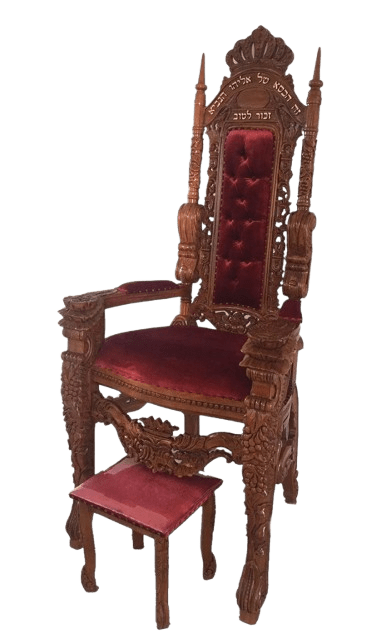
The ceremony begins with the baby being placed upon a special chair, known as Kiseh Shel Eliyahu, the Chair of Elijah. This chair remains unoccupied, as it is a place reserved for the prophet, a testament to God’s promise that Elijah would witness every Brit Milah.
The circumcision itself is performed with skill and reverence by the Mohel. The Mohel recites the blessing over the commandment of circumcision. Following the procedure, the father recites the blessing “Who has sanctified us with His commandments and commanded us to enter him into the covenant of Abraham our father.” The congregation then responds with the beautiful and hopeful prayer: “Just as he has entered into the covenant, so may he enter into Torah, into marriage, and into good deeds.”
The naming of the baby boy takes place as part of this ceremony, as his name is formally announced for the first time in a prayer over a cup of wine.
The Brit Milah is a celebration rich with regional and familial traditions:
Ululation and Song: Unlike many Ashkenazi ceremonies which are typically quiet, Sephardic Brit Milah celebrations are often accompanied by music and song. Women joyfully ululate with high-pitched sounds (zaghareet) as the baby is brought into the room, a chant of elation that is common in many Middle Eastern cultures.
A Bed of Spices: Following the circumcision, it is a Moroccan Sephardic custom for everyone to smell fragrant spices, particularly dried rose petals. This tradition connects the moment to the creation of Adam, who was created when God “blew into his nostrils the breath of life.” The soul is said to be fully reconnected at the moment of Brit Milah, making the sense of smell a perfect vehicle for this spiritual idea.
Inclusion of Family Names: A beautiful Sephardic custom is to name a child after a living relative, a sign of respect and an invocation of a long life. This is a significant contrast to many Ashkenazi traditions, where children are named after a deceased relative. Additionally, in some Sephardic communities, the family name is included in the formal naming of the child, for example, “Moshe ben Gavriel Haddad.”
The Brit Milah concludes with a Seudat Mitzvah, a commanded festive meal. Eating at this meal is considered a great mitzvah, a joyous way to celebrate the completion of the commandment and the child’s entry into the covenant. The meal is not merely a social gathering; it is a profound act of spiritual participation and communal celebration.
Apple and Sand Traditions: Some Persian communities use apples at the feast, referencing the Midrash that Jewish women gave birth in apple orchards in Egypt, where heavenly emissaries assisted them. The apples are seen as a symbol of easy labor and delivery. Moroccan communities may place a dish of sand near the mohel, signifying the hope that the child’s descendants will be as numerous as the sands of the sea, echoing God’s promise to Abraham.
Learn more about the Sephardic traditions of Birth and Naming.