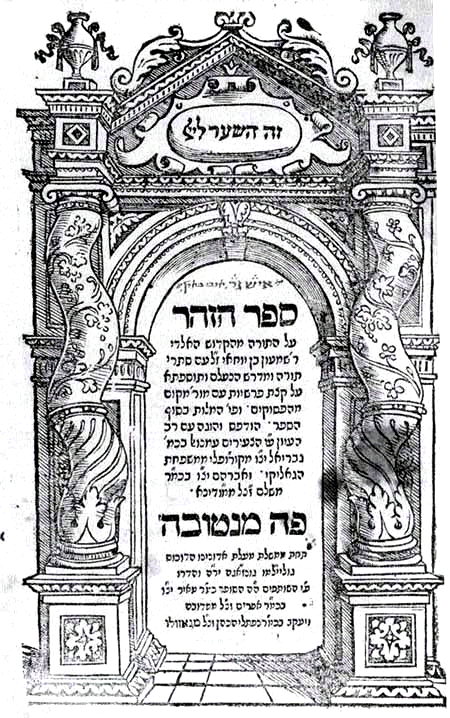
Seville scholar whose Sefer Abudarham explains the prayers and blessings line by line so ordinary worshippers could pray with understanding. It remains a key source for the history of the Sephardi siddur.
Who was Rabbi David Abudarham?
Rabbi David ben Yosef Abudarham was a scholar of fourteenth-century Seville who wrote Sefer Abudarham, a commentary that explains the prayers and blessings of the Jewish year line by line. He wrote it so that ordinary worshippers could understand what they were praying, and it remains one of the most important sources for the history and meaning of the Sephardic prayer book.
Seville
Little is known of Rabbi Abudarham’s life. He lived in Seville, in Castile, in the first half of the fourteenth century, when it was home to one of the largest Jewish communities in Spain. He is said to have studied in Toledo with Rabbi Yaakov ben Asher, the Baal HaTurim. He completed his book in 1340.
Why he wrote
In his introduction, Rabbi Abudarham explains that he saw many people praying without understanding the words, and following customs without knowing their reasons. He set out to give them a book that would explain the prayers clearly, their meaning, their sources in the Bible and the Talmud, and the laws and customs connected with them, so that they could pray with understanding and devotion.
Sefer Abudarham
The book goes through the daily prayers, the blessings, and the prayers for Shabbat, the festivals and the fast days, explaining each one. It discusses the differences between the customs of various communities, and it brings the opinions of the Geonim and of the great Spanish, French and Provençal sages. It also includes a commentary on the Passover Haggadah, a detailed treatment of the Jewish calendar and its astronomical basis, and discussion of the laws of blessings.
Because Rabbi Abudarham collected so many sources, some of them otherwise lost, and recorded the practice of his time, his book is a key witness to the Sephardi liturgy before the Expulsion. It was printed in Lisbon in 1489, one of the early Hebrew books printed on the Iberian Peninsula, and many times since.
Rabbi Abudarham’s legacy for Sephardim
Sephardic prayer is known for its clarity, its beauty, and its emphasis on understanding the words. Rabbi David Abudarham embodied that ideal. His book still answers the questions of anyone who wants to know why we say what we say, and it preserves the voice of the synagogues of Seville for every generation.

Sources
- "Abudarham, David ben Joseph," Encyclopaedia Judaica, 2nd ed. (2007)