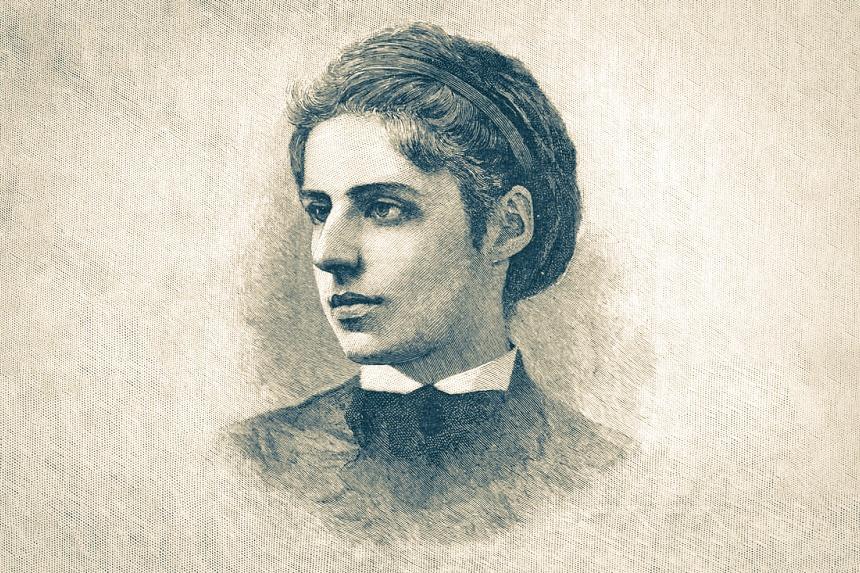
New York poet from an old Sephardic family whose sonnet The New Colossus is inscribed at the Statue of Liberty. The pogroms of 1881 turned her into an advocate for Jewish refugees and Jewish renewal.
Life and legacy
Emma Lazarus transformed American literary and civic language by linking immigration, Jewish historical consciousness, and social responsibility. Born into an established Sephardic family in New York, she initially wrote within elite American literary circles and corresponded with prominent authors. The persecution of Jews in the Russian Empire redirected her work toward refugee relief, public advocacy, Jewish education, and arguments for collective Jewish renewal. Her sonnet The New Colossus, written for a fundraising exhibition supporting the Statue of Liberty’s pedestal, later supplied the monument with its enduring identity as a welcoming Mother of Exiles. Lazarus also translated medieval Hebrew poets and confronted antisemitism in essays and verse. Her work established a model for the self-consciously Jewish American writer engaged in national debate.
Sephardic connection
Descendant of established New York Sephardic families, including members of Congregation Shearith Israel

Sources
- Esther Schor, Emma Lazarus
- Emma Lazarus, Shalvi/Hyman Encyclopedia of Jewish Women