Jewish holidays, also known as Jewish festivals or Yamim Tovim, are holidays observed in Judaism and by Jews throughout the Hebrew calendar. They include religious, cultural and national elements, derived from three sources: biblical mitzvot, rabbinic mandates, and the history of Judaism and the State of Israel.


Discover the story, mitzvot, and joyous customs of Purim, from Megillah reading to festive meals, gifts, and celebrations.

Tu Bishvat (ט”ו בשבט) (lit., “fifteenth of Shevat”, as ט״ו is the number “15” in Hebrew letters), is the new year for trees. According to the Mishnah, it marks the day from which fruit tithes are counted each year. Starting on this date, the biblical prohibition on eating the first three years of fruit (orlah) and the requirement to bring the fourth year fruit (neta revai) to the Temple in Jerusalem were counted.


There was no miracle in the house without blood on its posts. Maybe it’s for this that we are all reminded that every person, in every generation, has to see itself as if they were going out of Mitsraim.

Rosh HaShana “Seder” and symbolic actions On both nights of Rosh HaShana, it is customary to bring to the table

The Book of Esther presents vivid scenes, rich dialogues, and a web of intrigue, setting the stage for epic events.

Hanukkah is the holiday of miracles. One last jug of oil was found in the Temple, it was enough to

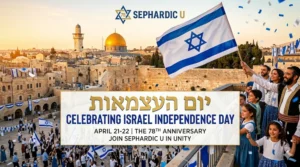
Sephardic U was recently launched to decode the cultural, spiritual and intellectual DNA of our great Sephardic heritage. Unlocking the