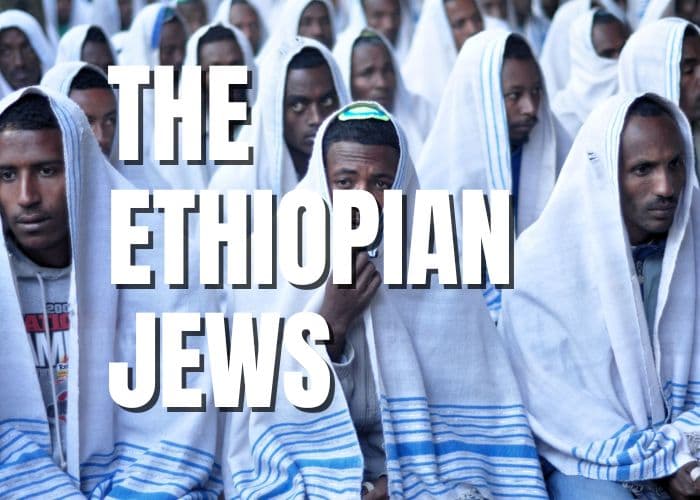
Madagascar has one of the world’s newest Jewish communities. Many Malagasy have long told stories of Israelite ancestors, but the community that now practices rabbinic Judaism took shape only in the 2010s, when a group of families near the capital, Antananarivo, left Messianic congregations, studied Torah on their own and, in 2016, converted under Orthodox rabbis. The community prays in the Sephardi rite. See also Ethiopian Jews and Bnei Anusim.
Traditions of Israelite descent
Claims that the Malagasy descend from ancient Israelites, sometimes called the “Malagasy secret,” go back centuries and take many forms: stories of King Solomon’s fleets, of exiles from Babylon, of the Lost Tribes. European writers from the 17th to the 20th century repeated and debated them. The French governor Étienne de Flacourt, writing about the 1640s, described a group near the island of Nosy Boraha, the Zafy Ibrahim (“descendants of Abraham”), who rested on Saturdays and used biblical names; scholars still debate who they were, and by the colonial period they identified as Arabs.
What historians and geneticists say
The Malagasy people descend mainly from Austronesian settlers from Southeast Asia and from Bantu-speaking peoples of East Africa, with later Arab and other contacts. No genetic study supports Israelite descent for the Malagasy as a whole; a 2013 study of the Antemoro people found some lineages of Middle Eastern origin, which may reflect Arab contact. The traditions matter to those who hold them, but they are not historical evidence.
Jews in colonial Madagascar
Under French rule a small number of European Jews lived on the island; Abraham Schrameck, a French Jewish politician, was governor in 1918–1919. The census of 1941, under Vichy rule, counted 26 Jews. Separately, the Nazi “Madagascar Plan” of 1940 proposed deporting Europe’s Jews to the island; it was never carried out.
A new community
- From Messianic congregations. Madagascar has many Messianic groups that mix Jewish practices with Christian belief. Around 2010, families in Ampanotokana, near Antananarivo, broke with them and began studying rabbinic Judaism. The government registered them as a religious congregation in 2012.
- Conversion, 2016. In May 2016, after years of study, 121 members, including children, converted before a beit din of three Orthodox rabbis and immersed in a river serving as the mikveh. Fourteen couples then married under the chuppah. The American organization Kulanu, which supports emerging Jewish communities, helped organize the conversions.
- Since then. A further group converted in 2018, and the community has formed a rabbinical council and opened a print shop. It follows a Sephardi liturgy, and an Algerian-born Orthodox rabbi from Belgium, Rabbi Moshe Yehouda, has served as its spiritual leader.
The community today
The community numbers a few hundred people and still has no permanent synagogue or school. In 2025 a community leader, Vincent Raharinjaka of Antananarivo, wrote to Sephardic U asking for help with books, above all Sephardi prayer books and volumes of the Babylonian and Jerusalem Talmud. To help, contact him at yehoudim.malagashiyim@gmail.com.
Sources and further reading
- “The Malagasy secret,” The Jerusalem Report (Jerusalem Post).
- “In remote Madagascar, a new community chooses to be Jewish,” JTA, June 5, 2016.
- “Judaism in Madagascar”, Wikipedia.
Revised October 2026 to correct errors in an earlier version of this page.