
Light, Joy, and Continuity: An Inside Look at the Moroccan Sephardic Wedding
A Moroccan Sephardic wedding is far more than a wedding celebration—it is a living expression of Jewish history, North African culture, music, family tradition, and deep communal joy.
As someone born in Morocco who has attended and experienced many Moroccan Jewish weddings throughout my life—both in the United States and within Sephardic communities abroad—I have seen how deeply these traditions continue to thrive across generations. To experience this living heritage in a modern diaspora setting, I recently attended my cousin’s Moroccan Sephardic wedding in Montreal, a city home to one of the most vibrant Moroccan Jewish communities outside Israel. For generations, Montreal’s Sephardic community has preserved the melodies, customs, foods, and traditions brought from North Africa, passing them from parents to children.
What unfolded over several unforgettable hours felt less like attending a modern reception and more like stepping into centuries of living Sephardic tradition. If you have never attended a Moroccan Jewish wedding before, here is an inside look at one of Judaism’s most vibrant celebrations.
What Is a Moroccan Sephardic Wedding?
Moroccan Sephardic weddings blend traditional Jewish marriage rituals with customs developed over centuries among Moroccan Jews whose roots trace back to North Africa and medieval Spain.
Historically, these weddings were not single-day events but multi-day celebrations involving extended family gatherings, ritual meals, music, and communal participation. In the modern diaspora, many of these traditions are condensed into a single wedding week while preserving their symbolic depth and emotional intensity. What remains unchanged is the central philosophy: a wedding is not a private affair—it is a communal milestone.
What Happens Before the Wedding?
A Moroccan Sephardic wedding begins long before the canopy is raised, initiating a series of gathering rituals for the families.
Mikveh Before the Wedding
In accordance with Jewish tradition, the bride immerses in the mikveh (ritual bath) before the wedding ceremony, symbolizing purification, renewal, and transition into married life. In many Moroccan Sephardic communities, this is a deeply emotional family milestone. Family members and close friends often accompany the bride, carrying trays of sweets to symbolize the “sweet” new beginnings ahead.
Pre-Wedding Shabbat Meals
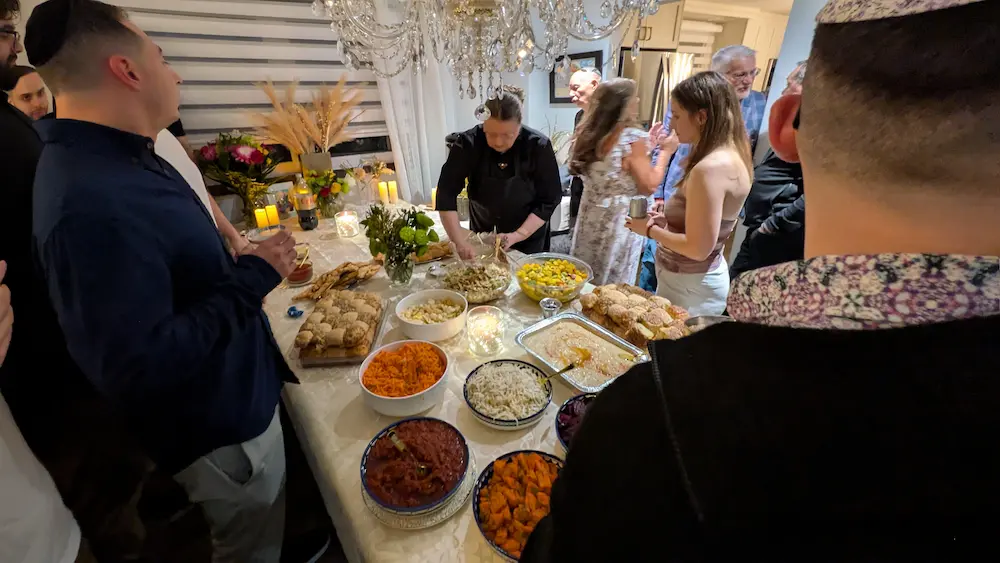
The Shabbat before the wedding is marked by large, festive family meals. Close relatives and friends gather around a table filled with singing, blessings, and traditional foods. This Shabbat becomes an extension of the wedding itself—a spiritual and communal preparation for the week ahead.
The Groom’s Brunch and Friendship Gathering
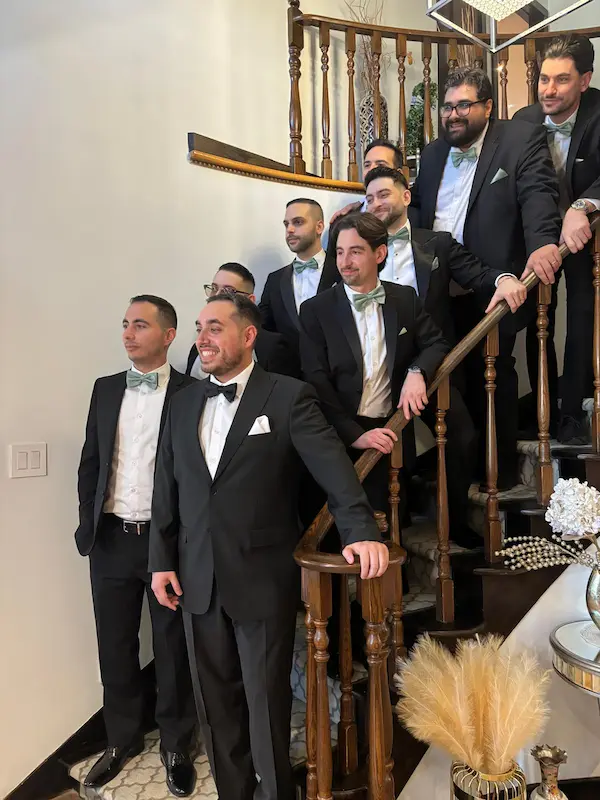
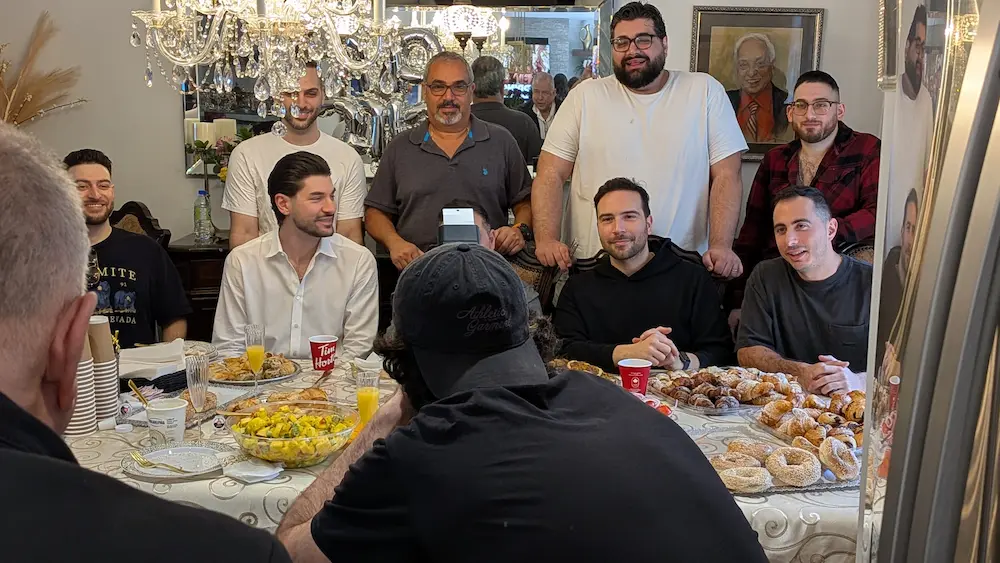
On the morning of the wedding, the groom is surrounded by his close friends—many of whom have known each other since childhood. In many families, this takes the form of a lively brunch hosted by the groom’s parents, filled with humor, storytelling, and deep bonds of brotherhood to ground the groom before the big night.
The Wedding Ceremony: The Spiritual Heart
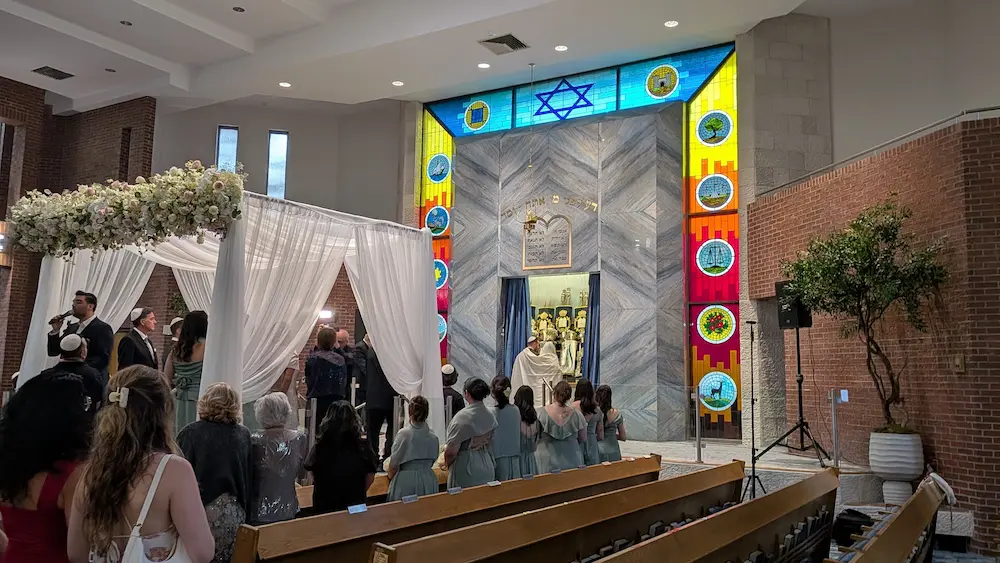
The spiritual heart of the evening begins beneath the huppah, the Jewish wedding canopy representing the home the couple will build together.
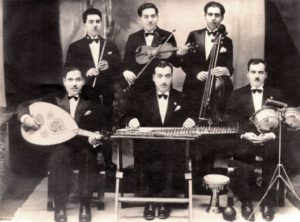
At my cousin’s wedding, before the bride entered, the hazzan (cantor) began singing powerful Sephardic melodies that immediately transformed the atmosphere. Throughout the evening, the music flowed beautifully between Hebrew, French, Spanish, Arabic, and traditional Moroccan styles. The hazzan utilized distinct Moroccan maqam (musical modes), masterfully preserving centuries-old North African Jewish musical heritage.
The processional unfolded with grandparents, family members, and friends, culminating in the bride’s entrance as the entire room rose to honor her.
The Ketubah and Sheva Berakhot
One of the most emotional moments followed: the singing of the ketubah (marriage contract). Rather than a simple reading, the ketubah was sung in a traditional Sephardic style, transforming a legal document into a transcendent spiritual experience. As the hazzan sang in Aramaic, the room fell completely silent.
Following the Sheva Berakhot—the Seven Blessings celebrating creation, joy, and the future of the couple—the groom shattered the glass underfoot. Instantly, the room erupted. Traditional Moroccan yooyoos (ululation cries) echoed across the ballroom as guests surged forward.
The Immediate Celebration: No Transition
At many weddings, guests gradually warm up to the dance floor. At a Moroccan Sephardic wedding, there is no transition.
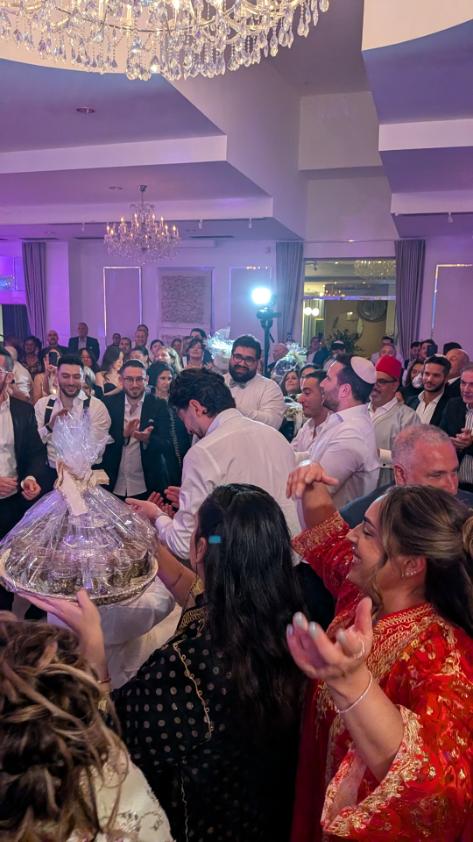
The moment the ceremony ended in Montreal, hundreds of guests flooded the dance floor. The music blended Israeli melodies, Arabic rhythms, Sephardic traditions, and modern instrumentation, featuring an electric violin and synthesizer. Within minutes, the bride and groom were lifted high on ornate chairs above the crowd while guests danced beneath them. The parents of both the bride and groom were also lifted, demonstrating visually that a marriage encompasses the union of entire families. The celebration became immediate, collective, and overwhelming in its energy.
The Henna Ceremony: Ancient Roots and Royalty
Several hours into the celebration, the atmosphere shifted dramatically. The music paused, guests turned toward the entrance, and haunting Arabic melodies began to play.
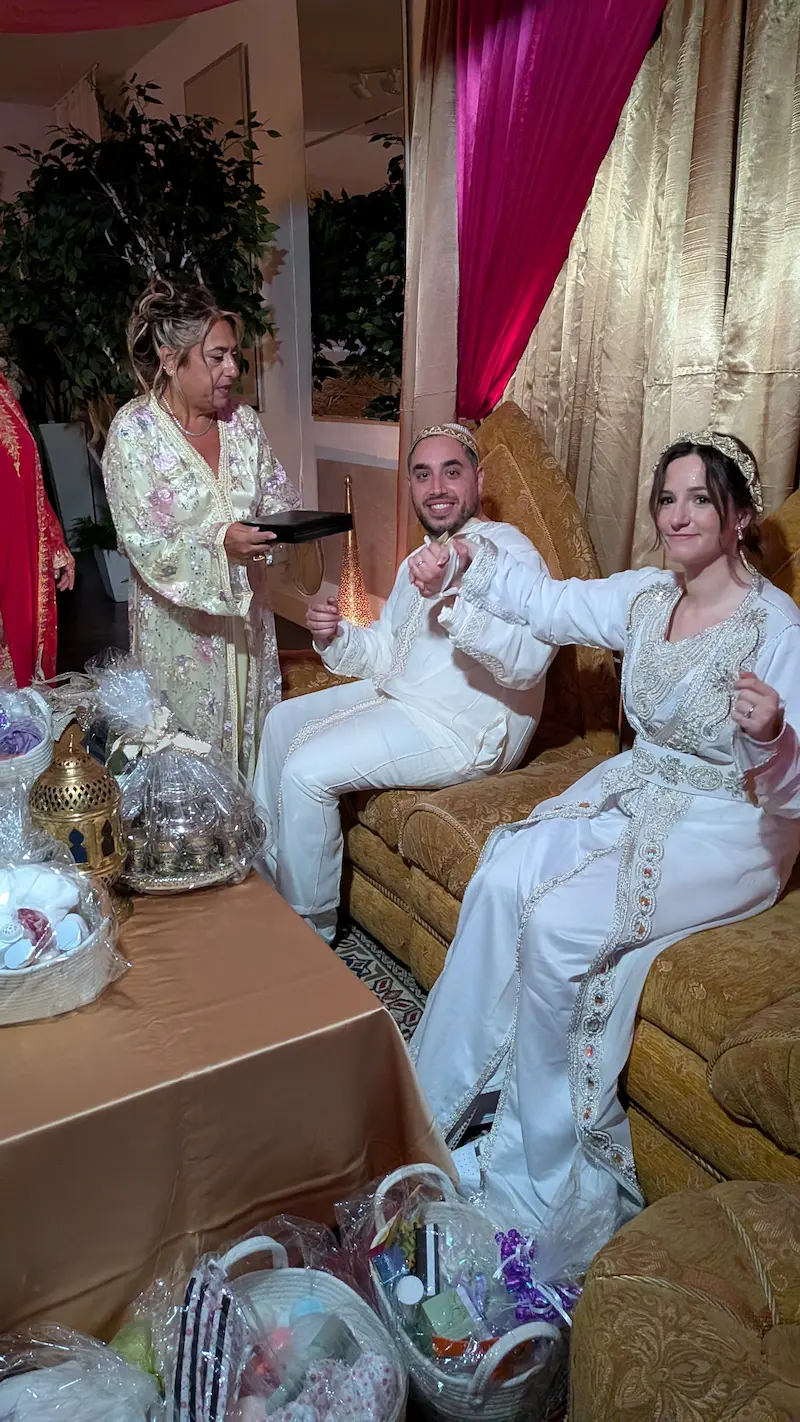
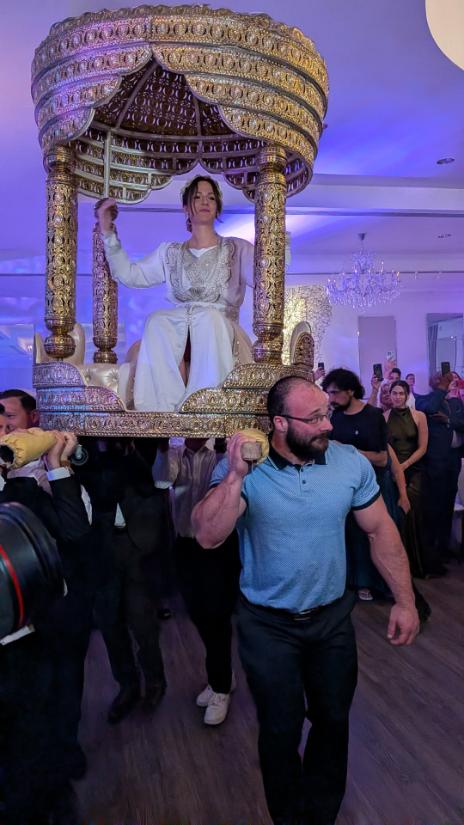
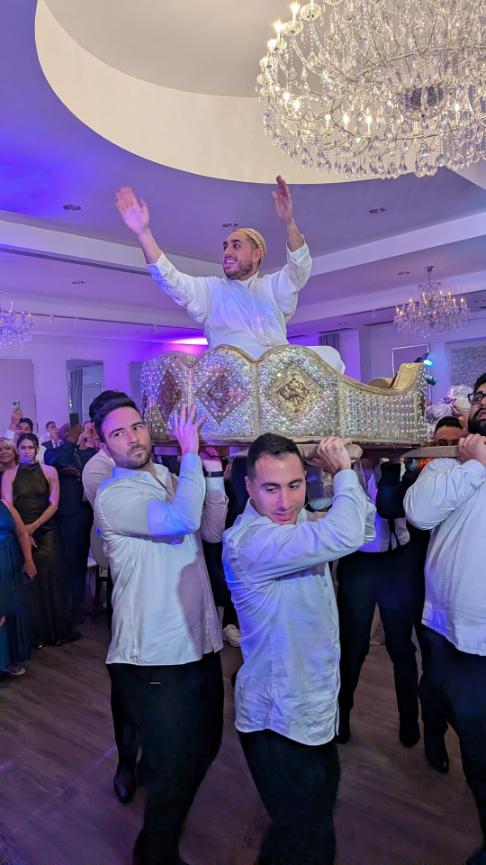
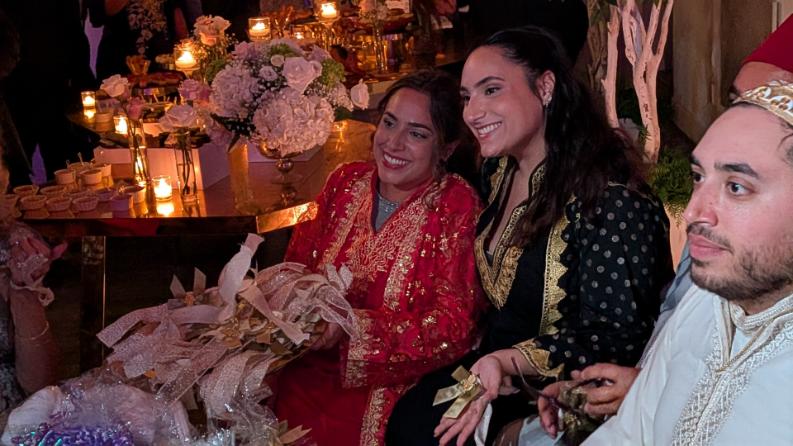
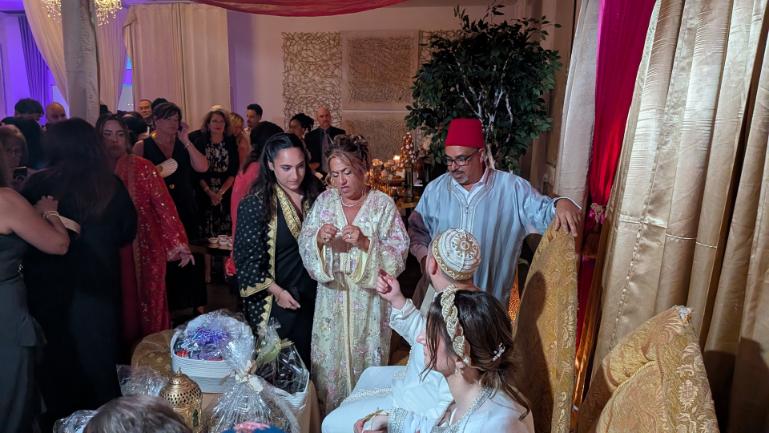
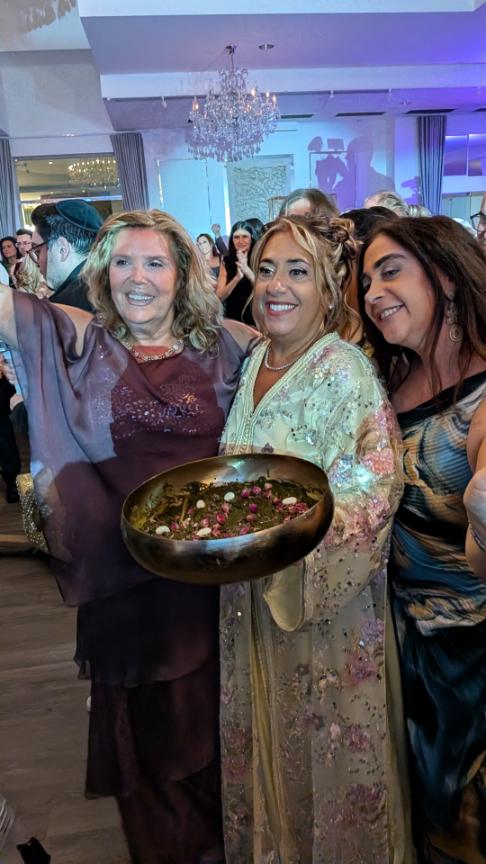
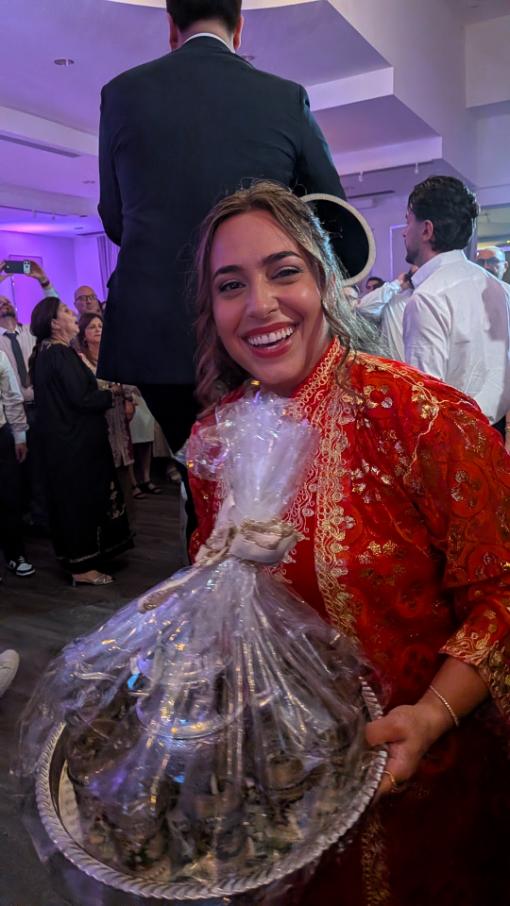
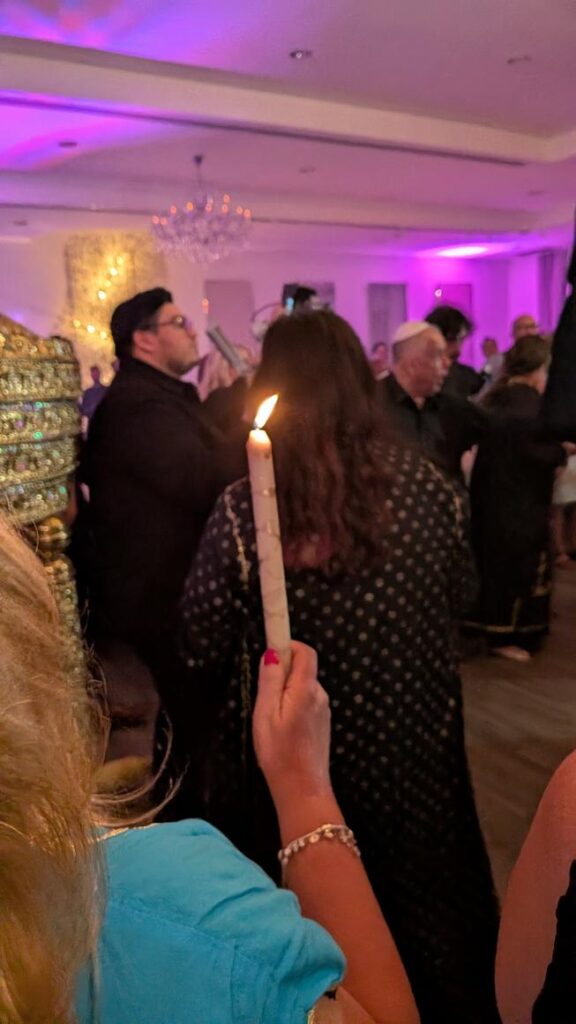
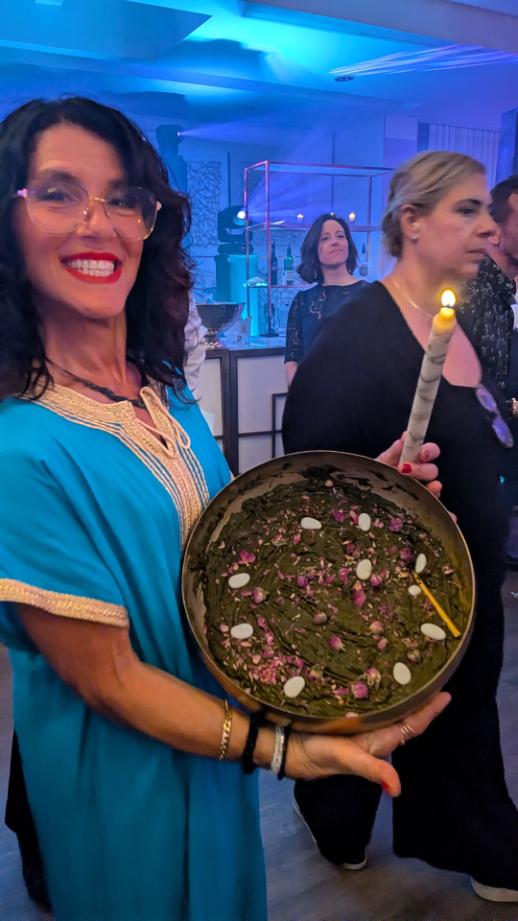
Then, the doors opened. The bride entered seated on an ornate golden chair carried above the crowd, followed by the groom in another. Both had changed into stunning, traditional Moroccan caftans. Behind them, family members carried candles, trays, and henna bowls while joyful yooyoos once again filled the room. The procession felt truly royal.
The Biblical Symbolism of Henna
Henna carries deep symbolic meaning in Moroccan and Sephardic Jewish culture, representing blessing (baraka), prosperity, fertility, happiness, and protection from the evil eye.
However, its symbolism reaches even further back. In Shir HaShirim (Song of Songs 1:14), the beloved is described as “a cluster of henna blossoms in the vineyards of En Gedi.” The Hebrew word kofer (כופר) is traditionally associated with the henna plant. Within this poetic imagery, henna becomes an ancient symbol of love, beauty, and devotion. Seen through this lens, the ceremony is a continuation of biblical symbolism, where love and blessing are expressed through the natural world.
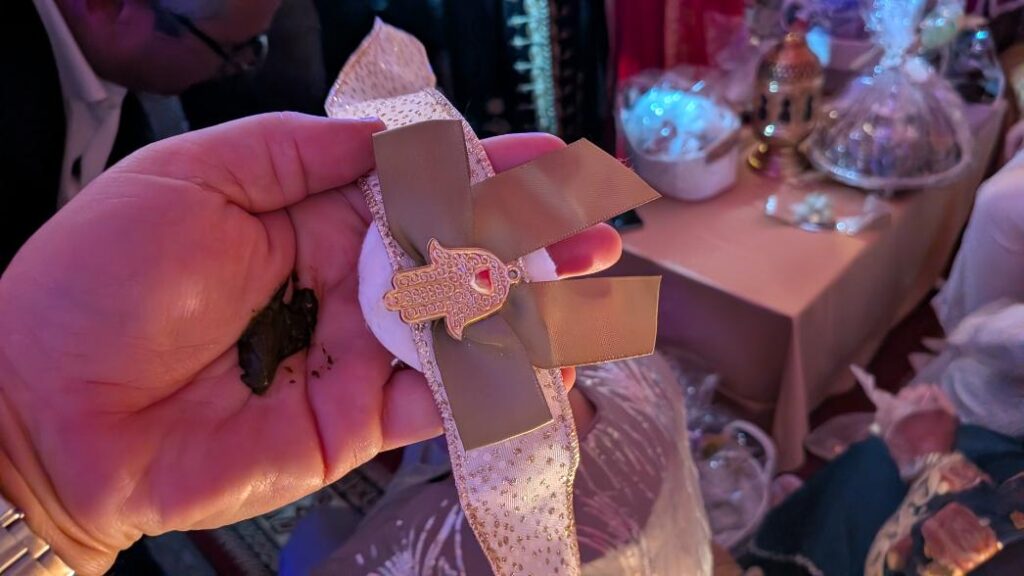
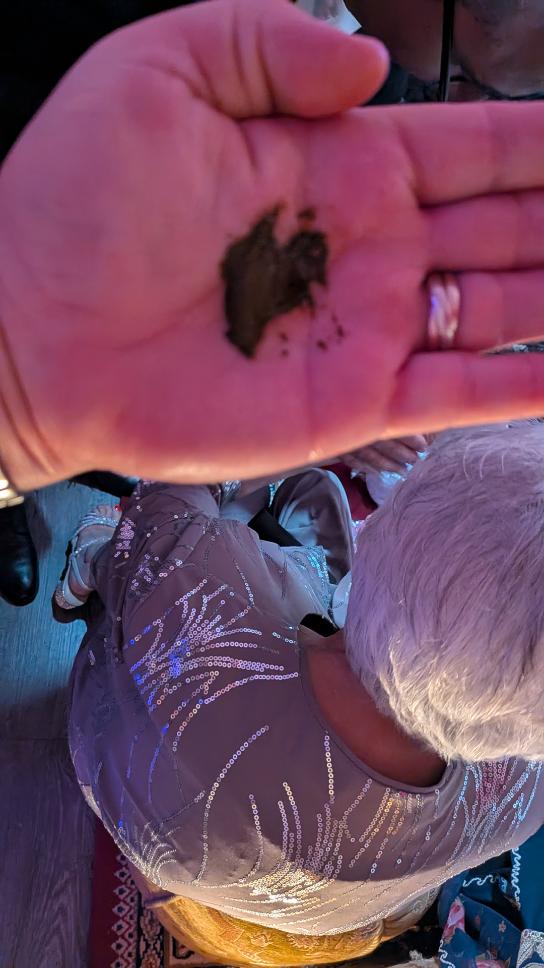
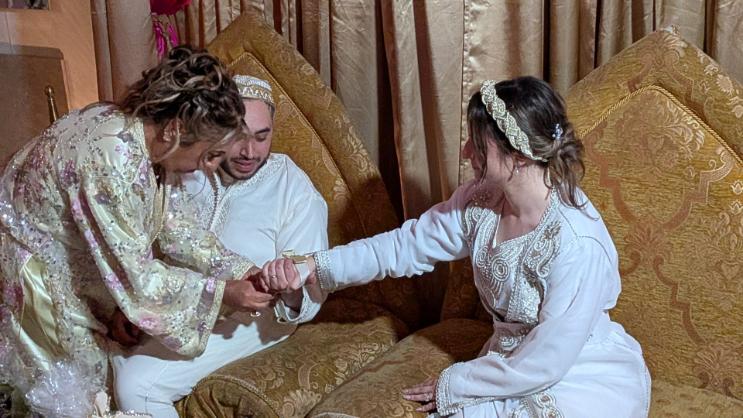
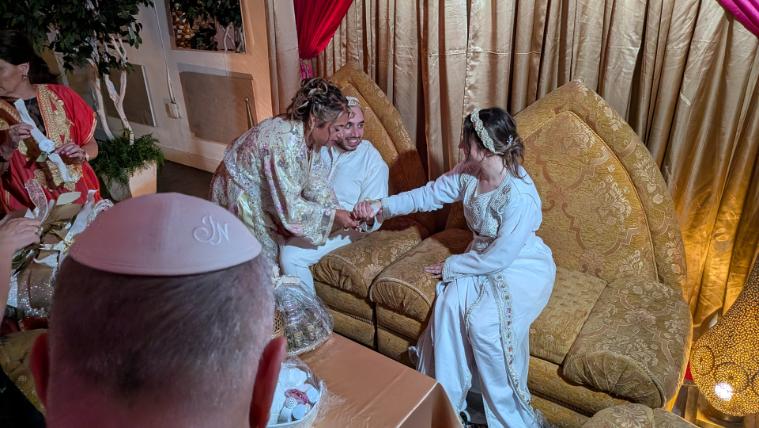
During the ceremony, the bride and groom sat beneath an elaborate velvet tent in ornate chairs, acting as the symbolic king and queen of their new household. Family members exchanged gifts and blessings, while guests received small markings of henna on their palms—transforming them from mere observers into active participants in the blessing.
A Sacred Abundance: The Food and Dessert
In Sephardic culture, hospitality is a sacred value. Food is not simply a meal; it is part of the blessing itself.
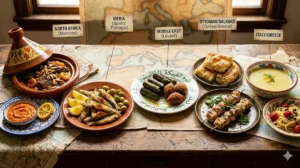
The evening began with a ninety-minute cocktail reception that felt more like a culinary festival than a traditional wedding cocktail hour. Guests moved between stations featuring grilled vegetables, smoked meats, barbecue, and Mediterranean specialties. Later came an extended, intentional flow of appetizers and plated dishes delivered throughout the evening, including poke bowls, tuna tacos, shawarma, and falafel. The pace was deliberately unhurried, allowing the celebration to unfold through the food.
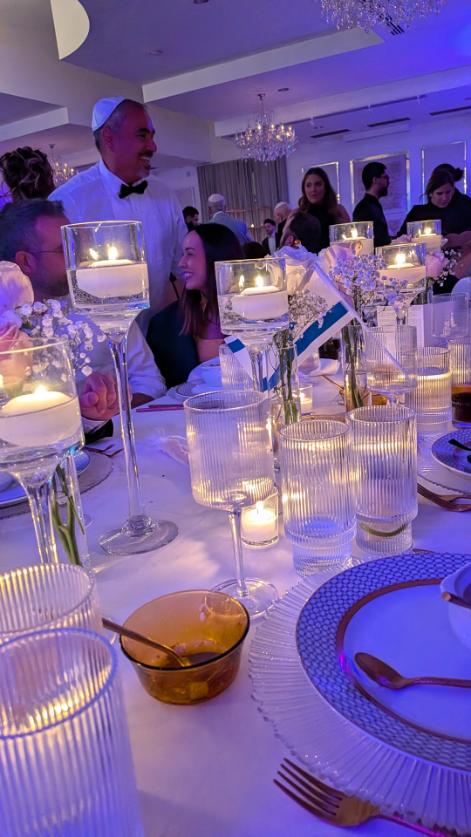
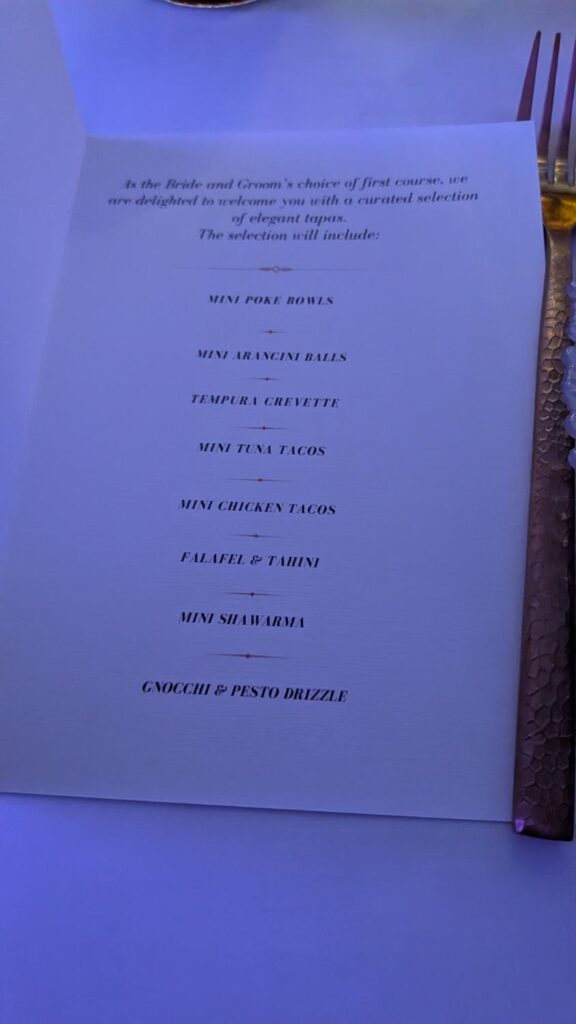
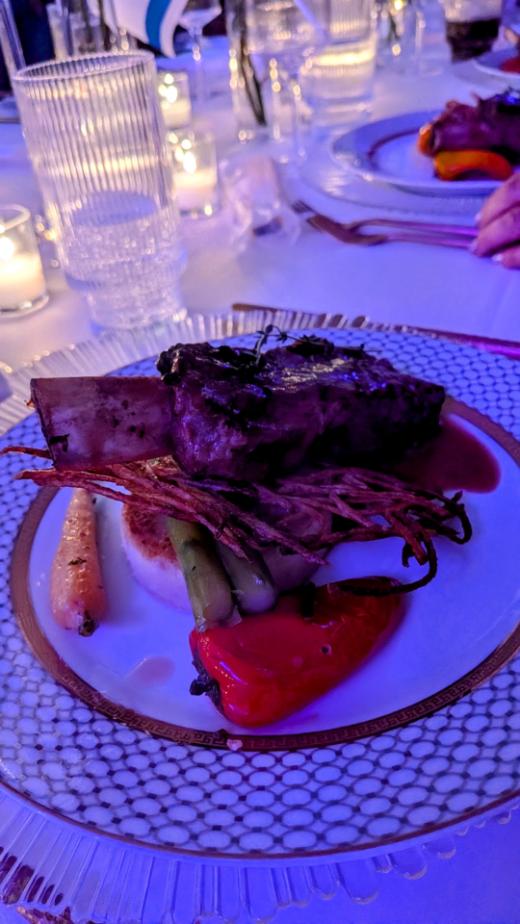
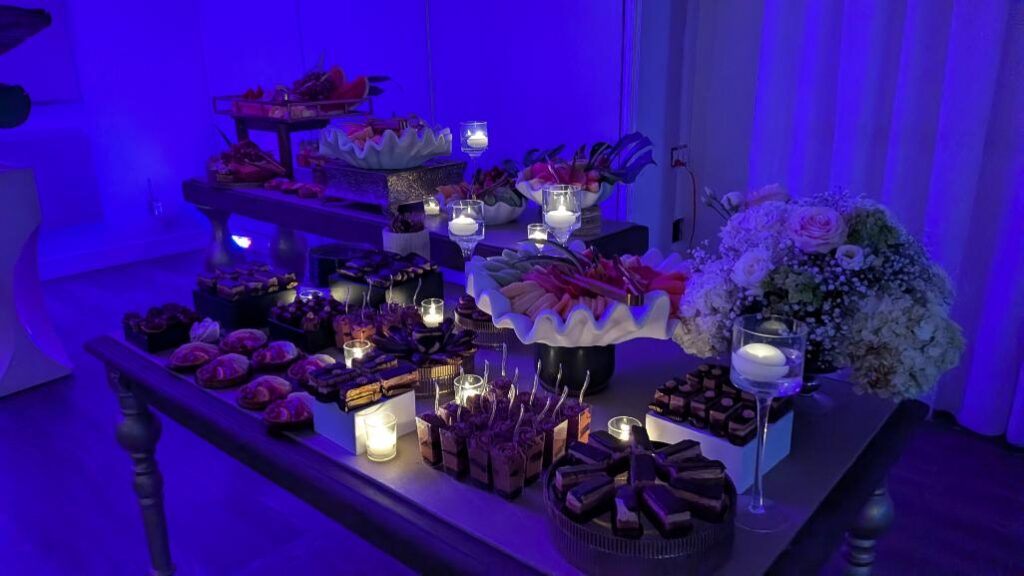
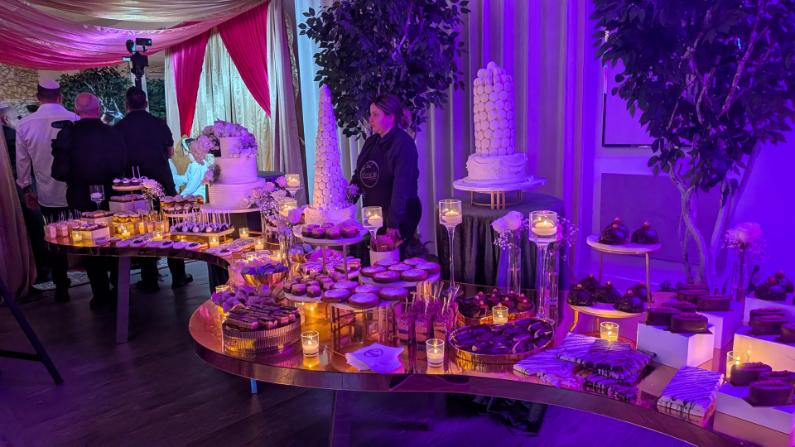
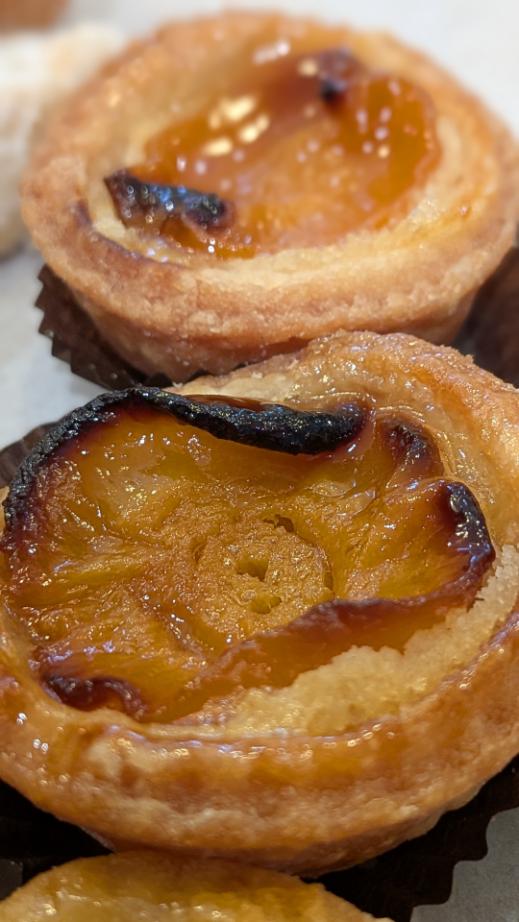
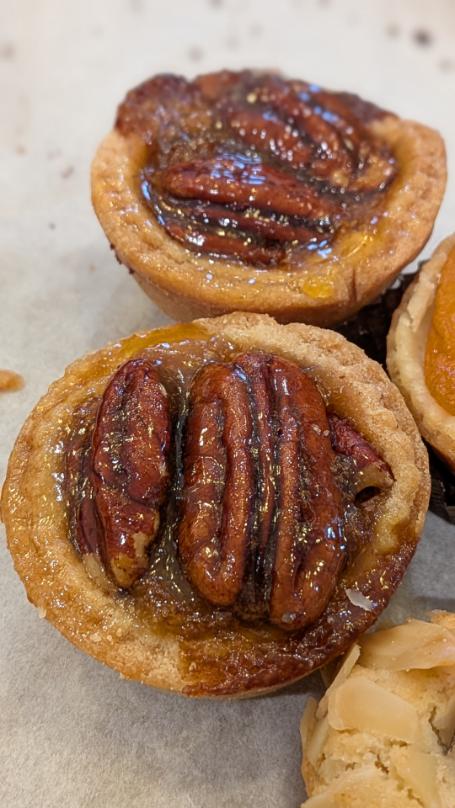
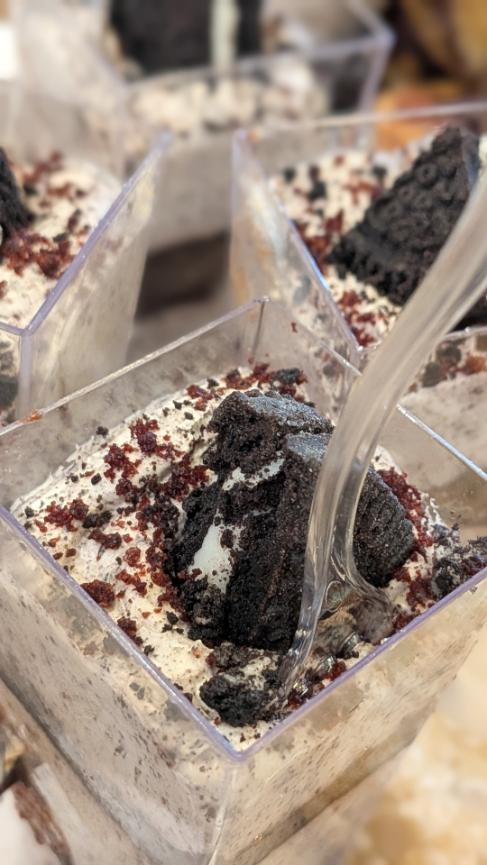
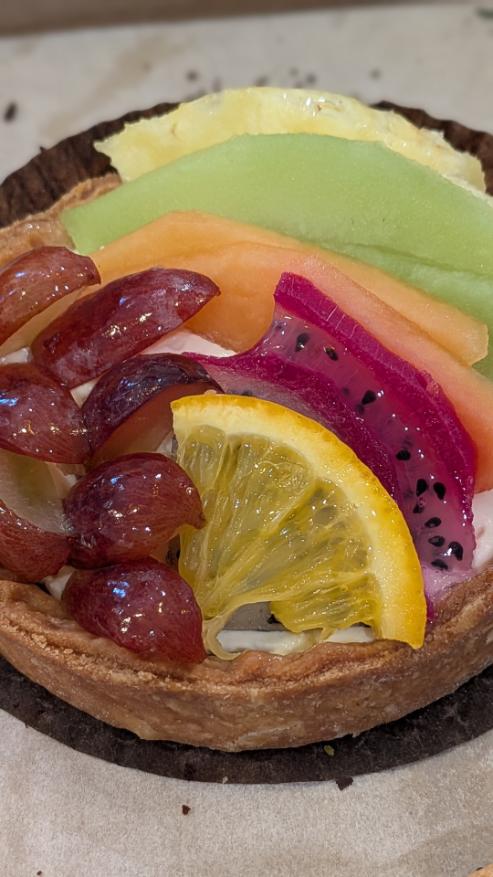
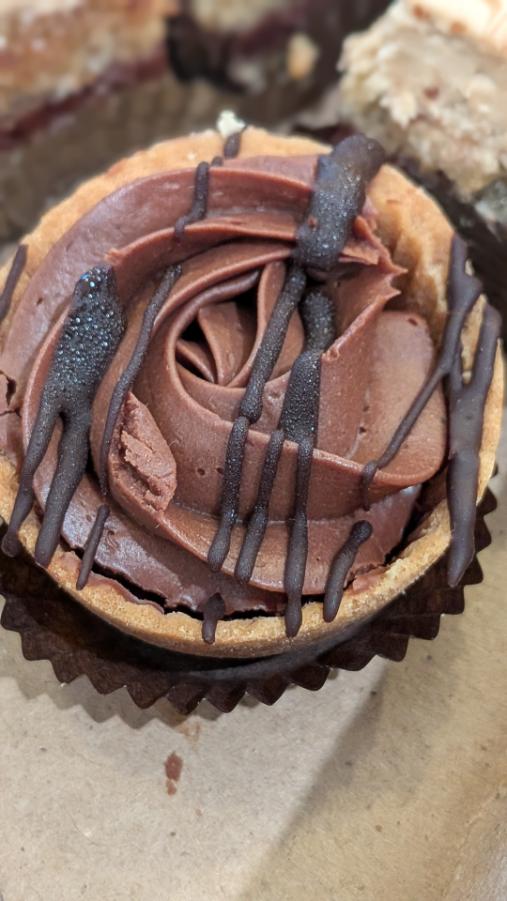
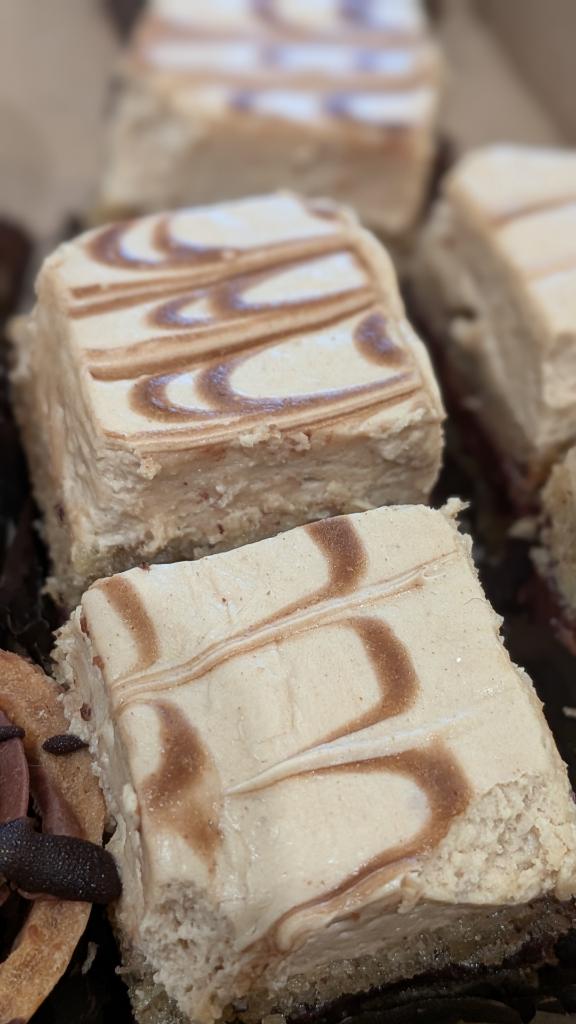
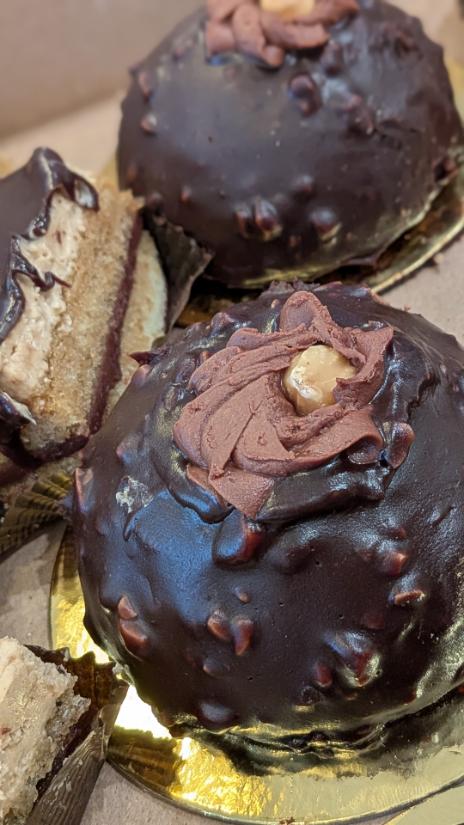
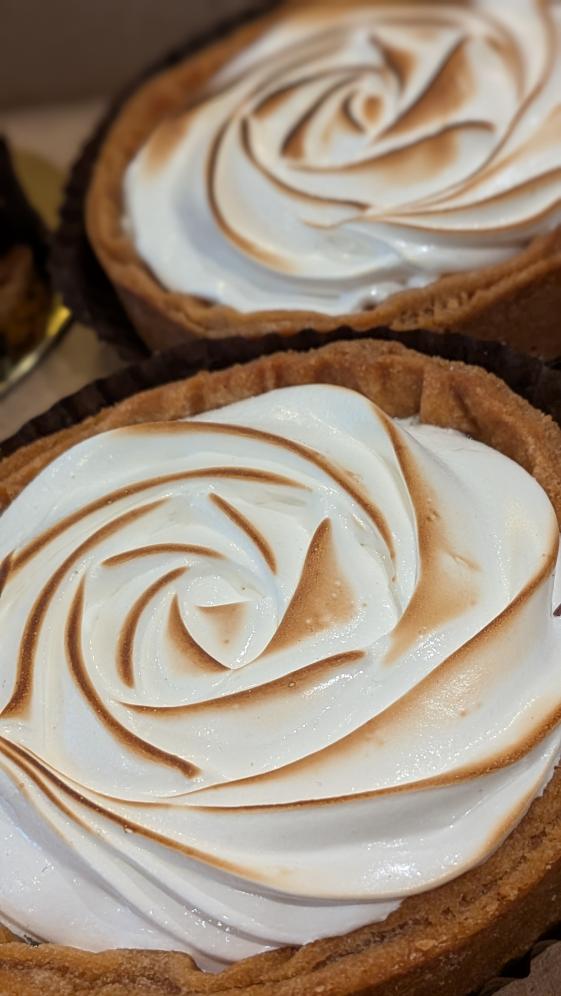
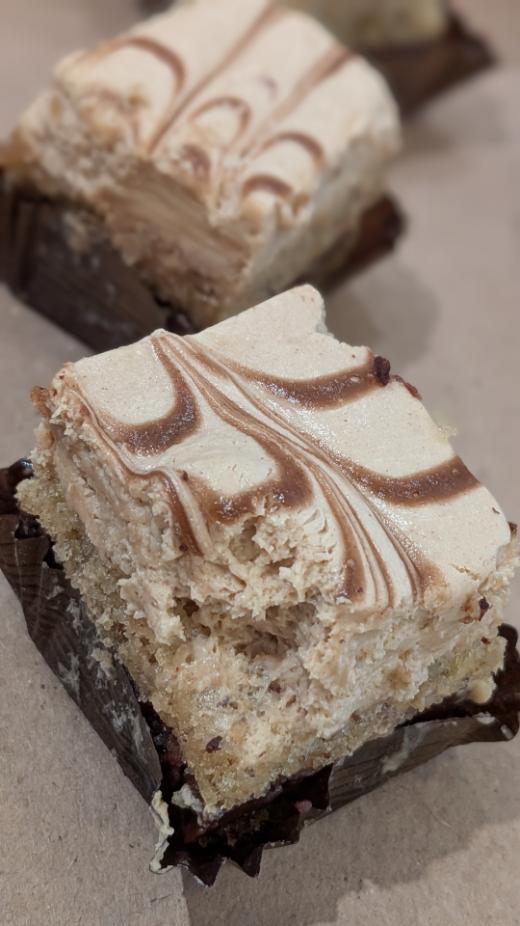
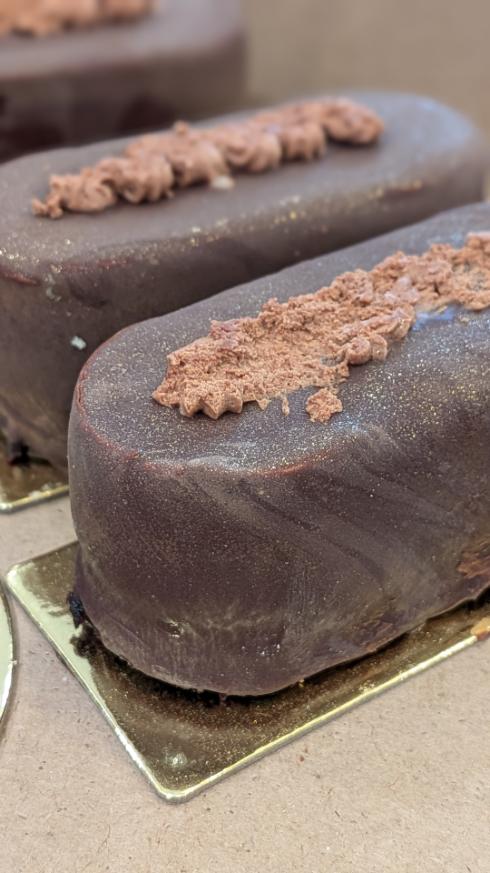
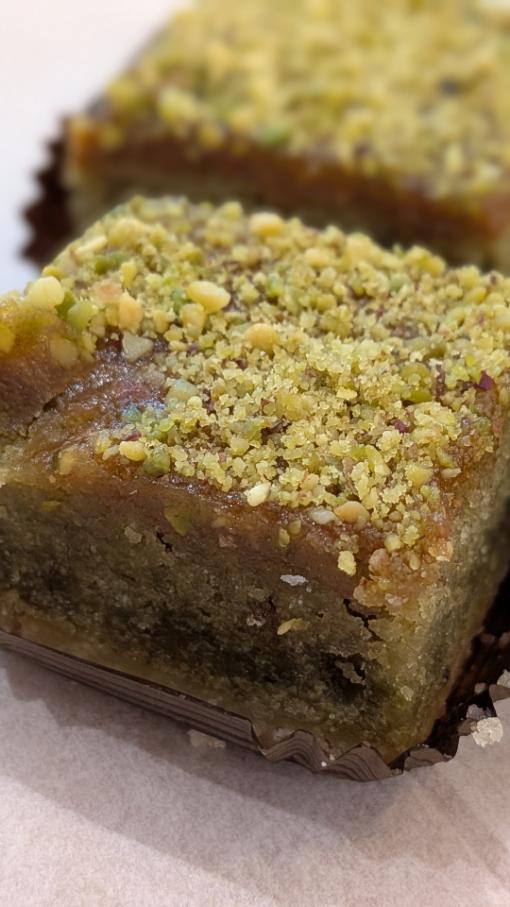
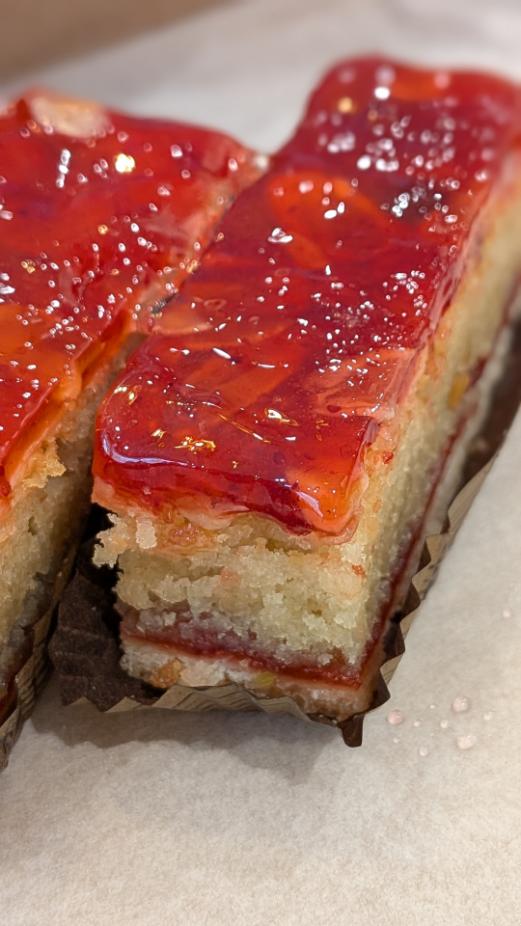
Just when it felt impossible for the evening to continue, partition walls opened to reveal an enormous dessert display. Rows of pastries, cakes, Moroccan sweets, marzipan, shebakia, and Moroccan cigars stretched across the room. Traditional mint tea and French press coffee accompanied the spread, allowing guests to converse late into the night.
One detail immediately stood out: mufleta—a beloved Moroccan Jewish sweet made of thin fried dough, heavily associated with celebrations and hospitality. Like much of the evening itself, the dessert experience reflected pure abundance and warmth.
What Happens After the Wedding?
The celebration continues long after the final wedding reception music fades.
- The Morning After (Sfenj and Sweet Beginnings): The morning after the wedding, the bride and groom are welcomed at the groom’s parents’ home for breakfast. Fresh Moroccan sfenj—warm, sugar-dusted fried dough—is served alongside coffee and tea to symbolize the beginning of a “sweet life” together.
- Sheva Berakhot (Seven Nights of Celebration): In the days following the wedding, the celebration continues through Sheva Berakhot. Each night, different family members or friends host the couple for a festive meal filled with blessings, singing, and communal joy.
Why Moroccan Sephardic Weddings Leave a Lasting Impression
What makes a Moroccan Sephardic wedding unforgettable is not simply the scale of the music or the food—it is the profound sense of continuity. Every custom—the maqam melodies, the ketubah, the henna ceremony, the caftans, the yooyoos, and the dancing—connects modern families directly with the generations that came before them.
These traditions do not feel preserved behind glass; they feel vibrantly, dynamically alive. At a time when many cultural customs risk fading into obscurity, Moroccan Sephardic weddings continue to preserve centuries of Jewish heritage in ways that are deeply emotional and profoundly communal.
FAQ – Frequently Asked Question regarding Moroccan Weddings
Historically, Moroccan Jewish weddings lasted several days and sometimes up to a full week. Today, many diaspora families combine multiple traditions into one large, condensed celebration spanning a wedding week.
Henna symbolizes blessing (baraka), prosperity, fertility, happiness, and protection against the evil eye.
Guests receive a small dab of henna on their palms as a way of sharing in the couple’s good fortune, joy, and communal blessings.
Many couples change out of their Western wedding attire and into heavily embroidered, traditional Moroccan caftans and tunics for the henna procession.
Lifting the bride and groom symbolizes their elevated status as royalty on their wedding day, allowing the community to dance around them and celebrate their joy collectively.
Editor’s Note: Moroccan Jewish wedding customs vary beautifully by family background, city of origin, and community traditions. Customs among families from Casablanca, Marrakesh, Tangier, Fez, and other regions may feature unique variations.