
A guide to the sacred rituals of a Jewish wedding under the chuppah.
The Jewish wedding ceremony is a sacred and joyous event that creates a new Jewish home and unites two souls in a spiritual bond. In Sephardic communities, the ceremony is steeped in ancient customs and beautiful traditions that have been passed down for generations. While the core elements are universal across Judaism, Sephardic weddings are enriched with unique prayers, melodies, and rituals.
The wedding day is considered a day of forgiveness and spiritual renewal, akin to Yom Kippur, for the bride and groom. Before the ceremony begins, the groom’s tallis (prayer shawl) is often held over his head in a symbolic gesture of protection, or he may receive a special blessing from his father.
A vital pre-ceremony ritual is the signing of the Ketubah, the Jewish marriage contract. This is a private and solemn moment where the groom and witnesses sign the legally-binding document, often in a separate room from the main ceremony. The signing of the Ketubah is a serious act that formalizes the husband’s obligations to his wife.
The ceremony takes place under the Chuppah (wedding canopy), a symbol of the new home the couple will build together. The procession to the chuppah is a significant moment. In Sephardic tradition, the groom is led to the canopy, followed by the bride, who is often veiled and surrounded by her family. The parents of the couple escort them to the chuppah to demonstrate their support and blessing for the new family.
Under the canopy, the groom covers the bride’s face with her veil, an act known as Badeken, which symbolizes his commitment to clothe and protect her. This is a deeply emotional moment.
The main part of the ceremony is the Kiddushin (sanctification or betrothal). This is a two-part process that makes the marriage legally binding under Jewish law.
Part 1: Ring Ceremony. The groom recites a blessing and places a simple gold ring on the bride’s finger, saying “With this ring, you are consecrated to me as my wife according to the law of Moses and Israel.”
Part 2: Ketubah Reading. Following the ring ceremony, the Ketubah is read aloud by the rabbi. This is a public declaration of the groom’s obligations and the couple’s covenant. The artistic beauty of the Ketubah is often on display for all to see.
The core of the ceremony’s joy and spiritual depth comes from the Sheva Brachot, seven blessings recited by the rabbi or honored guests over a cup of wine. These blessings praise God for the creation of the world, humanity, and the joy of a wedding.
After the seven blessings, the bride and groom each take a sip of the wine. Following this, the groom concludes the ceremony by stomping on a glass wrapped in a cloth, a solemn moment that symbolizes the destruction of the Temple in Jerusalem and reminds the couple of both joy and sorrow in life.
While a prominent custom in many Ashkenazi ceremonies is for the bride to circle the groom seven times under the chuppah, this is not a traditional Sephardic practice. In Sephardic communities, the focus is on the direct, uninhibited union of the couple. The lack of this ritual highlights a distinct cultural difference and is part of the unique beauty of Sephardic tradition.
While traditionally held a week before the wedding, many Sephardic communities now combine the vibrant Henna ceremony with the wedding reception. The couple may change into traditional caftans after the wedding ceremony and receive the blessings of the henna paste, allowing out-of-town guests to participate in both events without a separate trip.
After the ceremony concludes, the couple is immediately led to a private room for a moment of Yichud (seclusion). This is the first time they are alone as husband and wife. It is a brief moment for them to reflect on their new status and share a private meal together before joining their guests.
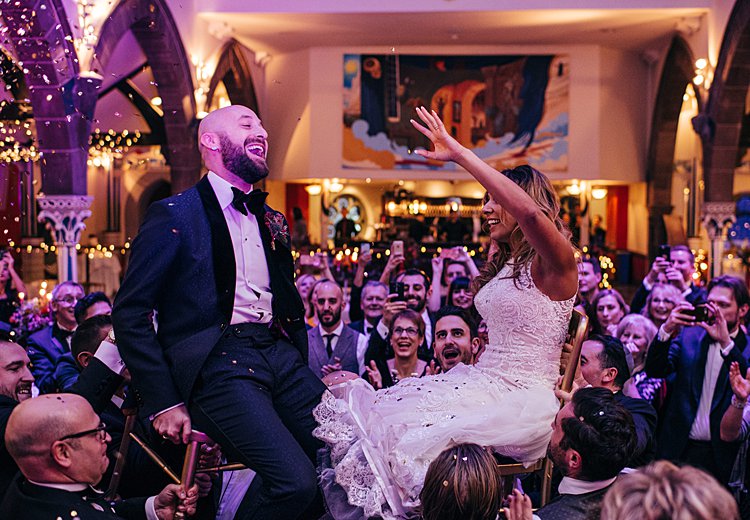
The day culminates in a Seudat Mitzvah, a festive wedding meal filled with music, dancing, and heartfelt blessings. The joy is shared by the entire community, which celebrates the new couple’s union and the beginning of their journey.