Discover your Sephardic genealogy and family history.
Sephardic genealogy connects families back to the Iberian Peninsula and follows their journeys across the globe. Tracing your Sephardic Jewish ancestry preserves culture, faith, and identity for future generations.
Sephardic genealogy focuses on descendants of Jews expelled from Spain (1492) and Portugal (1497). It differs from Ashkenazi genealogy in:
Surnames: Many date to medieval Iberia, e.g., Toledano, Cordovero.
Migration: North Africa, Ottoman Empire, Balkans, Americas.
Crypto-Jewish Histories: Families converted outwardly but maintained Jewish practices secretly.
Surnames are key to linking modern families with historical records.
| Category | Examples | Clues |
|---|---|---|
| Geographical | Catalan, Saragossi, Castro | Iberian origin |
| Occupational/Descriptive | Cohen, Abravanel, Chayot | Profession or lineage |
| Converted Names | Rodrigues, Mendes, Nunez | Crypto-Jewish ancestry |
The 1492 Spanish and 1497 Portuguese expulsions led to widespread settlements:
North Africa (Maghreb): Morocco, Algeria, Tunisia
Ottoman Empire: Turkey, Greece, Balkans, Middle East
Western Europe & Americas: Amsterdam, London, Curacao, New York
DNA testing complements archival research:
Lineage Verification: Confirms Iberian or Middle Eastern markers.
Relative Matching: Connect with distant family.
Recommended platforms: AncestryDNA, 23andMe, MyHeritage DNA, FamilyTreeDNA
Article links:
[Using DNA in Sephardic Genealogy] – methodology and best practices
Tracing Sephardic ancestry requires both patience and the right resources. From centuries-old synagogue records to modern DNA testing, a wide variety of tools can help uncover hidden branches of your family tree. Below you’ll find trusted archives, online databases, and step-by-step guides that make the journey more manageable.
SephardicGen – Specialized Sephardic family name indexes and regional databases.
JewishGen (Sephardic Database Project) – Searchable family trees, burial records, and immigration lists.
FamilySearch – Millions of digitized documents, including birth, marriage, and death records.
Ancestry & MyHeritage – Large databases with global coverage, plus DNA testing options.
For more detailed guidance, see Exploring Sephardic Genealogy: Navigating Resources for Ancestral Discovery.
Synagogue and Community Records – Birth, marriage, and burial registers.
Spanish & Portuguese Notarial Records – Pre-expulsion documents, often in old Spanish or Ladino.
National Libraries & Archives – Collections in North Africa, the Balkans, and the Middle East.
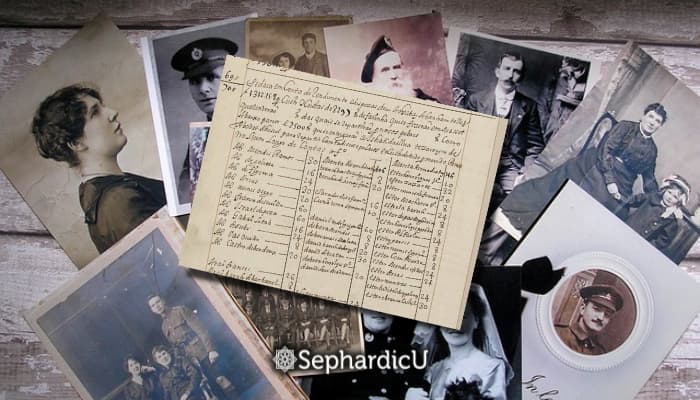
Private Family Archives – Photographs, ketubot, and letters preserved across generations.
Tracing Sephardic ancestry is a rewarding journey, but it comes with unique challenges. Historical migrations, periods of persecution, and language differences often result in fragmented or hidden records. Understanding these obstacles allows you to strategize and make steady progress.
Language Barriers: Records may appear in Hebrew, Ladino, Arabic, Ottoman Turkish, Spanish, or Portuguese.
Lost Archives: Expulsions, wars, and forced conversions destroyed or concealed entire collections.
Surname Variations: Names often shifted across borders and languages.
Hidden Histories: Families of crypto-Jews (Bnei Anusim) may have sparse or disguised documentation.
Learn archive terminology
Join online genealogy communities
Use translation/transcription tools
Documenting your family story not only strengthens your own connection to the past but contributes to the preservation of Sephardic heritage for the community. Sephardic U provides a platform to share, record, and celebrate these stories.
Record and share oral histories with your family or community.
Digitize documents, photographs, and ketubot for long-term preservation.
Participate in community projects and collaborate with heritage organizations.
Teach traditions and stories to younger generations.
Sephardic U offers a rich library of articles to guide your genealogical journey. From historical context to surname studies and practical guides, each article helps connect you with your ancestral roots.
Explore the global story of dispersion and survival.
Discover how surnames reveal family origins.
Learn practical tools and resources.
Understand the deeper meaning of this work.
Ways to safeguard Sephardic culture and history.
Connect with roots and contribute to legacy.
Explore diaspora impacts on family narratives.
Explore the intricate tapestry of Sephardic heritage.
Full collection of insights, tips, and stories.
Proof often involves tracing family records, surnames, and oral histories. Some countries, like Portugal and Spain, offer citizenship to descendants of Sephardic Jews, requiring documentation such as birth certificates, family trees, and historical records.
Jewish genealogy can be challenging due to:
Late adoption of surnames
Name changes over time
Lack of traditional records
Endogamy (intermarriage within the community)
These factors can complicate tracing lineage.
Begin by collecting family documents, interviewing relatives, and identifying ancestral towns. Utilize online databases and archives, such as JewishGen and SephardicGen, to find relevant records.
Some surnames have Jewish origins, especially those of Hebrew or Spanish origin. However, many names are shared across cultures, so a surname alone may not confirm Jewish ancestry.
Records can be found in national and local archives, synagogue records, and online databases. Countries like Turkey, Greece, and Morocco have significant Sephardic archives. JewishGen and SephardicGen are valuable online resources.
DNA testing can provide insights into ancestral origins and connect with distant relatives. However, it should be used in conjunction with traditional genealogical research for a comprehensive understanding.
Document your findings, digitize photographs and records, and share them with family members and community groups. Consider submitting your story to platforms like Sephardic U to contribute to the collective heritage.
