Without a blessing
Many Sephardic synagogues say the full Hallel without its blessing, following the Chief Rabbinate of Israel.

Holidays5 Iyar · Israel Independence Day
Thanksgiving for the State of Israel: Hallel, a festive meal, and the long Sephardic presence in the Land.

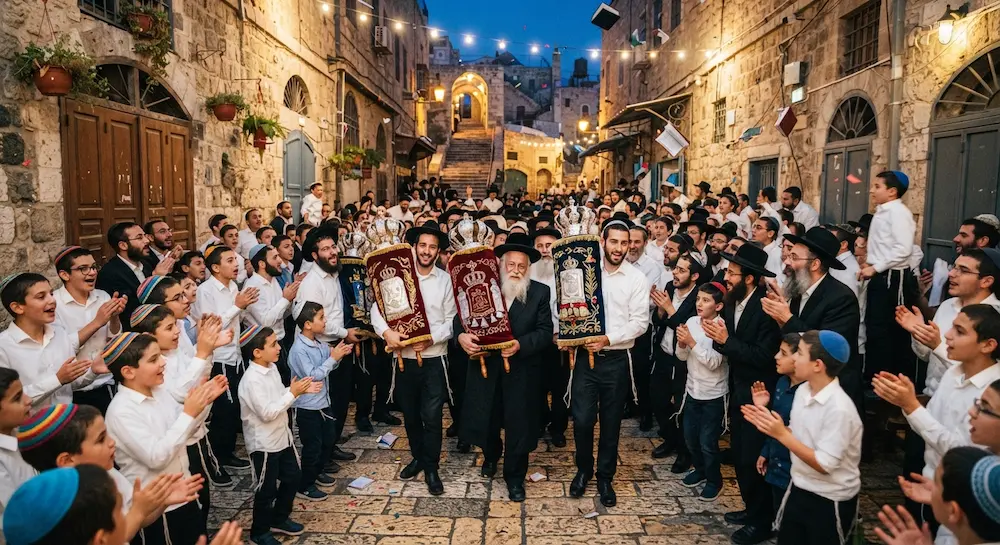
On the fifth of Iyar 5708, 14 May 1948, the State of Israel was declared. Yom Ha'atzmaut follows Yom HaZikaron, the day of remembrance for fallen soldiers and victims of terror, moving from mourning to thanksgiving.
Sephardic Jews never left the Land: the communities of Jerusalem, Hebron, Safed and Tiberias kept Jewish life there for centuries, and after 1948 nearly a million Jews from North Africa and the Middle East came home.
Sephardic rabbis differed on how to mark the day in prayer, but gratitude for the ingathering of the exiles is shared by all.
In the synagogue
Many Sephardic synagogues say the full Hallel without its blessing, following the Chief Rabbinate of Israel.
Rabbi Shalom Messas, Chief Sephardic Rabbi of Jerusalem, and other rabbis of Moroccan origin ruled that Hallel is said with its blessing, and many Moroccan congregations follow them.
Hakham Ovadia Yosef ruled that one may say Hallel without a blessing, after the prayers.
Hakham Ovadia YosefMost Sephardic congregations omit Tahanun on the day.
Follow the custom of your synagogue and rabbi.
At home and outdoors
Families gather, often outdoors, for a festive meal, with words of Torah and thanks.
Many recite psalms of thanksgiving and sing pizmonim and Israeli songs, often to Sephardic melodies.
The day before is a day of memorial, with Tehillim and Hashkavah for the fallen.
TehillimKeep learning
Questions
Most Sephardic synagogues say Hallel, many without a blessing; many Moroccan congregations say it with a blessing, following Rabbi Shalom Messas. Follow your community.
Most Sephardic congregations omit Tahanun on the day.
To avoid any violation of Shabbat in the preparations or the celebrations, the day is moved earlier or later when 5 Iyar falls near Shabbat.