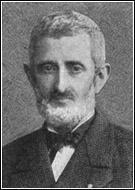
Venetian preacher whose Binah LeIttim, sermons for the Shabbatot and festivals, was beloved across the Sephardi and Mizrahi world. He also served the community of Pisa and wrote on the laws of terumah.
Who was Rabbi Azaria Figo?
Rabbi Azaria Figo was a preacher and rabbi of seventeenth-century Italy, and the author of Binah LeIttim, “Understanding of the Times,” a collection of sermons for the Shabbatot and festivals that became one of the most beloved books of Jewish preaching across the Sephardi and Mizrahi world. For centuries, rabbis in Salonica, Baghdad, Morocco and Jerusalem built their own sermons on his.
Venice
Azaria Figo was born in Venice in 1579, to a Sephardic family. Venice in his time was one of the great centers of Jewish life and of Hebrew printing, and its ghetto was home to communities of Italian, Ashkenazi, Levantine and Western Sephardi Jews. Figo studied Torah, and as a young man also the secular sciences and literature of the Italian Renaissance. Later in life he wrote that he regretted the time he had given to them rather than to Torah.
Pisa
At about the age of twenty-eight he became rabbi of the Sephardic community of Pisa, in Tuscany, a community of former conversos from Spain and Portugal who had returned to Judaism. There he wrote Giddulei Terumah, a commentary on Sefer HaTerumot, a medieval Spanish work of civil law by Rabbi Shmuel HaSardi.
Binah LeIttim
In 1627 he returned to Venice to serve as preacher of the Sephardic community, and he preached there for twenty years. Binah LeIttim gathers his sermons for the festivals, the fast days and special Shabbatot. Each takes a verse or a saying of the sages and develops it with logic, eloquence and moral force, calling the listener to repentance, faith and a life of Torah.
The book was printed in Venice in 1648 and many times since. It was especially loved in the Ottoman Empire, North Africa and the Middle East, where it was among the books that every preacher studied.
Death
Rabbi Azaria Figo died in 1647 in Rovigo, near Venice, shortly before his sermons were published.
Rabbi Figo’s legacy for Sephardim
The sermon, the derasha, has always been at the center of Sephardic religious life, the way the Torah is taught to the whole community. Rabbi Azaria Figo was one of its masters, and through his book his voice reached far beyond Venice, to synagogues across the Sephardic world.
Sources
- "Figo (Picho), Azariah," Encyclopaedia Judaica, 2nd ed. (2007)
- Marc Saperstein, Jewish Preaching, 1200–1800: An Anthology (New Haven: Yale University Press, 1989)