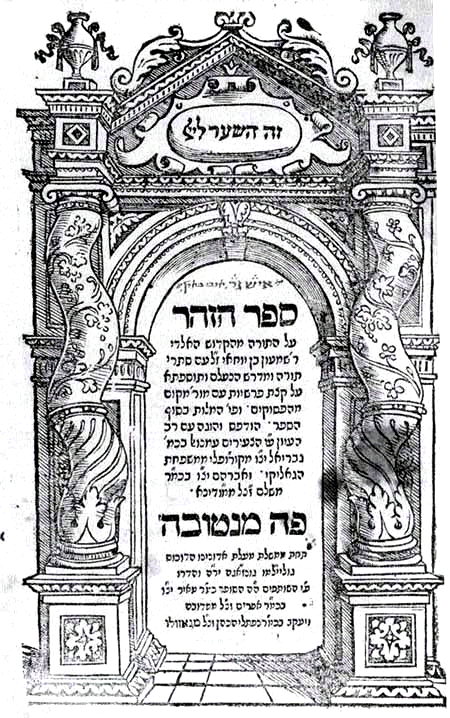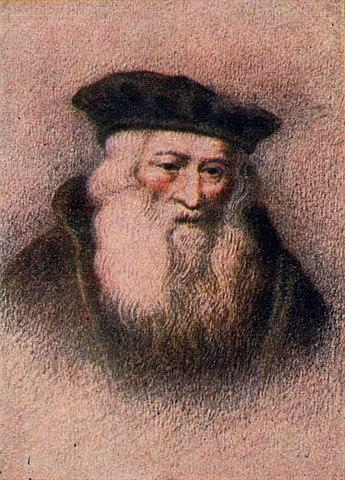
Son of the Rosh, he organized all practical law into four divisions in the Arba'ah Turim. Maran built his Beit Yosef as a commentary on the Tur, so its structure survives in every Shulhan Arukh printed since.
Who was the Baal HaTurim?
Rabbi Yaakov ben Asher, known as the Baal HaTurim, “the master of the Turim,” wrote the Arba’ah Turim, “The Four Rows,” the great code that organized all of practical Jewish law into four parts. When Maran Rabbi Yosef Karo set out to write his monumental Beit Yosef, he wrote it as a commentary on the Tur, and so the four parts of the Tur became the four parts of the Shulhan Arukh, which every Sephardic and Ashkenazic community follows.
From Germany to Toledo
Yaakov ben Asher was born around 1269 in Germany, probably in Cologne, the son of the great sage Rabbenu Asher ben Yehiel, the Rosh. When the Rosh fled Germany, Yaakov came with him, and around 1305 the family settled in Toledo, where the Rosh became chief rabbi. Rabbi Yaakov studied with his father, and he spent the rest of his life in Toledo. He refused public office and, according to his own writings, lived in poverty, devoted to study.
The Arba’ah Turim
The Tur’s name comes from the four rows of precious stones on the breastplate of the High Priest. Its four parts are Orah Hayyim, on daily life, prayer, Shabbat and the festivals; Yoreh De’ah, on dietary laws, mourning and other ritual matters; Even HaEzer, on marriage and divorce; and Hoshen Mishpat, on civil law and the courts.
Unlike the Rambam’s Mishneh Torah, the Tur deals only with laws that apply in the present day, and it brings the opinions of the different authorities, Sephardic and Ashkenazic alike, before giving the halakha, often following his father the Rosh. It was clear, practical and complete, and it quickly became the standard code of Jewish law. It was one of the first Hebrew books ever printed, in Piove di Sacco in Italy, in 1475.
From the Tur to the Shulhan Arukh
In the sixteenth century, Maran Rabbi Yosef Karo wrote his Beit Yosef on the Tur, tracing every law to its source and ruling between the authorities. He then condensed his conclusions into the Shulhan Arukh, following the Tur’s four parts and its order. To this day, halakhic works cite laws by their section of the Tur and the Shulhan Arukh.
The Baal HaTurim on the Torah
Rabbi Yaakov also wrote a commentary on the Torah. Its short introductions to each section, full of gematria, the numerical values of words, and other wordplay, are printed in most editions of the Humash under the name Baal HaTurim. He also wrote a longer commentary on the Torah drawing on the Ramban and other commentators.
Death
The Baal HaTurim died around 1343, traditionally in Toledo.
The Baal HaTurim’s legacy for Sephardim
The Baal HaTurim gave Jewish law the shape it still has. Every time a Sephardi rabbi opens the Shulhan Arukh or the Beit Yosef, he is working within the four rows laid out in Toledo more than six hundred years ago.

Teachers and students
Sources
- "Jacob ben Asher," Encyclopaedia Judaica, 2nd ed. (2007)
- Menachem Elon, Jewish Law: History, Sources, Principles (Philadelphia: Jewish Publication Society, 1994), vol. 3