
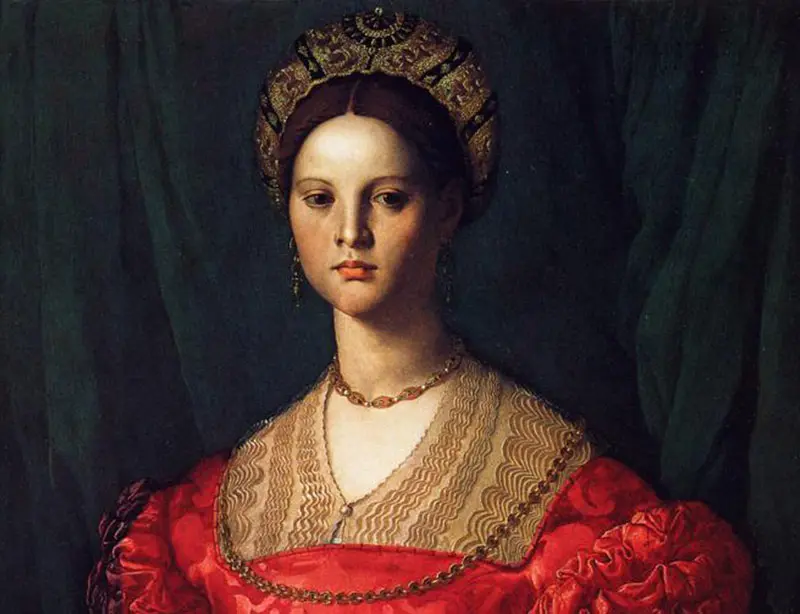
Portuguese converso who ran one of Europe's great banking houses and used it to rescue conversos from the Inquisition. Openly Jewish in Constantinople, she funded synagogues, schools and the resettlement of Tiberias.
Who was Doña Gracia?
Doña Gracia Nasi was one of the most powerful women of sixteenth-century Europe and one of the great heroines of Jewish history. Born into a converso family in Lisbon, she ran one of the largest trading and banking houses of the age, and used its wealth and its network to rescue thousands of conversos from the Inquisition. When at last she could live openly as a Jew, she became the protector of her people, organizing a boycott of a papal port and leasing the town of Tiberias as a haven for Jewish refugees. Jews of her own time called her simply La Señora.
A converso childhood
She was born in Lisbon in 1510 and baptized Beatriz de Luna. Her family, like many in Portugal, descended from Spanish Jews who had fled the Expulsion of 1492 and were forced to convert in Portugal in 1497. Outwardly Catholic, the family secretly kept what it could of Judaism. Her Hebrew name was Hannah, and later in life she took the family’s Jewish name, Nasi.
In 1528 she married Francisco Mendes, also of a converso family, who with his brother Diogo ran the House of Mendes, a firm that traded in pepper and spices from India and lent money to kings and emperors. When Francisco died in 1535, she was twenty-five, a widow with a young daughter, Ana, later called Reyna, and heir to half of one of the largest fortunes in Europe.
Antwerp and Venice
With the Inquisition coming to Portugal, she left in 1536 for Antwerp, the commercial capital of northern Europe, where Diogo Mendes ran the firm’s main branch. After Diogo’s death in 1542 she took over the direction of the House of Mendes, an extraordinary position for a woman of that time.
Behind its business, the firm ran a secret escape network. Conversos fleeing Portugal were helped with money, papers and transport along a route through Antwerp and across the Alps to Italy and the Ottoman Empire, where they could return to Judaism. Thousands of people escaped this way.
Under growing pressure from the authorities, including attempts to seize her fortune and to marry her daughter to a Catholic nobleman, she left Antwerp secretly in 1544 for Venice. There a bitter dispute with her sister Brianda over Diogo’s estate led to her being denounced and briefly held, and to the Venetian authorities intervening in the family’s affairs.
Ferrara
In 1549 Duke Ercole II d’Este welcomed the family to Ferrara, where conversos were allowed to return openly to Judaism. There she lived for the first time as a Jew, under the name Gracia Nasi. In 1553 the Spanish translation of the Bible known as the Ferrara Bible, printed by Abraham Usque and Yom Tov Athias for the returning conversos, was dedicated to her. Samuel Usque’s Consolation for the Tribulations of Israel, published the same year, praised her as the heart of her people.
Constantinople
In 1553 she settled in Constantinople, the capital of the Ottoman Empire, where Jews could live freely under the protection of Sultan Suleiman the Magnificent. Her nephew, Joseph Nasi, who later married her daughter, joined her and became a powerful figure at the sultan’s court. In Constantinople she lived openly as a Jewish noblewoman, supported scholars, schools and the poor, and founded a synagogue, known after her as the synagogue of La Señora.
In 1556 Pope Paul IV had dozens of conversos in the papal port of Ancona arrested, and some two dozen were burned at the stake. Doña Gracia organized a boycott of Ancona by Jewish merchants of the Ottoman Empire, the first economic action of its kind in Jewish history. The boycott did not hold, partly because rabbis disagreed about the danger it posed to the Jews still living in papal lands, and the martyrs could not be saved; but it showed a Jewish people ready to defend its own.
Tiberias
Around 1558 she obtained from the sultan a lease on Tiberias and the surrounding villages in the Galilee, in return for tax revenue paid to the treasury. With Joseph Nasi she began to rebuild the town’s walls, to settle Jews there, and to develop crafts and trade, including the production of silk. It was the first organized attempt in centuries to resettle Jews in the Land of Israel, and many see it as a forerunner of the return to Zion. The project did not outlive her and her nephew, but it remains one of the most remarkable chapters of her life.
Death
Doña Gracia died in 1569, most probably in Constantinople. Her burial place is not known with certainty; a tradition holds that she was buried in Tiberias.
Doña Gracia’s legacy for Sephardim
Doña Gracia stands for the courage of the Bnei Anusim, the descendants of forced converts who held on to their Jewish identity in secret and returned to it when they could. She used every resource she had to save others and to rebuild Jewish life, and she did it as a woman in a world ruled by men. Today she is remembered in Israel, Portugal and Turkey, where streets, institutions and a museum in Tiberias bear her name, and Sephardi communities honor her as a model of leadership, generosity and faith.
Sephardic connection
Portuguese New Christian who reestablished an openly Jewish identity and used the Mendes commercial network to protect Sephardic refugees

Sources
- Cecil Roth, The House of Nasi: Doña Gracia
- Marianna D. Birnbaum, The Long Journey of Gracia Mendes
- Andrée Aelion Brooks, The Woman Who Defied Kings: The Life and Times of Doña Gracia Nasi (St. Paul: Paragon House, 2002)
- Cecil Roth, Doña Gracia of the House of Nasi (Philadelphia: Jewish Publication Society, 1948)


