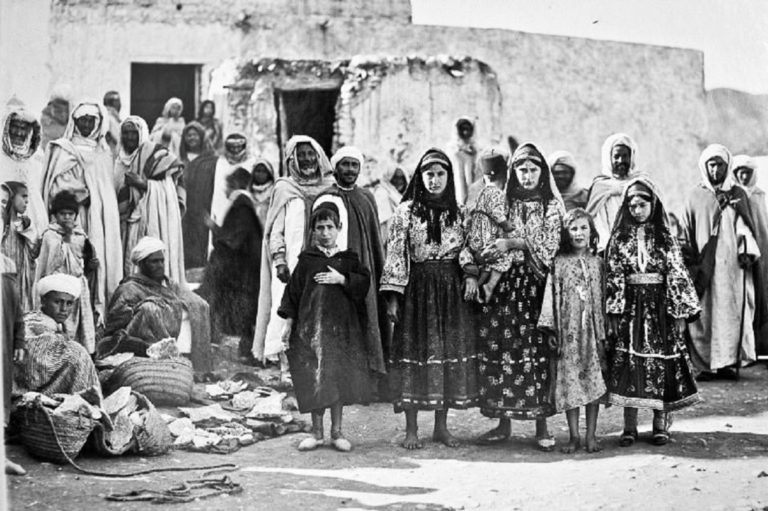
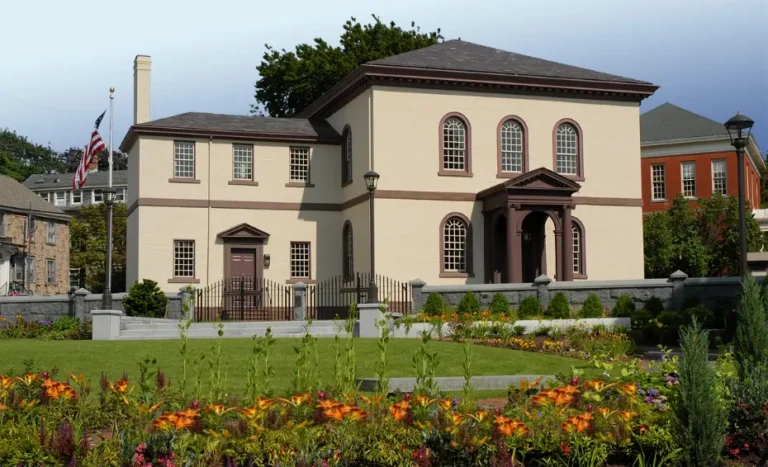
“Eastern Sephardim” are the descendants of the Jews of Spain and Portugal who settled in the Ottoman Empire after 1492: in Istanbul, Salonica, Izmir and Edirne, across the Balkans, in the Land of Israel, and in Syria and Egypt. For four centuries they shared a language, Judeo-Spanish, a liturgy and a rabbinic tradition. This page is an overview; each region has its own page. For the Sephardim who settled in Amsterdam, London and the Americas, see Western Sephardim; for North Africa, see North African Sephardim.
The communities
- Turkish Jews. Istanbul, Izmir, Edirne and Bursa, from Bayezid II’s welcome of the exiles to the community of about 15,000 today.
- Greek Jews. Salonica, for four centuries a city with a Jewish majority or plurality, and Rhodes, alongside the older Greek-speaking Romaniotes.
- Balkan Jews. Sarajevo, Sofia, Belgrade, Monastir and Bucharest, from the 16th century to the Holocaust.
- Syrian Jews, Lebanese Jews and Egyptian Jews. Arabic-speaking communities where the exiles joined older local Jews and their rabbinic tradition became the norm.
Origins
The exiles did not arrive in empty lands. Greek-speaking Romaniote Jews had lived in Anatolia and the Balkans since antiquity, Ashkenazi Jews had settled along the Danube in the 14th century, and Arabic-speaking Jews, later called Musta’arabim, lived in Damascus, Aleppo and Cairo. The Ottomans, who took Constantinople in 1453, ruled most of these lands by the early 16th century, conquering Syria and Egypt in 1516–1517.
The Sephardi connection
Sultan Bayezid II admitted the Jews expelled from Spain in 1492, and refugees from Portugal and Italy followed. They founded congregations named after their towns of origin, and within a few generations their language and rite became the norm for Ottoman Jewry as a whole. The Romaniote, Ashkenazi and Arabic-speaking communities were gradually absorbed, though some, such as the Romaniotes of Ioannina, kept their own identity.
- The Land of Israel. Rabbi Joseph Karo, born in Toledo in 1488, settled in Safed around 1535; his Shulchan Aruch, published in 1565, became the standard code of Jewish law. In 1558 Doña Gracia Mendes Nasi obtained a lease on Tiberias, which her nephew Joseph Nasi helped rebuild.
- Leadership. The Ottoman state dealt with its Jews through their own leaders, above all the Hakham Bashi, the chief rabbi in Istanbul.
- Crisis. Sabbatai Zevi, born in Izmir, proclaimed himself the messiah in 1665 and converted to Islam in 1666, dividing communities for generations; see the Sabbatean crisis.
Modern era and departure
As the empire shrank in the 19th and early 20th centuries, Eastern Sephardim became citizens of new nation-states, and Alliance Israélite Universelle schools spread French. Many emigrated to the Americas and Palestine, especially after the Great Fire of Salonica in 1917. The Holocaust destroyed most of the European communities: nearly 60,000 Greek Jews, more than 80% of the prewar community, were murdered, as were most of Yugoslavia’s Jews and the Jews of Bulgarian-occupied Macedonia and Thrace. The Jews of Bulgaria proper were not deported, and Turkey stayed neutral. Read more: Sephardim in the Holocaust.
After the war most survivors, and most of the Jews of Bulgaria, Syria, Egypt and Lebanon, left for Israel, the United States, Latin America and France.
Religious life
Eastern Sephardim follow the Ottoman Sephardi rite, with Hebrew as the language of prayer. In 1730 Rabbi Yaakov Culi published the first volume of the Me’am Lo’ez, a Bible commentary in Judeo-Spanish that became the most widely read book in Sephardi homes. In Edirne and Istanbul congregations sang maftirim, Hebrew hymns set to Ottoman classical music.
Language, music and food
The everyday language was Judeo-Spanish, called Judezmo or Djudyo by its speakers and written in Hebrew letters until the 20th century. Ladino, strictly, is the word-for-word Judeo-Spanish used to translate the Bible and prayers, though the name is now used for the whole language. About 51,000 people spoke it natively in 2018. Salonica’s Judeo-Spanish press was among the liveliest in the empire. In Syria, Lebanon and Egypt, families spoke Arabic. The kitchen shares borekas, bulemas and pastel (filled pastries), huevos haminados and sutlach; see our Sephardic recipes.
The community today
The largest communities still in the region are in Turkey, about 15,000, and Greece, about 4,000 (2024 estimates), with small communities in Bulgaria, Serbia, Bosnia and North Macedonia. Most Eastern Sephardim now live in Israel, the United States, France and Latin America.
A note on terms
“Eastern Sephardim” describes the descendants of the Iberian exiles in Ottoman lands. The Jews of Iraq, Iran, Yemen and Central Asia, many of whom adopted Sephardi prayer and law but had little or no Iberian ancestry, are usually called Mizrahi Jews; see Mizrahi communities. The line is not sharp: Syrian, Lebanese and Egyptian Jews include both the exiles’ descendants and older local families.
Sources and further reading
- Esther Benbassa and Aron Rodrigue, Sephardi Jewry: A History of the Judeo-Spanish Community, 14th–20th Centuries (University of California Press, 2000).
- Avigdor Levy, The Sephardim in the Ottoman Empire (Darwin Press, 1992).
- Zion Zohar (ed.), Sephardic and Mizrahi Jewry: From the Golden Age of Spain to Modern Times (NYU Press, 2005).
- “Judaeo-Spanish” and “Joseph Karo”, Wikipedia.
- The sources listed on each community page linked above.
Revised October 2026 to correct errors in an earlier version of this page.