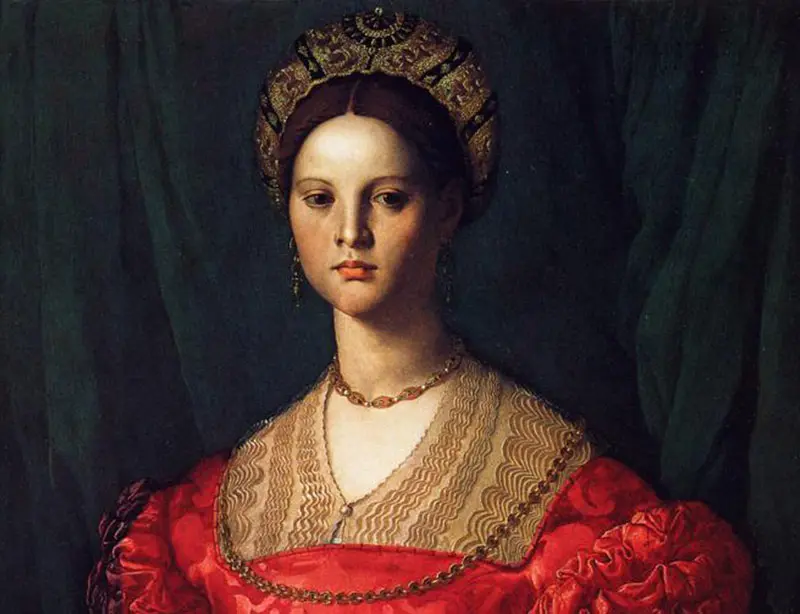
Treasurer to the kings of Portugal and then of Castile, he pleaded in vain with Ferdinand and Isabella to cancel the Expulsion, then went into exile with his people. His sweeping commentaries open each section with questions, a method still used by teachers.
Who was Don Yitzhak Abarbanel?
Don Yitzhak Abarbanel was a statesman, financier, philosopher and biblical commentator, and the most famous Jewish leader at the time of the Expulsion from Spain. He served the kings of Portugal, Castile and Naples, pleaded with Ferdinand and Isabella to cancel the decree of 1492, and then chose exile with his people rather than baptism. In the years of wandering that followed he wrote commentaries on the Torah and the Prophets that are still widely studied.
Lisbon
Yitzhak Abarbanel was born in Lisbon in 1437, into a wealthy family that traced its descent to King David and had moved from Castile to Portugal. He received a broad education in Torah, Jewish philosophy and the learning of his day, and entered the service of King Afonso V of Portugal as a financier and adviser. In Lisbon he wrote his first works and gathered a great library.
When Afonso died in 1481, his successor, João II, turned against the nobles who had been close to the old king. In 1483 Abarbanel was accused of taking part in a conspiracy and fled to Castile; he was sentenced to death in his absence and his property was seized.
Castile and the Expulsion
In Castile he soon entered the service of Ferdinand and Isabella, managing tax collection and financing their wars. When the monarchs issued the decree expelling the Jews in March 1492, Abarbanel, with Don Avraham Seneor, the chief rabbi of Castile, tried to have it revoked. According to his own account, he appealed to the king and queen again and again, and offered great sums of money, but in vain.
Seneor accepted baptism. Abarbanel refused and left Spain with tens of thousands of his fellow Jews in the summer of 1492.
Exile
He settled first in Naples, where he again served the king, until the French invasion of 1494–1495 forced him to flee once more. He lived in Corfu and in Monopoli in southern Italy, and finally in Venice, where he helped negotiate a trade agreement between Venice and Portugal. He died in Venice in 1508 and was buried in Padua; his grave was later lost.
His sons followed him into the world of learning. The eldest, Yehuda, known as Leone Ebreo, was a physician and philosopher whose Dialogues of Love became a classic of Italian Renaissance thought.
The commentator
Most of Abarbanel’s great works were written in the years of exile. His commentaries on the Torah and on the Former and Latter Prophets are recognizable at once: each section opens with a list of questions, sometimes dozens of them, about the text’s meaning, its difficulties and its lessons, which the commentary then answers one by one. He drew on his own experience of kings and courts to explain the politics of the Bible, and his commentaries are long, learned and readable.
He also wrote Zevah Pesah, a commentary on the Haggadah; Nahalat Avot, on Pirkei Avot; and Rosh Amanah, a defense of the Rambam’s thirteen principles of faith.
Redemption
Having lived through the destruction of Spanish Jewry, Abarbanel turned to the question of redemption. In three works, Mayenei HaYeshua on the Book of Daniel, Yeshuot Meshiho and Mashmia Yeshua, he argued that the sufferings of his generation were the birth pangs of the Messiah, and that redemption was near. These books gave comfort and hope to the exiles and influenced Jewish messianic thought for generations.
Abarbanel’s legacy for Sephardim
For Sephardim, Abarbanel embodies both the greatness of Spanish Jewry and the tragedy of its end. He was a man of the court who never forgot his people, a scholar who wrote his greatest books as a refugee, and a leader who chose faith over his fortune and his home. Many families proudly carry the name Abarbanel or Abravanel, and his commentaries remain on the shelves of Sephardi homes and synagogues around the world.
Sources
- B. Netanyahu, Don Isaac Abravanel: Statesman and Philosopher, 5th ed. (Ithaca: Cornell University Press, 1998)
- Cedric Cohen-Skalli, Don Isaac Abravanel: An Intellectual Biography (Waltham: Brandeis University Press, 2021)