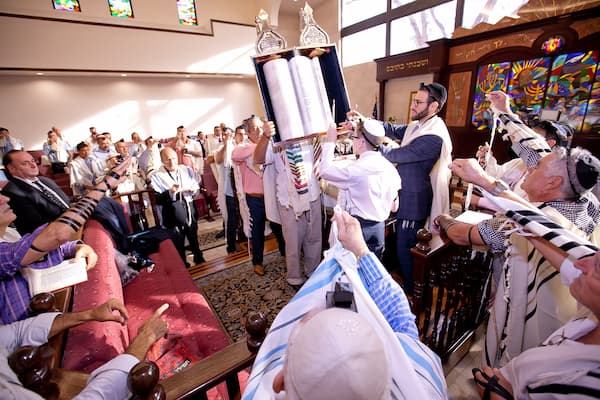
Tefillin
- Sephardim do not put on tefillin during Ḥol ha-Mo`ed (the middle days of festivals).
- They say only one blessing to cover the tefillin of the arm and the head, rather than one for each. However they say the second blessing if they are interrupted and have to say something after placing the arm tefillin.
- Sephardim wind the tefillin strap anti-clockwise (for a right-handed person). The form of the knot and of the wrappings round the hand is also different from that of the Ashkenazim.
- The letter shin on the head tefillin has a different calligraphy than on the Ashkenazi tefillin.
- The script used in Torah scrolls, tefillin and mezuzot is different from the Ashkenazic and nearer to the printed square characters.[16]
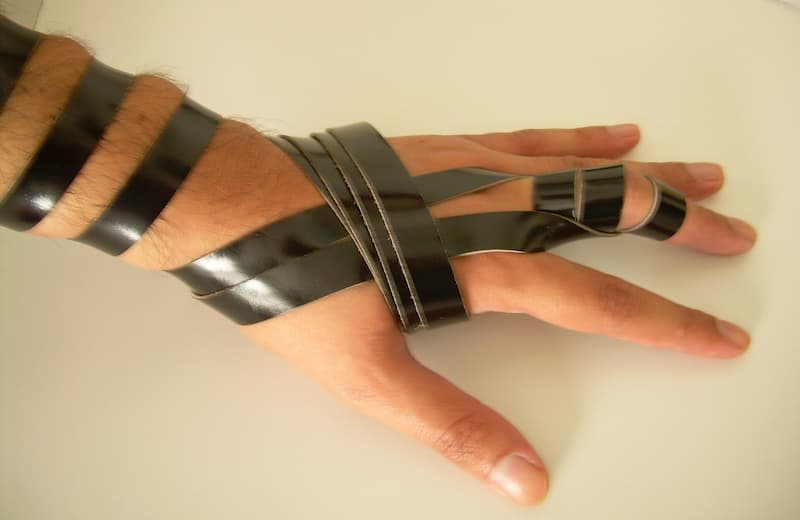
Tefillin straps Sephardic knot photo credit Wikicommons
Watch the video on your YouTube channel:
https://youtu.be/Aw0uqOtGIns?si=PaBA3VMyveDvce7V
Holidays
Yamim Noraim
- Seliḥot are said throughout the month of Elul in the morning rather than at night.
- Around Rosh Ashana, the typical new year greeting is “Tizku leshanim rabot” (תזכו לשנים רבות). The answer is “Neimot vetovot” (נעימות וטובות).
- Sephardic Rishonim (medieval scholars) reject the customs of Tashlikh and Kapparot, though they were re-introduced by the Lurianic school (Spanish and Portuguese Jews still do not observe them).
Hanukkah
- Only one set of Hanukkah lights is lit in each household.
- The shammash is lit together with the other Hanukkah lights, instead of being used to light them (which would be impractical, given that the lights are traditionally oil lamps rather than candles).
Passover
- Sephardim only say blessings over the first and third cups of Passover wine, instead of over all four.
- The items on the Seder plate are arranged in a fixed hexagonal order (except among Spanish and Portuguese Jews: this usage is increasingly popular among Ashkenazim). L
Counting of the Omer period
- During the Counting of the Omer period, observant Sephardi men avoid cutting their hair and shaving/cutting their beard for 34 days, rather than 33, as the Ashkenazi practice.
Bereavement
- The Sephardi term of commemorating a close relative’s death is nahala (נחלה) or meldado. Ashkenazim use the Yiddish term Yahrzeit instead.
- The common Sephardi greeting to express a condolence is Min hashamayim tenuhamu (מן השמים תנוחמו).
- If a relative passed away in the month of Adar, in a leap year, most Sephardim commemorate it in Adar II rather than the Ashkenazi practice of Adar I or both.
- The Sephardi memorial prayers (Hashkabot) serve a similar role to the Ashkenazi Yizkor.
Date Conversion Calendar