Jews lived in Afghanistan for well over a thousand years, along the trade routes that linked Persia, India and Central Asia. Their communities in Herat, Kabul and Balkh were branches of Persian Jewry, and they spoke Persian and wrote it in Hebrew letters. Several thousand Jews still lived in Afghanistan in 1948; almost all left for Israel in the following decades, and the last known Jews departed in 2021. Afghan Jews are counted among the Mizrahi communities. See also Iranian Jews and Bukharan Jews.
Origins
Persian tradition holds that Jews settled in Balkh after the fall of the Kingdom of Judah in 587 BCE, and Islamic tradition links the city with the prophets Ezekiel and Jeremiah. Written evidence begins in the 7th century CE. In the 12th century the geographer al-Idrisi described a Jewish quarter in Kabul, and Hebrew and Judeo-Persian tombstones of the 11th to 13th centuries survive near the Minaret of Jam in the mountains of Ghor.
In the early 2010s, hundreds of manuscript pages from the 11th to 13th centuries, written in Hebrew, Aramaic, Judeo-Arabic and Judeo-Persian, surfaced in northern Afghanistan. The National Library of Israel acquired 29 pages of this “Afghan Genizah” in 2013 and about 250 more in 2016, opening a window on a Jewish world that had been almost unknown.
Herat and Kabul
Persian Jews, many from Mashhad, settled in Herat and Kabul in the 17th and 18th centuries, and in the 18th century Jews who had served the army of Nader Shah settled in Kabul. After the forced conversion of the Jews of Mashhad in 1839, some escaped to Herat, which became the community’s main center. Jews worked as merchants, moneychangers and traders along the routes to Bukhara and India.
The 20th century
- Refugees and restrictions. In the early 1930s Jews fleeing the Soviet Union reached Afghanistan, and from 1933 the government confined them to Kabul and Herat and limited their trade. In 1935 the Jewish Telegraphic Agency reported “ghetto rules” restricting Jews’ dress and movement, and there were riots in Herat that year.
- Emigration. More than 5,000 Jews lived in Afghanistan in 1948. Afghanistan was unusual among Muslim countries in allowing Jews who emigrated to keep their citizenship, and most moved to Israel over the next two decades; about 300 remained in 1969.
- The last Jews. Most of the rest left after the Soviet invasion of 1979. By 2004 only a handful remained in Kabul, among them Zablon Simintov, who cared for the city’s last synagogue, and Isaac Levy, who died in 2005. Simintov left in September 2021, after the Taliban returned to power, and settled in Israel in 2024.
Religious life and heritage sites
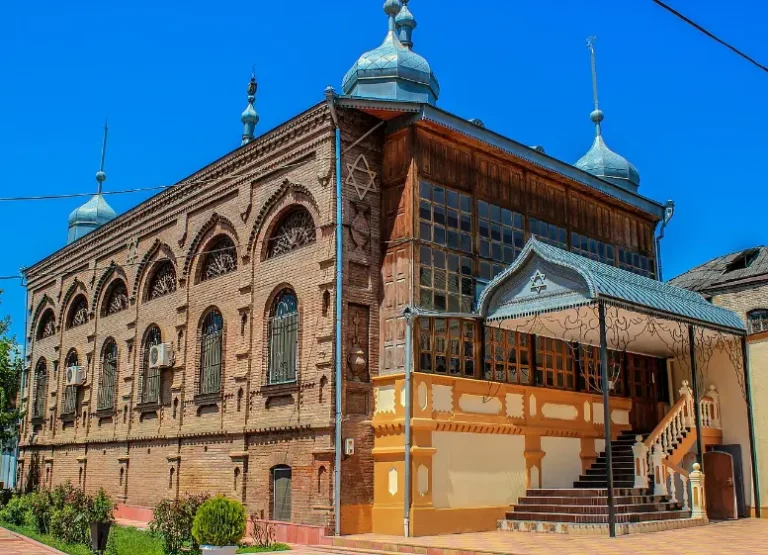
Afghan Jews prayed in the Persian Jewish tradition, with their own melodies, and today follow the customs of the Edot HaMizrach. Herat preserves the community’s heritage: four former synagogues, among them the Yu Aw Synagogue, the largest, which has been restored and protected, as well as a Jewish bath house and a cemetery with Hebrew tombstones, repaired with donations from Afghan Jews in Israel. Kabul’s synagogue stands on Flower Street (Kuche-ye Gol Forushiha).
The community today
More than 10,000 Jews of Afghan descent live in Israel, where the community has its own synagogues and associations, with more than 200 families in New York and smaller groups in London. No known Jews remain in Afghanistan.
Notable people
- Zablon Simintov b. 1959 · Herat Carpet dealer and caretaker of the Kabul synagogue; the last Jew known to live openly in Afghanistan. He left in 2021 and moved to Israel in 2024.
Sources and further reading
- Sara Y. Aharon, From Kabul to Queens: The Jews of Afghanistan and Their Move to the United States (American Sephardi Federation, 2011).
- “History of the Jews in Afghanistan” and “Afghan Geniza”, Wikipedia.
Published October 2026.