France has the largest Jewish community in Europe, about half a million people, and most of them are Sephardim. Their families came from Algeria, Morocco, Tunisia and Egypt in the great migration of 1956–1967, which transformed a community that had been mostly Ashkenazi after the Holocaust. France also has older Sephardi roots: the Portuguese Jews of Bordeaux and Bayonne were the first Jews in Europe to become full citizens, in 1790. See also North African Sephardim, Algerian Jews and Western Sephardim.
Before the Sephardim
Jews lived in Roman Gaul, and by the 6th century there were communities in Marseille, Arles, Paris and Bordeaux. Northern France was home to Rashi (1040–1105) of Troyes, whose commentaries on the Bible and Talmud are studied everywhere. The Jews were expelled from the kingdom of France in 1306, recalled in 1315 and expelled again by a decree of 1394, and they were driven out of Provence after 1501. Only the papal territories around Avignon, where the Juifs du Pape lived in Avignon, Carpentras, Cavaillon and L’Isle-sur-la-Sorgue, and later Alsace and Lorraine, kept Jewish communities.
The Portuguese Jews of Bordeaux and Bayonne
From the 16th century, New Christians fleeing Portugal settled in Bordeaux and Bayonne as “Portuguese merchants.” Outwardly Catholic at first, they gradually lived openly as Jews and became one of the Western Sephardi communities, tied by trade and family to Amsterdam, London and the Caribbean. During the Revolution, on January 28, 1790, the National Assembly made the Portuguese and Avignon Jews full citizens, more than a year before the rest of France’s Jews were emancipated on September 27, 1791. Their heirs still worship at the Grande Synagogue de Bordeaux and the Nefoutsot Yehouda synagogue of Bayonne. See also Portuguese Jews.
Emancipation to the Holocaust
- Napoleon. In 1807 Napoleon convened a Grand Sanhedrin of rabbis and lay leaders, and in 1808 created the Consistory system that still organizes French Jewish religious life.
- Algeria. The Crémieux Decree of 1870 made the Jews of French Algeria, about 40,000 at the time, French citizens, the link that later brought Algerian Jews to France as citizens. See Algerian Jews.
- The Holocaust. About 330,000 Jews lived in France in 1940. Under the German occupation and the Vichy regime, about 76,000 were deported, among them nearly 13,000 seized in the Vel’ d’Hiv roundup of July 1942; only about 2,500 deportees survived. About a quarter of the Jews of France were killed.
The North African migration
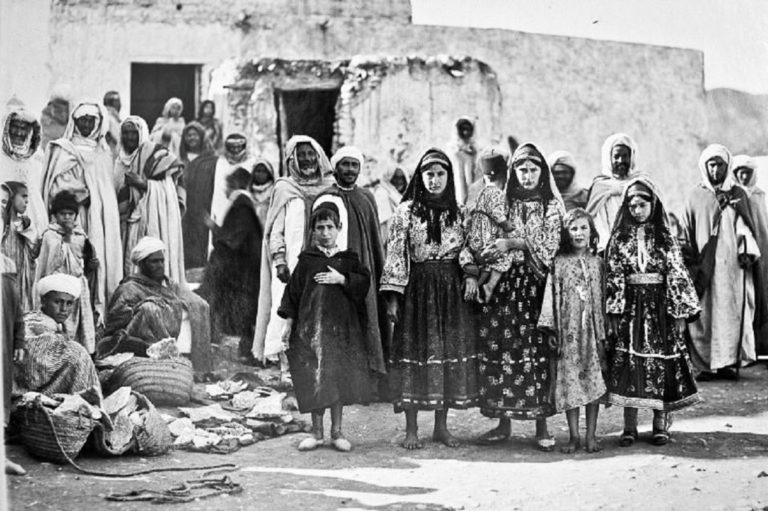
About 180,000 Jews remained in France after the war. Between 1956 and 1967, as Tunisia and Morocco became independent, Algeria won its war of independence and Egypt expelled its Jews after the Suez crisis, about 235,000 Sephardi Jews arrived from North Africa and Egypt. Nearly all of Algeria’s Jews, already French citizens, came in 1962. By the late 1960s Sephardim were the majority of French Jews. They revived synagogues, schools and kosher food across the country, built new communities in the suburbs of Paris, such as Sarcelles, and in Marseille, Lyon, Nice and Toulouse, and brought North African liturgy, music and cooking into French Jewish life. See also Moroccan, Tunisian and Egyptian Jews.
Religious life
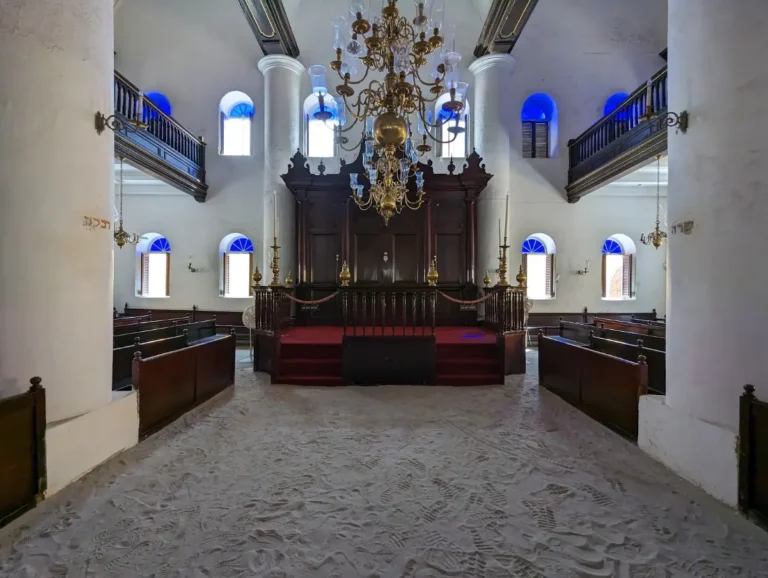
Most French synagogues today follow North African Sephardi customs, and the Consistory’s leadership reflects the change: Joseph Sitruk, born in Tunis, was Chief Rabbi of France from 1987 to 2008, and his successor Haïm Korsia comes from a family of Algerian origin. Alongside the Consistory, Chabad and independent Sephardi congregations have grown. The Synagogue of Carpentras, founded in the 14th century and rebuilt in the 18th, is the oldest synagogue still in use in France.
The community today
Estimates put France’s Jewish population at 480,000 to 550,000, the largest in Europe and the third largest in the world, with about 277,000 in the Paris region and about 70,000 in Marseille. Rising antisemitism, including the murders at the Ozar Hatorah school in Toulouse in 2012 and at the Hypercacher kosher supermarket in Paris in January 2015, has led many to move to Israel, where about 200,000 French Jews now live.
Notable people
- Joseph Sitruk 1944–2016 · Tunis Chief Rabbi of France, 1987–2008, during the years Sephardim became the majority of French Jews.
- Jacques Derrida 1930–2004 · El Biar, Algeria Philosopher, founder of deconstruction.
- Claude Cohen-Tannoudji b. 1933 · Constantine, Algeria Physicist; Nobel Prize in Physics, 1997.
- Serge Haroche b. 1944 · Casablanca Physicist; Nobel Prize in Physics, 2012.
- Gisèle Halimi 1927–2020 · La Goulette, Tunisia Lawyer and feminist who defended Algerian independence fighters and whose 1972 Bobigny trial helped pave the way for legal abortion in France.
- Enrico Macias b. 1938 · Constantine, Algeria Singer whose songs of exile from Algeria made him a star in France.
Sources and further reading
- Esther Benbassa, The Jews of France: A History from Antiquity to the Present (Princeton University Press, 1999).
- Maud S. Mandel, Muslims and Jews in France: History of a Conflict (Princeton University Press, 2014).
- “History of the Jews in France”, Wikipedia.
Published October 2026.