


In a time when headlines often emphasize division, a quieter story is unfolding across college campuses — one rooted not in politics, but in memory, culture, and identity.
A recent Forward Magazine article documented an unexpected trend: Muslim and Sephardic Jewish students discovering that their histories overlap far more than they differ.
Read the original reporting here.
What emerges is not a formal “peace initiative,” but something more authentic — students sharing music, language, traditions, and meals, and realizing they are not strangers at all.
This is the story of Sephardic Muslim shared heritage — and why it matters now more than ever.
A Tradition Older Than Politics
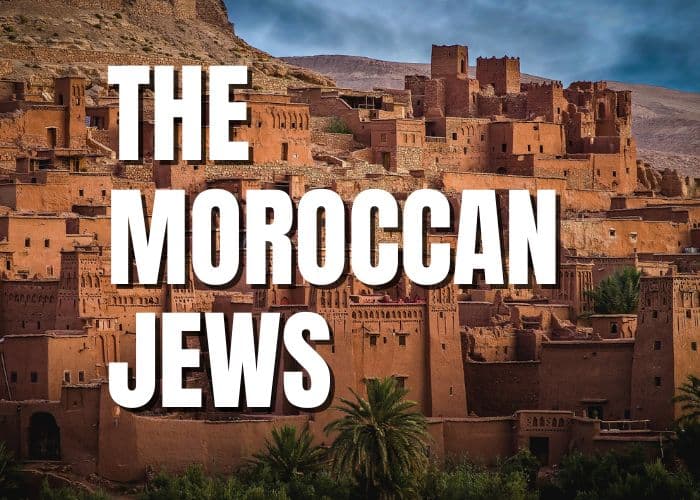
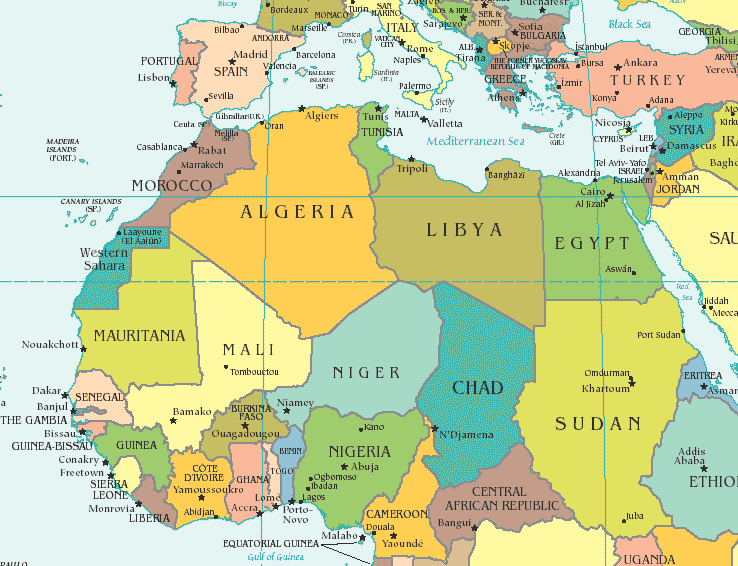
For centuries across Morocco, Iraq, Syria, Egypt, Turkey, and the wider Middle East and North Africa, Jews and Muslims lived not merely beside each other but among each other.
They spoke the same dialects.
They cooked the same foods.
They celebrated life cycle events in similar ways.
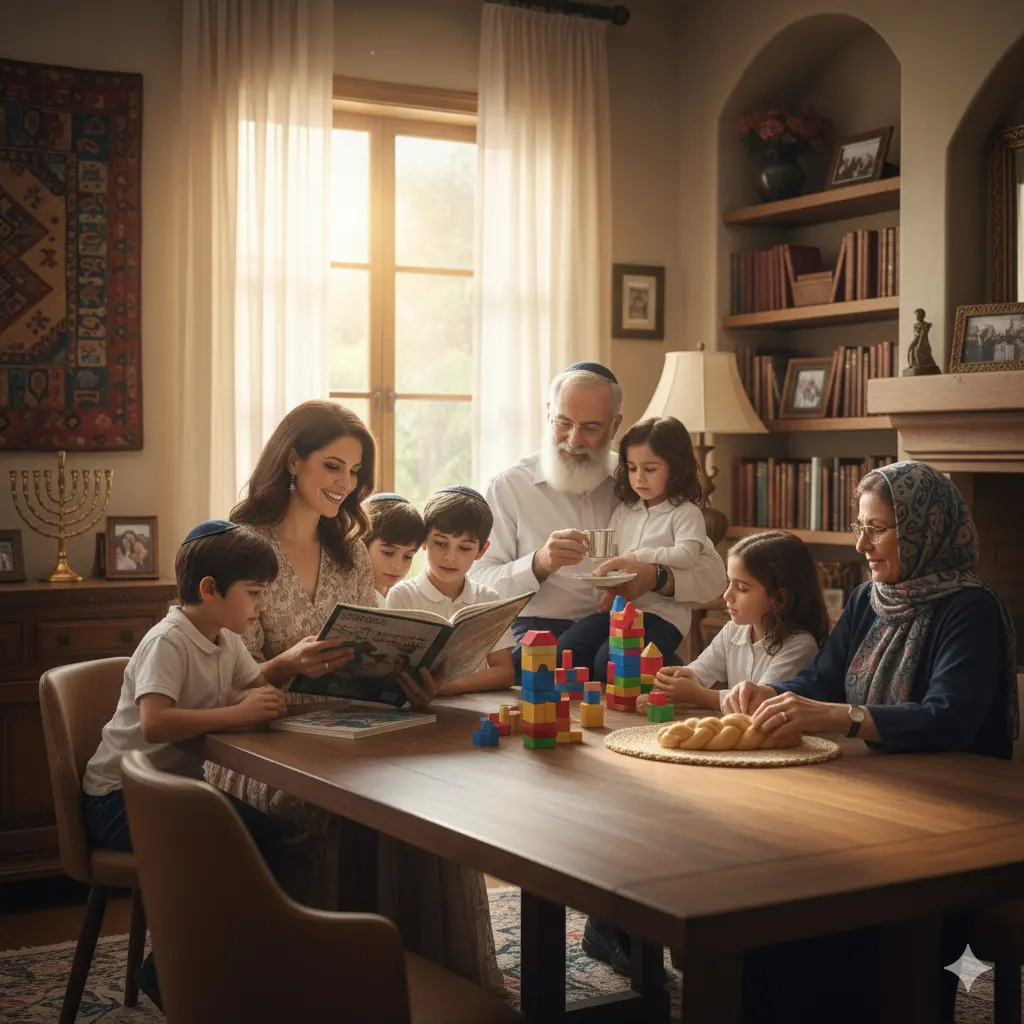
One powerful example is Mimouna — the Moroccan Jewish celebration after Passover.
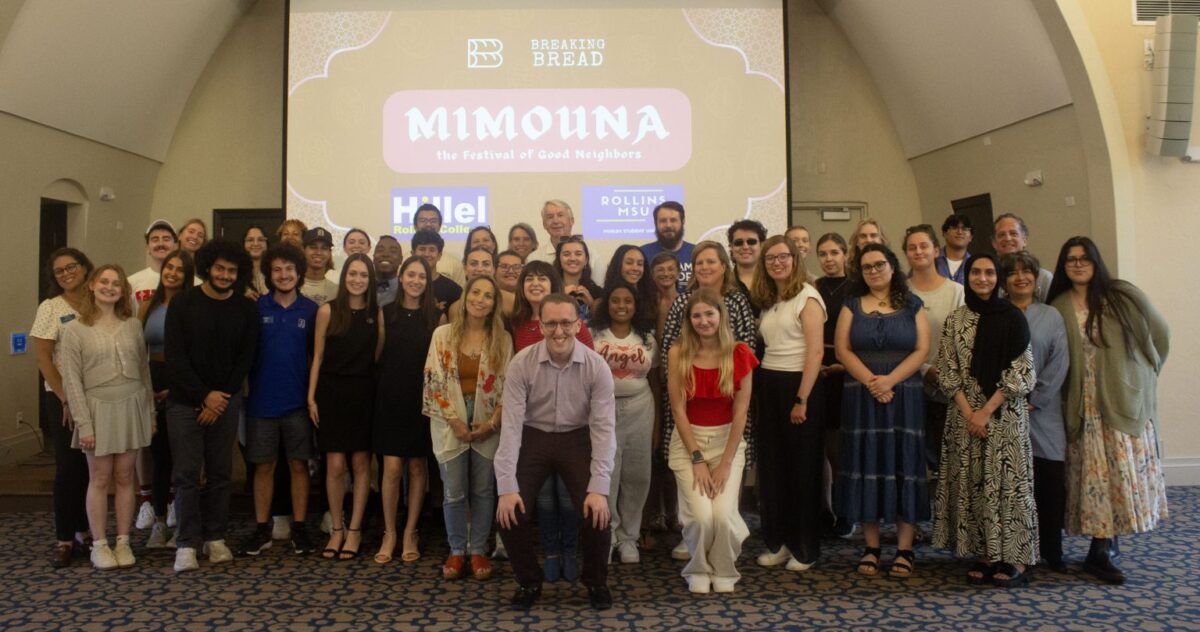
Joseph Pool, a college senior quoted in the Forward article, and founder of Breaking Bread, described hearing from his Moroccan grandparents how Muslim neighbors would bring flour, butter, and milk immediately after the holiday so Jewish families could once again eat chametz.
He later hosted a Mimouna on campus — and Muslim students showed up in large numbers.
“There is still this connection ability here.”
This is the essence of Sephardic Muslim shared heritage: not coexistence, but intertwined living.
Why Food Builds Bridges Faster Than Dialogue

Interfaith panels often struggle because participants arrive ready to debate.
Shared culture works differently.
Students didn’t attend events to argue theology — they came for familiar smells, melodies, and memories from home.
At cultural gatherings across campuses, students bonded over:
- baklava and mufleta
- Arabic and Judeo-Arabic phrases
- North African music rhythms
- family cooking traditions
Joseph explained the deeper impact of a shared meal:
“If you share a meal with someone, you start with something in common… then politics becomes just an issue, not identity.”
This insight is profound.
The modern conflict conversation frequently begins with ideology.
Sephardic heritage begins with humanity.
Discovering Jews Are Middle Eastern Too
One of the most revealing outcomes reported in the article: many Muslim students had never met Middle Eastern Jews before college.
Some assumed Jews were exclusively European.
Friendship challenged that perception immediately.
Students recognized:
- same accents
- same humor
- same grandparents’ stories
- same proverbs
- same childhood foods
The result was not agreement on politics — but recognition of shared origin.
This reframes conversations entirely.
Instead of “us and them,” the discussion becomes “our region.”
That shift alone lowers hostility more effectively than debate ever could.
The Role of Identity: Sephardic Jews as Cultural Translators
Sephardic and Mizrahi Jews occupy a unique position in today’s campus environment.
They often:
- look similar to Arab classmates
- speak related languages
- share regional history
- understand both Jewish and Middle Eastern social frameworks
Because of this, conversations become less abstract and more personal.
Students reported that once common ancestry was recognized, discussions became calmer and more productive.
Not because disagreements disappeared — but because dignity entered the room.
This is a critical feature of Sephardic Muslim shared heritage:
It humanizes before it persuades.
Culture Before Politics: The Order Matters
Many modern peace efforts attempt dialogue first and relationship later.
These students did the opposite.
They built friendship first — through culture — and only later spoke about difficult issues.
The pattern repeated across campuses:
- Music or food event
- Cultural curiosity
- Friendship
- Trust
- Honest conversation
When identity is acknowledged, disagreement becomes survivable.
Without that foundation, disagreement feels existential.
This explains why informal gatherings succeeded where structured programs often fail.
A Generational Shift Is Happening
Perhaps the most important takeaway is that this movement is grassroots.
No institution ordered it.
No government negotiated it.
No organization scripted it.
Young people — especially those from immigrant families — simply recognized familiar pieces of home in each other.
They inherited memory rather than ideology.
Grandparents who lived side-by-side in Fez, Baghdad, or Damascus unknowingly passed down a cultural blueprint for coexistence.
Today’s students are rediscovering it.
Not as nostalgia — but as reality.
What This Means for the Future
The lesson of Sephardic Muslim shared heritage is not that conflict disappears.
It is that conflict changes shape when people see each other as relatives in history rather than rivals in identity.
Shared heritage does three powerful things:
- reduces demonization
- allows disagreement without dehumanization
- makes coexistence emotionally possible
Political solutions require policies.
Human solutions require familiarity.
These students found familiarity in language, recipes, music, and memory.
And that proved stronger than assumptions.
The Power of a Meal
At the center of this story is a simple truth:
people rarely hate those whose grandmother cooks like theirs.
A table accomplishes what arguments cannot.
That is why Mimouna matters.
Not only as a holiday — but as a model.
You don’t begin with peace treaties.
You begin with shared bread.
Reclaiming a Forgotten Narrative
Modern discourse often portrays Jewish-Muslim history as permanently adversarial.
But for much of history — especially in Sephardic lands — daily life was collaborative.
Not perfect.
Not utopian.
But interconnected.
The students in this story did not create something new.
They remembered something old.
And by remembering, they changed how they speak to one another.
A Sephardic Lesson for the World
Sephardic tradition has always preserved a powerful idea:
Identity can be distinct without being distant.
These young adults demonstrated that cultural closeness creates emotional space — even when political disagreement remains.
The broader message is universal:
When people encounter each other as categories, they argue.
When they encounter each other as neighbors, they listen.
The new generation is not ignoring history.
They are expanding it — adding relationships to narratives.
And that may be the most hopeful development of all.
Conclusion
The story highlighted in the Forward is ultimately not about one campus or one event.
It is about rediscovering a civilizational memory — one in which Jews and Muslims were part of the same cultural ecosystem.
Through shared meals, shared sounds, and shared language, students uncovered a truth their ancestors already knew:
Common heritage does not erase differences.
It makes them livable.
The revival of Sephardic Muslim shared heritage suggests a path forward grounded not in slogans, but in lived experience.
Sometimes the most powerful bridge is not built —
it is remembered.