


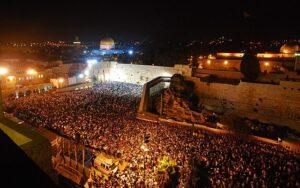



For centuries, the Book of Tehillim (Psalms) has formed an essential part of Jewish prayer, comfort, and personal devotion. Its 150 chapters express praise, gratitude, longing, distress, hope, trust, and the search for comfort and strength[cite: 1].
Jews have traditionally turned to Tehillim in many different circumstances—including times of illness, difficulty, danger, remembrance, and personal need[cite: 1]. Today, we are thrilled to launch the new Sephardic U Tehillim System—a clean, robust digital reading tool designed to make the Book of Psalms fully accessible without compromising on traditional integrity.
Launch the Interactive Tehillim Reader Now →
When Do People Read Tehillim?
Tehillim is woven into many different moments of Jewish life[cite: 1]. For some, it’s a regular part of daily or weekly prayer—a quiet return to familiar words[cite: 1]. For others, it becomes especially meaningful at a particular moment: a personal reflection, a hope carried into words, or a way of sitting with something difficult[cite: 1].
- Prayer and Reflection: Many people read Tehillim simply as part of ongoing devotional practice, on their own schedule[cite: 1].
- Illness and Concern for Others: Tehillim is often turned to when someone is unwell, or when praying on behalf of someone facing a health concern[cite: 1].
- Difficulty or Uncertainty: In moments of hardship or an uncertain outcome, many find that Tehillim gives words to what’s hard to express[cite: 1].
- Protection and Safety: Some chapters are traditionally recited in connection with protection, before travel, or in times of concern for safety[cite: 1].
- Remembrance: Tehillim is often part of how people remember someone who has died, including around a yahrzeit or azkara[cite: 1].
- Personal Needs and Hopes: Whatever the specific concern—a decision, a hope, a personal struggle—many turn to Tehillim to hold it in prayer[cite: 1].
Note: Exactly which chapters are read, and how, differs among communities, families, and individual custom[cite: 1]. Our digital Tehillim tool presents documented traditions and sources rather than a single required list[cite: 1].
Tehillim in Sephardic and Mizrahi Tradition
Tehillim holds a vital place in the prayer and devotional life of Sephardic and Mizrahi communities, as it does throughout Jewish tradition more broadly[cite: 1]. Sephardic and Mizrahi Jews are not one uniform group—they come from a wide range of regions, each carrying its own customs, melodies, and practices[cite: 1].
Within that diversity, Tehillim appears in many forms: as personal prayer, as a shared devotional practice, as part of remembrance for someone who has died, and as an expression of hope in difficult moments[cite: 1]. How and when specific chapters are read can vary by community, family, and individual custom[cite: 1].
Sephardic U’s goal is to present these traditions and their sources as clearly and accurately as possible—distinguishing documented community customs from broader Jewish practice, rather than treating every practice as uniquely or universally Sephardic[cite: 1].
Frequently Asked Questions About Tehillim
What is Tehillim?
Tehillim is the Hebrew name for the Book of Psalms—a biblical collection of 150 chapters recited widely in Jewish prayer and personal devotion, expressing praise, gratitude, distress, hope, and trust[cite: 1].
How many chapters are in Tehillim?
Tehillim contains 150 chapters[cite: 1]. All 150 are available in our digital reader in Hebrew and English[cite: 1].
Can I read Tehillim in English?
Yes[cite: 1]. Every chapter is presented with accessible layouts so you can read in whichever language—or both—you prefer[cite: 1].
Which Tehillim should I read for someone who is sick or hospitalized?
Different communities and traditions follow different customs when praying for someone who is ill or hospitalized[cite: 1]. Rather than presenting a single required list, our Tehillim tool walks you through available traditions and their sources[cite: 1]. (Tehillim is always a spiritual complement to medical care, not a substitute for it[cite: 1]).
Can I read Tehillim for someone who has died?
Yes[cite: 1]. Tehillim is commonly read in memory of someone who has passed away, including around a yahrzeit or azkara[cite: 1]. Specific customs and chapter selections vary by community and family tradition[cite: 1].
Do Sephardim read Tehillim?
Yes[cite: 1]. Tehillim is part of the shared prayer life of Jewish communities generally, including Sephardic and Mizrahi communities, each of which carries its own customs within that broader practice[cite: 1].
Behind the System: Our Architectural & Methodological Framework
For rabbis, scholars, and serious students looking at the technical and halachic framework behind this tool, our guiding principle is simple: The technology should serve the tradition — not redefine it.
Because this is a religious resource, we approached the project differently from an ordinary website feature, carefully considering the underlying text, the calendar, and traditional practices without making sweeping halachic claims. Below is our complete 18-point methodology:
📖 Read the Complete 18-Point Technical & Halachic Methodology
1. The Tehillim text comes first
At the center of the system is the Book of Psalms itself: the 150 chapters of Tehillim.
We did not write, paraphrase, modernize, or “adapt” the Psalms for this project. The system treats the biblical text as the text, and everything else — reading plans, purposes, navigation, dates, progress indicators, and explanations — is an organizational layer built around it.
During development, established Jewish digital-text resources, including the Sefaria library and its structured text resources, were used as part of the research and data-preparation process. Sefaria provides programmatic access to Jewish texts and their structured references, making it useful for working with individual chapters and verses rather than copying text from an arbitrary webpage.
Where appropriate, the Tehillim data is maintained locally by Sephardic U rather than requiring the reader’s browser to retrieve every chapter from a third-party website. This gives the system greater consistency and allows the presentation, navigation, and reading experience to remain under Sephardic U’s control.
The important distinction is this: We are not presenting Sephardic U’s website formatting as a new version of Tehillim. We are presenting the established text through a Sephardic U digital reading system.
2. The Jewish calendar is handled separately from the reading plan
One of the most important technical decisions we made was not to calculate the Hebrew calendar ourselves.
The traditional monthly Tehillim cycle is based on the Hebrew calendar, not the Gregorian calendar. That means a website cannot simply assume that the first day of a civil month is the beginning of a Tehillim cycle.
Instead, Sephardic U uses Hebcal’s Hebrew Date Converter to determine the current Hebrew date.
Hebcal provides a dedicated Hebrew/Gregorian conversion API, including conversion from a Gregorian date to the corresponding Hebrew year, month, and day. It also supports conversion in the opposite direction and can validate whether a particular Hebrew date exists.
This distinction matters because the Hebrew calendar contains months of different lengths and leap years, including the distinction between Adar and Adar I/Adar II.
Rather than reproducing Hebrew-calendar mathematics inside the Tehillim plugin, we ask a specialized calendar service for the calendar information and allow the Tehillim system to concentrate on what it actually needs to do: “Given today’s Hebrew date, which Tehillim reading belongs to today?”
3. Why we use the traditional monthly Tehillim cycle
The foundation of the daily reading system is the traditional practice of completing the entire Book of Tehillim over the course of a Hebrew month.
This is not a reading schedule invented for the Sephardic U website. The practice of dividing Tehillim into daily portions over a month is a well-established Jewish practice and is also represented in modern Jewish calendar resources. Hebcal, for example, includes a “traditional 30-day cycle” for daily Psalms.
Our task was therefore not to invent a monthly division, but to make the traditional concept usable in a modern digital environment.
That required answering several practical questions:
- Which chapters belong to each day?
- What happens in Hebrew months that contain only 29 days?
- How should the system know what day of the cycle it is?
- What happens when the Hebrew month changes?
- How should the reader see where they are within a day’s assigned chapters?
- How can someone return later and immediately understand their progress?
These questions led us to separate the calendar layer from the reading-plan layer.
4. The 30-day reading map is treated as data, not calendar mathematics
The Tehillim monthly cycle is represented inside the system as a defined reading map.
The system does not attempt to “calculate” which Psalms should be read by applying an algorithm to chapter numbers. Instead, the daily assignments are explicitly defined. That is an important distinction.
A reading plan is a religious/content decision. Calendar conversion is a calendar decision. They should not be mixed together.
The system therefore works conceptually like this: Hebrew date → Hebrew day of month → reading-plan day → assigned Tehillim chapters.
This makes the reading schedule transparent and testable.
5. The 29-day month question required special attention
The Hebrew calendar does not make every month 30 days long.
That created one of the most important research and design questions in the project: how should a traditional 30-day Tehillim framework behave when the Hebrew month has only 29 days?
We did not want the website to make an arbitrary programming decision and present it as religious tradition.
The reading map was therefore reviewed specifically for this issue.
- The first 28 days of the cycle remain the same regardless of whether the Hebrew month contains 29 or 30 days.
- Day 29 has two defined behaviors:
- In the normal 29-day reading structure: Psalms 140–144
- When the final two portions are collapsed for a 29-day month: Psalms 140–150
It is an explicit rule in the reading-plan data, ensuring software does not silently “figure something out” and turn an implementation shortcut into an implied religious ruling.
6. We distinguish traditional practice from Sephardic U’s own curation
Not every way of organizing Tehillim has the same status. There are traditional reading cycles, community customs, commonly used chapter groupings, and modern devotional systems. We do not want to blur these categories.
When Sephardic U presents a traditional monthly cycle, we identify it as such.
When Sephardic U presents a purpose-driven reading plan — for healing, protection, remembrance, personal need, etc. — we treat that as a carefully researched curated resource, not as though every such grouping were a universally binding Sephardic prescription.
7. The purpose-driven system required a different kind of research
The traditional monthly cycle answers: “What should I read today?”
A purpose-driven system answers: “I have a particular need or intention. Which Tehillim might I read?”
The purpose-driven plans were researched as curated selections rather than pretending that there is one universally accepted table. Where traditional associations are well established, they inform a selection. Where a grouping is a practical devotional compilation, it is treated as such.
8. We also researched how much a person can realistically read
A reading plan is not very useful if the assigned material is technically correct but impractical for a person to complete.
For that reason, the system also considers the approximate reading time associated with each selection as a practical aid, allowing someone with five minutes to have a different entry point from someone with thirty minutes.
9. The same chapters can appear in different reading plans
Tehillim is not a collection in which every chapter belongs to only one category. A Psalm may be relevant to more than one purpose, and different traditions may associate the same Psalm with different needs. Therefore, one chapter can belong to multiple reading plans.
10. Why we built the data locally
External APIs are useful for research and data preparation, but they can change, go down, or impose rate limits (e.g., Sefaria API). For the actual reading experience, Sephardic U separates the source process from the reader’s experience: Research and verify → prepare the data → store what the system needs → serve consistently.
11. The Hebrew calendar and Tehillim content are intentionally independent
The calendar service knows dates. The reading-plan system knows chapters. The purpose system knows curated selections. The reader interface knows navigation. None of these systems needs to pretend to be the other, keeping the architecture modular and maintainable.
12. Today’s Tehillim is genuinely date-driven
The system determines today’s date using the WordPress timezone, converts it to Hebrew via Hebcal, identifies the Hebrew day, accounts for 29/30 day month lengths, applies the cycle rules, retrieves chapters, and presents them seamlessly.
13. We built progress into the reading experience
The reading interface treats a day’s assignment as a sequence. The reader can see completed chapters, the current chapter, and chapters remaining (e.g., Completed: 1–3 | Current: 4 | Remaining: 5–8), reflecting a philosophy that technology should never be an obstacle to practice.
14. One reading interface serves multiple paths
Whether arriving via Today’s Tehillim, a purpose-driven plan, or another path, the underlying reader is shared. This ensures consistent progress tracking and makes the system easy to expand without rebuilding the reader.
15. We deliberately avoided hidden religious assumptions
We avoided making small software decisions that carry hidden religious implications (such as calendar calculation rules or treating curated lists as binding halakha). This is especially vital for Sephardic U’s diverse audience spanning Sephardim, Ashkenazim, Bnei Anusim, and students of heritage.
16. What Sephardic U is — and is not — claiming
The system provides a reliable digital gateway to Tehillim. It is not a new siddur, a new nusach, a halachic ruling, a replacement for a rabbi, or a claim that our particular organization is the only legitimate way to use Tehillim.
17. Why we chose this approach
We avoided a purely technical approach (“here are 150 Psalms in a database, good luck”) and an overly authoritative one (“this is the correct Jewish way”). We preserve the text, respect the tradition, document sources, and use technology to make practice accessible.
18. Why this matters to Sephardic U
This project makes Sephardic and Mizrahi heritage available as a living tradition. The technology is new; the Psalms are not. Our guiding principle remains: Sephardic U provides the technology and organization; the tradition provides the foundation.