



Selichot: History, Customs, Halakhah & the 40-Day Journey
Selichot—from the Hebrew root meaning “forgiveness”—are penitential prayers and supplications recited in preparation for Rosh Hashanah and Yom Kippur. For Sephardic and Mizrahi Jews, Selichot are an important part of the spiritual preparation for the High Holy Days, combining teshuvah, prayer, biblical themes, and centuries of expressive liturgical poetry (piyyut). While there is a shared Sephardic tradition, Selichot customs are not identical in every community. Moroccan, Algerian, Tunisian, Syrian, Iraqi, Egyptian, Turkish, Balkan, Persian, and other Sephardic and Mizrahi communities have preserved their own melodies, piyyutim, and liturgical customs.Why Do Sephardim Say Selichot for 40 Days?
The Sephardic tradition connects the period of Elul through Yom Kippur with the forty-day period of Moshe Rabbeinu on Mount Sinai. According to the traditional chronology, Moshe ascended Mount Sinai on Rosh Chodesh Elul to receive the second set of tablets and to plead for forgiveness following the sin of the Golden Calf. He remained there for forty days, descending on Yom Kippur. This became a powerful model for the season of teshuvah: a forty-day journey of reflection, repentance, forgiveness, and spiritual renewal.When Do Sephardim Begin Saying Selichot?
Sephardic communities traditionally begin Selichot on the 2nd of Elul and continue through Yom Kippur, with important calendar exceptions. This distinguishes the Sephardic tradition from the Ashkenazic custom, in which Selichot generally begin much closer to Rosh Hashanah.- Sephardic/Mizrahi: Selichot traditionally begin on the 2nd of Elul and continue through the High Holy Days.
- Ashkenazic: Selichot generally begin on the Saturday night before Rosh Hashanah, or earlier when necessary to provide the customary number of days.
Are Selichot Said Every Day?
The expression “40 days of Selichot” describes the broader spiritual period from Elul through Yom Kippur. It does not mean that the standard Selichot service is recited on every single calendar day. There are important exceptions, most notably Shabbat and Rosh Chodesh.Are Selichot Recited on Shabbat?
No. In the standard Sephardic and Mizrahi practice, Selichot are not recited on Shabbat. Shabbat is a day of holiness, rest, and spiritual joy. Penitential elements such as vidui, tachanun, and similar supplications are omitted from the regular Shabbat service. Therefore, even when Shabbat falls during Elul, the regular Selichot service is not recited before Shacharit. The fact that Selichot are normally said before Shacharit does not change this rule. If Shabbat falls during the Selichot season, the regular service is simply omitted and resumes on the next appropriate day. There have historically been communities with distinctive Shabbat piyyut traditions sometimes associated with Selichot. These local customs should not be confused with the standard Sephardic Selichot service.Are Selichot Recited on Rosh Chodesh?
The standard practice is also to omit Selichot on Rosh Chodesh. Rosh Chodesh has its own special character within the Jewish calendar, and penitential prayers are not normally incorporated into its regular service.When Are Selichot Recited?
Traditionally, Selichot are recited in the early morning hours before dawn (Alot HaShachar). These pre-dawn gatherings create an atmosphere of quiet devotion and reflection, elevated by soul-stirring Maqam melodies and iconic opening piyyutim, such as B’Motza’ei Menucha for the first night. The traditional timing allows the community to begin the day with prayer and teshuvah before the distractions of the day begin. In communities where Selichot are scheduled at another time, the appropriate halakhic considerations should be observed.Join Our Virtual Selichot Minyan
Can’t make it in person? We host live, virtual Selichot services throughout the Selichot season and the High Holy Days.What Are the Thirteen Attributes of Mercy?
One of the central moments of Selichot is the recitation of the Thirteen Attributes of Divine Mercy (Shelosh-Esreh Middot), based on Shemot (Exodus) 34:6–7. These verses describe Hashem’s attributes of compassion and mercy revealed to Moshe following the sin of the Golden Calf. They became one of the central expressions of Jewish prayer for forgiveness. Because the Thirteen Attributes are recited as part of a communal appeal for Divine mercy, there are specific halakhic customs governing their recitation, particularly when they are said as part of a congregation.What Is Vidui in Selichot?
Vidui means confession. During the Selichot season, we acknowledge our shortcomings before Hashem and ask for forgiveness. This is part of the larger process of teshuvah, which involves recognizing wrongdoing, expressing regret, making amends where necessary, and resolving to change. The penitential character of vidui is also one reason that such prayers are not incorporated into the regular Shabbat service.What Are Piyyutim in Selichot?
A piyyut is a liturgical poem written to be incorporated into Jewish prayer. Sephardic Selichot are particularly rich in piyyutim, many of which were composed by Jewish poets over centuries of Jewish life in the Middle East, North Africa, Spain, and the Mediterranean world. These poems combine biblical imagery, rabbinic teachings, Hebrew wordplay, appeals for Divine mercy, communal memory, and traditional melodies. Different communities preserve different selections, which is why Selichot can sound dramatically different from one Sephardic synagogue to another.What Is the Role of Maqam in Sephardic Selichot?
In many Sephardic and Mizrahi communities, Selichot are sung according to traditional Maqam systems. Maqam is a system of melodic modes used throughout Middle Eastern Jewish liturgical music. The choice of Maqam can reflect the character of a particular prayer, the calendar, or the tradition of the community. These musical traditions are an important part of how Sephardic communities have transmitted their liturgy from one generation to another.Are Tallit and Tefillin Worn During Selichot?
Typically, tallit and tefillin are not worn during early morning Selichot because the service is often conducted before the proper halakhic time for these mitzvot. If a congregation gathers later in the morning, immediately preceding Shacharit after the proper time, local customs may vary.Does the Chazzan Wear a Tallit During Selichot?
There is a difference between Ashkenazic and Sephardic practice concerning this custom. In many Ashkenazic communities, the prayer leader wears a tallit when reciting the Thirteen Attributes during Selichot. In the standard Sephardic practice, the chazzan does not generally wrap himself in a tallit specifically for Selichot. As with many Sephardic customs, local minhagim can differ.Is the Shofar Blown During Sephardic Selichot?
In many Edot HaMizrach communities, shofar blasts are incorporated into the Selichot service. The shofar is a central symbol of Elul and the call to awaken the soul to teshuvah. The exact placement and number of blasts varies according to community and liturgical tradition. In some traditions, blasts are associated with the recitation of the Thirteen Attributes and passages such as Tizkor-Tizkeh, bringing the urgent call to repentance directly into the heart of the supplications.Sephardic and Ashkenazic Selichot: What Is the Difference?
The most obvious difference is when the Selichot season begins.- Sephardic/Mizrahi tradition: Selichot generally begin on the 2nd of Elul and continue through Yom Kippur, subject to the calendar’s exceptions.
- Ashkenazic tradition: Selichot generally begin much closer to Rosh Hashanah, usually on the Saturday night before Rosh Hashanah or earlier when necessary.
The 40-Day Journey to Yom Kippur
Selichot are ultimately about more than reciting a particular collection of prayers. They mark a period of spiritual preparation. The journey begins with the call of Elul: wake up, reflect, and return. It continues through Rosh Hashanah, when we stand before Hashem as individuals and as a community. The Aseret Yemei Teshuvah—the Ten Days of Repentance—bring the process into greater focus. Finally, Yom Kippur brings the journey to its culmination: a day devoted to teshuvah, prayer, fasting, confession, and the hope for forgiveness. For Sephardic Jews, Selichot provide the daily rhythm that carries us through this season, connecting our communities today with generations of Jewish prayer, poetry, music, and tradition.סליחות
נוסח עדות המזרח
קַמְתִּי בְּאַשְׁמוֹרֶת, לְבַקֵּשׁ עַל עֲוֹנִי. וְנַפְשִׁי שְׁחַרְחוֹרֶת מִפְּנֵי רוֹב זְדוֹנִי. רַחֵם עַל עֲדָתֶךָ. צֹאן מַרְעִיתֶךָ. אַשְׁרֵי יוֹשְׁבֵי בֵיתֶךָ. עוֹד יְהַלְלוּךָ סֶּלָה:
אַשְׁרֵי יוֹשְׁבֵי בֵיתֶךָ. עוֹד יְהַלְלוּךָ סֶּלָה: אַשְׁרֵי הָעָם שֶׁכָּכָה לּוֹ. אַשְׁרֵי הָעָם שֶׁיָהָוָהָ אֱלֹהָיו: תְּהִלָּה לְדָוִד. אֲרוֹמִמְךָ אֱלוֹהַי הַמֶּלֶךְ. וַאֲבָרְכָה שִׁמְךָ לְעוֹלָם וָעֶד: בְּכָל יוֹם אֲבָרְכֶךָּ. וַאֲהַלְלָה שִׁמְךָ לְעוֹלָם וָעֶד: גָּדוֹל יַהַוַהַ וּמְהֻלָּל מְאֹד. וְלִגְדֻלָּתוֹ אֵין חֵקֶר: דּוֹר לְדוֹר יְשַׁבַּח מַעֲשֶׂיךָ. וּגְבוּרֹתֶיךָ יַגִּידוּ: הֲדַר כְּבוֹד הוֹדֶךָ. וְדִבְרֵי נִפְלְאוֹתֶיךָ אָשִׂיחָה: וֶעֱזוּז נוֹרְאֹתֶיךָ יֹאמֵרוּ. וּגְדוּלָּתְךָ אֲסַפְּרֶנָּה: זֵכֶר רַב טוּבְךָ יַבִּיעוּ. וְצִדְקָתְךָ יְרַנֵּנוּ: חַנּוּן וְרַחוּם יֵהֵוֵהֵ. אֶרֶךְ אַפַּיִם וּגְדָל חָסֶד: טוֹב יֶהֶוֶהֶ לַכֹּל. וְרַחֲמָיו עַל כָּל מַעֲשָׂיו: יוֹדוּךָ יְהְוְהְ כָּל מַעֲשֶׂיךָ. וַחֲסִידֶיךָ יְבָרְכוּכָה: כְּבוֹד מַלְכוּתְךָ יֹאמֵרוּ. וּגְבוּרָתְךָ יְדַבֵּרוּ: לְהוֹדִיעַ לִבְנֵי הָאָדָם גְּבוּרֹתָיו. וּכְבוֹד הֲדַר מַלְכוּתוֹ: מַלְכוּתְךָ מַלְכוּת כָּל עֹלָמִים. וּמֶמְשַׁלְתְּךָ בְּכָל דּוֹר וָדֹר: סוֹמֵךְ יֹהֹוֹהֹ לְכָל הַנֹּפְלִים. וְזוֹקֵף לְכָל הַכְּפוּפִים: עֵינֵי כֹל אֵלֶיךָ יְשַׂבֵּרוּ. וְאַתָּה נוֹתֵן לָהֶם אֶת אָכְלָם בְּעִתּוֹ: פּוֹתֵחַ אֶת יָדֶךָ. וּמַשְׂבִּיעַ לְכָל חַי רָצוֹן: צַדִּיק יהוה בְּכָל דְּרָכָיו. וְחָסִיד בְּכָל מַעֲשָׂיו: קָרוֹב יהוה לְכָל קֹרְאָיו. לְכֹל אֲשֶׁר יִקְרָאֻהוּ בֶאֱמֶת: רְצוֹן יְרֵאָיו יַעֲשֶׂה. וְאֶת שַׁוְעָתָם יִשְׁמַע וְיוֹשִׁיעֵם: שׁוֹמֵר יִהִוִהִ אֶת כָּל אֹהֲבָיו. וְאֵת כָּל הָרְשָׁעִים יַשְׁמִיד: תְּהִלַּת יהוה יְדַבֶּר פִּי. וִיבָרֵךְ כָּל בָּשָׂר שֵׁם קָדְשׁוֹ לְעוֹלָם וָעֶד: וַאֲנַחְנוּ נְבָרֵךְ יָהּ מֵעַתָּה וְעַד עוֹלָם הַלְלוּיָהּ:
(ואומר השליח צבור חצי קדיש)
יִתְגַּדַּל וְיִתְקַדַּשׁ שְׁמֵיהּ רַבָּא. (אמן) בְּעָלְמָא דִּי בְרָא כִּרְעוּתֵיהּ. וְיַמְלִיךְ מַלְכוּתֵיהּ. וְיַצְמַח פֻּרְקָנֵיהּ. וִיקָרֵב מְשִׁיחֵיהּ. (אמן) בְּחַיֵּיכוֹן וּבְיוֹמֵיכוֹן וּבְחַיֵּי דְכֹל בֵּית יִשְׂרָאֵל בַּעֲגָלָא וּבִזְמַן קָרִיב וְאִמְרוּ אָמֵן. (אמן) יְהֵא שְׁמֵיהּ רַבָּא מְבָרַךְ לְעָלַם לְעָלְמֵי עָלְמַיָּא יִתְבָּרַךְ. וְיִשְׁתַּבַּח. וְיִתְפָּאַר. וְיִתְרוֹמַם. וְיִתְנַשֵֹּא. וְיִתְהַדָּר. וְיִתְעַלֶּה. וְיִתְהַלָּל שְׁמֵיהּ דְּקֻדְשָׁא בְּרִיךְ הוּא. (אמן) לְעֵילָּא מִן כָּל בִּרְכָתָא. שִׁירָתָא. תִּשְׁבְּחָתָא וְנֶחָמָתָא. דַּאֲמִירָן בְּעָלְמָא וְאִמְרוּ אָמֵן. (אמן)
יִתְגַּדַּל וְיִתְקַדַּשׁ שְׁמֵיהּ רַבָּא. (אמן) בְּעָלְמָא דִּי בְרָא כִּרְעוּתֵיהּ. וְיַמְלִיךְ מַלְכוּתֵיהּ. וְיַצְמַח פֻּרְקָנֵיהּ. וִיקָרֵב מְשִׁיחֵיהּ. (אמן) בְּחַיֵּיכוֹן וּבְיוֹמֵיכוֹן וּבְחַיֵּי דְכֹל בֵּית יִשְׂרָאֵל בַּעֲגָלָא וּבִזְמַן קָרִיב וְאִמְרוּ אָמֵן. (אמן) יְהֵא שְׁמֵיהּ רַבָּא מְבָרַךְ לְעָלַם לְעָלְמֵי עָלְמַיָּא יִתְבָּרַךְ. וְיִשְׁתַּבַּח. וְיִתְפָּאַר. וְיִתְרוֹמַם. וְיִתְנַשֵֹּא. וְיִתְהַדָּר. וְיִתְעַלֶּה. וְיִתְהַלָּל שְׁמֵיהּ דְּקֻדְשָׁא בְּרִיךְ הוּא. (אמן) לְעֵילָּא מִן כָּל בִּרְכָתָא. שִׁירָתָא. תִּשְׁבְּחָתָא וְנֶחָמָתָא. דַּאֲמִירָן בְּעָלְמָא וְאִמְרוּ אָמֵן. (אמן)
בֶּן אָדָם, מַה לְּךָ נִרְדָּם, קוּם קְרָא בְּתַחֲנוּנִים. שְׁפֹךְ שִׂיחָה, דְּרֹשׁ סְלִיחָה, מֵאֲדוֹן הָאֲדוֹנִים. רְחַץ וּטְהַר, וְאַל תְּאַחַר, בְּטֶרֶם יָמִים פּוֹנִים. וּמְהֵרָה, רוּץ לְעֶזְרָה, לִפְנֵי שׁוֹכֵן מְעוֹנִים. וּמִפֶּשַׁע, וְגַם רֶשַׁע, בְּרַח וּפְחַד מֵאֲסוֹנִים. אָנָּא שְׁעֵה, שִׁמְךָ יוֹדְעֵי, יִשְׂרָאֵל נֶאֱמָנִים. לְךָ אֲדֹנָי הַצְּדָקָה. וְלָנוּ בֹּשֶׁת הַפָּנִים: עֲמֹד כְּגֶבֶר, וְהִתְגַּבֵּר, לְהִתְוַדּוֹת עַל חֲטָאִים. יָהּ אֵל דְּרֹשׁ, בְּכֹבֶד רֹאשׁ, לְכַפֵּר עַל פְּשָׁעִים. כִּי לְעוֹלָם, לֹא נֶעְלָם, מִמֶּנּוּ נִפְלָאִים. וְכָל מַאֲמָר, אֲשֶׁר יֵאָמַר, לְפָנָיו הֵם נִקְרָאִים. הַמְּרַחֵם, הוּא יְרַחֵם, עָלֵינוּ כְּרַחֵם אָב עַל בָּנִים:
לְךָ אֲדֹנָי הַצְּדָקָה. וְלָנוּ בֹּשֶׁת הַפָּנִים: מַה נִּתְאוֹנֵן וּמַה נֹּאמַר. מַה נְּדַבֵּר וּמַה נִּצְטַדָּק: נַחְפְּשָׂה דְרָכֵינוּ וְנַחְקֹרָה. וְנָשׁוּבָה אֵלֶיךָ: כִּי יְמִינְךָ פְּשׁוּטָה. לְקַבֵּל שָׁבִים: שָׁבִים אֵלֶיךָ בְּכָל לֵב. שַׁוְעָתָם תְּקַבֵּל בְּרַחֲמֶיךָ: בְּרַחֲמֶיךָ הָרַבִּים בָּאנוּ לְפָנֶיךָ. כְּדַלִּים וּכְרָשִׁים דָּפַקְנוּ דְלָתֶיךָ: דְּלָתֶיךָ דָּפַקְנוּ רַחוּם וְחַנּוּן. אַל תְּשִׁיבֵנוּ רֵיקָם מִלְּפָנֶיךָ: מִלְּפָנֶיךָ מַלְכֵּנוּ רֵיקָם אַל תְּשִׁיבֵנוּ. כִּי אַתָּה שׁוֹמֵעַ תְּפִלָּה: שׁוֹמֵעַ תְּפִלָּה. עָדֶיךָ כָּל בָּשָׂר יָבֹאוּ: שׁוֹמֵעַ תְּחִנָּה. אֵלֶיךָ כָּל הָרוּחוֹת יָבֹאוּ: יָבֹאוּ אֵלֶיךָ הָרוּחוֹת. וְכָל הַנְּשָׁמָה: הַנְּשָׁמָה לָךְ וְהַגּוּף פָּעֳלָךְ. חוּסָה עַל עֲמָלָךְ: הַנְּשָׁמָה לָךְ וְהַגּוּף פָּעֳלָךְ. צוּר אֲשֶׁר אֵין דּוֹמֶה לָךְ. חוּסָה עַל עֲמָלָךְ: הַנְּשָׁמָה לָךְ וְהַגּוּף פָּעֳלָךְ. יהוה עֲשֵׂה לְמַעַן שִׁמְךָ: אָתָאנוּ עַל שִׁמְךָ. יהוה עֲשֵׂה לְמַעַן שִׁמְךָ: בַּעֲבוּר שִׁמְךָ. כִּי אֵל מֶלֶךְ חַנּוּן וְרַחוּם שְׁמֶךָ: שִׁמְךָ נִקְרָא עָלֵינוּ. יהוה אֱלֹהֵינוּ: שִׁמְךָ נִקְרָא בְּקִרְבֵּנוּ. אַל תַּנִּיחֵנוּ יהוה אֱלֹהֵינוּ: אֱלֹהֵינוּ בּוֹשְׁנוּ בְּמַעֲשֵׂינוּ. וְנִכְלַמְנוּ בַּעֲוֹנוֹתֵינוּ: אֵין לָנוּ פֶּה לְהָשִׁיב. וְלֹא מֵצַח לְהָרִים רֹאשׁ: כִּי רַבּוּ מְשׁוּבוֹתֵינוּ. לְךָ חָטָאנוּ: חָטָאנוּ עִם אֲבוֹתֵינוּ. הֶעֱוִינוּ הִרְשָׁעְנוּ: מַה נֹּאמַר לְפָנֶיךָ יהוה אֱלֹהֵינוּ. מַה נְּדַבֵּר וּמַה נִּצְטַדָּק: מַה נֹּאמַר לְפָנֶיךָ יוֹשֵׁב מָרוֹם. וּמַהּ נְּסַפֵּר לְפָנֶיךָ שׁוֹכֵן שְׁחָקִים: הֲלֹא הַנִּסְתָּרוֹת וְהַנִּגְלוֹת. אַתָּה יוֹדֵעַ: אַתָּה יוֹדֵעַ רָזֵי עוֹלָם. וְתַעֲלוּמוֹת סִתְרֵי כָל חָי: אַתָּה חוֹפֵשׂ כָּל חַדְרֵי בָטֶן. רוֹאֶה כְלָיוֹת וָלֵב: אֵין דָּבָר נֶעְלָם מִמָּךְ. וְאֵין נִסְתָּר מִנֶּגֶד עֵינֶיךָ: אִם עֲוֹנֵינוּ עָנוּ בָנוּ. יהוה עֲשֵׂה לְמַעַן שְׁמֶךָ: אִם עֲוֹנוֹת תִּשְׁמָר יָהּ. אֲדֹנָי מִי יַעֲמֹד: כִּי עִמְּךָ הַסְּלִיחָה. לְמַעַן תִּוָּרֵא: כִּי עִמְּךָ מְקוֹר חַיִּים. בְּאוֹרְךָ נִרְאֶה אוֹר: כִּי לֹא עַל צִדְקוֹתֵינוּ אֲנַחְנוּ מַפִּילִים תַּחֲנוּנֵינוּ לְפָנֶיךָ. כִּי עַל רַחֲמֶיךָ הָרַבִּים:
(בעשרת ימי תשובה יש מוסיפים)
לְמַעַנְךָ אֱלֹהַי. רְצֵה עַם לְךָ שִׁחַר. לְחַלּוֹת פָּנֶיךָ. בְּמַעֲמַד הַשַּׁחַר. אֲדֹנָי הַקְשִׁיבָה וַעֲשֵׂה אַל תְּאַחַר:
לְמַעַנְךָ אֱלֹהַי. רְצֵה עַם לְךָ שִׁחַר. לְחַלּוֹת פָּנֶיךָ. בְּמַעֲמַד הַשַּׁחַר. אֲדֹנָי הַקְשִׁיבָה וַעֲשֵׂה אַל תְּאַחַר:
לְמַעַנְךָ אֱלֹהַי. דְּלֵה מִמְּצֻלוֹת יָם. שְׂבֵעֵי רוֹשׁ וְלַעַן. בְּבֵית נוֹדָם וְשִׁבְיָם. וְשׁוּר לַחְצָם וְעָנְיָם. וְאַל תֵּפֶן לְמֶרְיָם. וְהַט אֹזֶן לְשַׁוְעָם. בִּתְפִלַּת הַשַּׁחַר: אֲדֹנָי הַקְשִׁיבָה וַעֲשֵׂה אַל תְּאַחַר:
לְמַעַנְךָ אֱלֹהַי. וַעֲשֵׂה לְטוֹבָה אוֹת. וְחוֹן נְפָשׁוֹת עֲצוּבוֹת. לְמֵי יֶשַׁע צְמֵאוֹת. וְקַבֵּץ נִדָּחִים. פְּזוּרִים בְּכָל פֵּאוֹת. אֲשֶׁר מֵרֹב תְּלָאוֹת. עוֹרָם מְאֹד שָׁחַר: אֲדֹנָי הַקְשִׁיבָה וַעֲשֵׂה אַל תְּאַחַר:
לְמַעַנְךָ אֱלֹהַי. יֶהֱמוּ רַחֲמֶיךָ. וּמִמְּעוֹן שָׁמֶיךָ. שְׁמַע קוֹל עַמֶּךָ. סוֹבְלֵי אַפְּךָ. קִצְפְּךָ וְזַעֲמֶךָ. וּמִנְּשׂוֹא אֵימֶיךָ. לִבָּם מְאֹד סְחַרְחַר: אֲדֹנָי הַקְשִׁיבָה וַעֲשֵׂה אַל תְּאַחַר:
לְמַעַנְךָ אֱלֹהַי. דַּלֶּיךָ תְּרַחֵם. וְשַׂמְּחֵם מִיגוֹנָם. וּבַעֲצָתְךָ תַנְחֵם. וְהַפְלֵא חֲסָדֶיךָ. וְחוּסָה נָּא וְרַחֵם. עֲמוּסִים מִבֶּטֶן וּמֵרֶחֶם מִשְׁחָר. אֲדֹנָי הַקְשִׁיבָה וַעֲשֵׂה אַל תְּאַחַר:
אֲדֹנָי, שְׁמָעָה. אֲדֹנָי, סְלָחָה. אֲדֹנָי הַקְשִׁיבָה וַעֲשֵׂה אַל תְּאַחַר, לְמַעַנְךָ אֱלֹהַי כִּי שִׁמְךָ נִקְרָא עַל עִירְךָ וְעַל עַמֶּךָ: הֲשִׁיבֵנוּ יהוה אֵלֶיךָ וְנָשׁוּבָה. חַדֵּשׁ יָמֵינוּ כְּקֶדֶם:
שֵׁבֶט יְהוּדָה בְּדֹחַק וּבְצַעַר. הֲיִשְׁאַג אַרְיֵה בַיַּעַר: מְקַוִּים יְשׁוּעָתְךָ אָבוֹת וּבָנִים. הָעֲנִיִּים וְהָאֶבְיוֹנִים: עֲמֹד בַּפֶּרֶץ בַּל נִהְיֶה לִשְׂחֹק. לָמָה יהוה תַּעֲמֹד בְּרָחוֹק: יוֹנָתְךָ עַד שַׁעֲרֵי מָוֶת הִגִּיעָה. יוֹשֵׁב הַכְּרוּבִים הוֹפִיעָה: הָבָה לָּנוּ עֶזְרַת מִצָּר. הֲיַד יהוה תִּקְצָר: חַדֵּשׁ יָמֵינוּ בְגָלוּת יָשָׁן. עוּרָה לָמָּה תִישָׁן: זְכֹר בָּנֶיךָ בְּאֶרֶץ לֹא לָהֶם. וְזָר לֹא יִקְרַב אֲלֵיהֶם: קֵץ הַנֶּחְתָּם גַּלֵּה לְגַלְמוּדָה. יִשְׂמַח הַר צִיּוֹן תָּגֵלְנָה בְנוֹת יְהוּדָה: שַׁוְעָתֵנוּ תַּעֲלֶה לִשְׁמֵי מְרוֹמִים. אֶל מֶלֶךְ יוֹשֵׁב עַל כִּסֵּא רַחֲמִים:
אֵל מֶלֶךְ יוֹשֵׁב עַל כִּסֵּא רַחֲמִים וּמִתְנַהֵג בַּחֲסִידוּת. מוֹחֵל עֲוֹנוֹת עַמּוֹ מַעֲבִיר רִאשׁוֹן רִאשׁוֹן. מַרְבֶּה מְחִילָה לַחַטָּאִים. וּסְלִיחָה לַפּוֹשְׁעִים. עוֹשֶׂה צְדָקוֹת עִם כָּל בָּשָׂר וְרוּחַ. לֹא כְרָעָתָם לָהֶם גּוֹמֵל. אֵל הוֹרֵתָנוּ לוֹמַר מִדּוֹת שְׁלֹשׁ עֶשְׂרֵה. זְכֹר לָנוּ הַיּוֹם בְּרִית שְׁלֹשׁ עֶשְׂרֵה. כְּמוֹ שֶׁהוֹדַעְתָּ לֶעָנָו מִקֶּדֶם. וְכֵן כָּתוּב בְּתוֹרָתָךְ: וַיֵּרֶד יהוה בֶּעָנָן וַיִּתְיַצֵּב עִמּוֹ שָׁם. וַיִּקְרָא בְשֵׁם, יהוה. וְשָׁם נֶאֱמַר:
וַיַּעֲבֹר יְהֹוָה עַל פָּנָיו וַיִּקְרָא, יְהֹוָה | יְהֹוָה אֵל רַחוּם וְחַנּוּן, אֶרֶךְ אַפַּיִם וְרַב חֶסֶד וֶאֱמֶת: נֹצֵר חֶסֶד לָאֲלָפִים נֹשֵׂא עָוֹן וָפֶשַׁע וְחַטָּאָה, וְנַקֵּה: וְסָלַחְתָּ לַעֲוֹנֵנוּ וּלְחַטָּאתֵנוּ וּנְחַלְתָּנוּ:
רַחֲמָנָא אִדְכַּר לָן קְיָמֵהּ דְּאַבְרָהָם רְחִימָא, בְּדִיל וַיַּעֲבֹר:
רַחֲמָנָא אִדְכַּר לָן קְיָמֵהּ דְּיִצְחָק עֲקֵידָא, בְּדִיל וַיַּעֲבֹר:
רַחֲמָנָא אִדְכַּר לָן קְיָמֵהּ דְּיַעֲקֹב שְׁלֵימָא, בְּדִיל וַיַּעֲבֹר:
רַחֲמָנָא אִדְכַּר לָן קְיָמֵהּ דְּמֹשֶׁה נְבִיאָה, בְּדִיל וַיַּעֲבֹר:
רַחֲמָנָא אִדְכַּר לָן קְיָמֵהּ דְּאַהֲרֹן כַּהֲנָא, בְּדִיל וַיַּעֲבֹר:
רַחֲמָנָא אִדְכַּר לָן זְכוּתֵהּ דְּיוֹסֵף צַדִּיקָא, בְּדִיל וַיַּעֲבֹר:
רַחֲמָנָא אִדְכַּר לָן קְיָמֵהּ דְּדָוִד מַלְכָּא מְשִׁיחָא, בְּדִיל וַיַּעֲבֹר:
רַחֲמָנָא אִדְכַּר לָן קְיָמֵהּ דְּפִינְחָס קַנָּאָה, בְּדִיל וַיַּעֲבֹר:
רַחֲמָנָא אִדְכַּר לָן צְלוֹתֵהּ דִּשְׁלֹמֹה מַלְכָּא, בְּדִיל וַיַּעֲבֹר:
רַחֲמָנָא אָרֵים יְמִינָךְ וְאַצְמַח פֻּרְקָנָךְ, בְּדִיל וַיַּעֲבֹר:
רַחֲמָנָא בְּכִסּוּפֵי אַפִּין אָתֵינָא לְמִקְרֵי קַמָּךְ רַחֵם עֲלָן, בְּדִיל וַיַּעֲבֹר:
רַחֲמָנָא גַּלֵּי גְבֻרְתָּךְ וּפְרֹק לָן, בְּדִיל וַיַּעֲבֹר:
רַחֲמָנָא דִּינָן אַפֵּיק לִנְהוֹרָא, בְּדִיל וַיַּעֲבֹר:
רַחֲמָנָא דִּינָא דְחַיֵּי טָבֵי גְּזֹר עֲלָן, בְּדִיל וַיַּעֲבֹר:
רַחֲמָנָא הַדְרָךְ שַׁוִּי עֲלָן, בְּדִיל וַיַּעֲבֹר:
רַחֲמָנָא וְלָא תִתְפְּרַע כְּעוֹבָדָנָא בִּישִׁין מִנָּן, בְּדִיל וַיַּעֲבֹר:
רַחֲמָנָא זִיוָךְ אַשְרֵי עֲלָן, בְּדִיל וַיַּעֲבֹר:
רַחֲמָנָא זַכְוָן חַפֵּשׂ לָן, בְּדִיל וַיַּעֲבֹר:
רַחֲמָנָא חֲשׁוֹב עֲלָן טַבְוָן, בְּדִיל וַיַּעֲבֹר:
רַחֲמָנָא טַבְוָן סַגִּיאָן אַיְתִי עֲלָן, בְּדִיל וַיַּעֲבֹר:
רַחֲמָנָא יִתְגַּלְגְּלוּן רַחֲמָךְ עֲלָן, בְּדִיל וַיַּעֲבֹר:
(בעשרת ימי תשובה מוסיפים:)
רַחֲמָנָא כַּתְבִינָן בְּסִפְרָא דְחַיֵּי טָבֵי, בְּדִיל וַיַּעֲבֹר:
רַחֲמָנָא כַּתְבִינָן בְּסִפְרָא דְחַיֵּי טָבֵי, בְּדִיל וַיַּעֲבֹר:
רַחֲמָנָא כַּתְבִינָן בְּסִפְרָא דְרַחֲמֵי, בְּדִיל וַיַּעֲבֹר:
רַחֲמָנָא כַּתְבִינָן בְּסִפְרָא דְצַדִּיקֵי וַחֲסִידֵי, בְּדִיל וַיַּעֲבֹר:
רַחֲמָנָא כַּתְבִינָן בְּסִפְרָא דִישָׁרֵי וּתְמִימֵי, בְּדִיל וַיַּעֲבֹר:
רַחֲמָנָא כַּתְבִינָן בְּסִפְרָא דְפַרְנָסָתָא טַבְתָּא וּמְזוֹנֵי טָבֵי, בְּדִיל וַיַּעֲבֹר:
רַחֲמָנָא כְּבֹשׁ חֶמְתָּא וְרֻגְזָא מִנָּן, בְּדִיל וַיַּעֲבֹר:
רַחֲמָנָא לָא תַעְבֵּיד גְּמִירָא לָן, בְּדִיל וַיַּעֲבֹר:
רַחֲמָנָא מְחֹל וּשְׁבֹק לְחוֹבִין וְלַעֲוָיָן, בְּדִיל וַיַּעֲבֹר:
רַחֲמָנָא נְהוֹר טוּבָךְ אַנְהַר עֲלָן, בְּדִיל וַיַּעֲבֹר:
רַחֲמָנָא סְעִיד וּסְמִיךְ הֱוֵי לָן, בְּדִיל וַיַּעֲבֹר:
רַחֲמָנָא עֲבֵיד עִמָּנָא אָתָא לְטַב, בְּדִיל וַיַּעֲבֹר:
רַחֲמָנָא פְּתַח שְׁמַיָּא לִצְלוֹתִין, בְּדִיל וַיַּעֲבֹר:
רַחֲמָנָא צְלוֹתָנָא קַבֵּל בְּרַעֲוָא, בְּדִיל וַיַּעֲבֹר:
רַחֲמָנָא קַבֵּל צְלוֹתִין וּבָעוּתִין בְּעִדָּן עַקְתִּין, בְּדִיל וַיַּעֲבֹר:
רַחֲמָנָא רַחֵם עַל נִשְׁמָתִין, בְּדִיל וַיַּעֲבֹר:
רַחֲמָנָא שַׁתָּא טַבְתָּא אַיְיתֵי עֲלָן, בְּדִיל וַיַּעֲבֹר:
רַחֲמָנָא תּוּב מֵרֻגְזָךְ, בְּדִיל וַיַּעֲבֹר:
רַחֲמָנָא וְלָא נֶהְדָּר רֵיקָם מִן קַמָּךְ, בְּדִיל וַיַּעֲבֹר:
וַיַּעֲבֹר יְהֹוָה עַל פָּנָיו וַיִּקְרָא: יְהֹוָה | יְהֹוָה אֵל רַחוּם וְחַנּוּן, אֶרֶךְ אַפַּיִם וְרַב חֶסֶד וֶאֱמֶת: נֹצֵר חֶסֶד לָאֲלָפִים נֹשֵׂא עָוֹן וָפֶשַׁע וְחַטָּאָה, וְנַקֵּה: וְסָלַחְתָּ לַעֲוֹנֵנוּ וּלְחַטָּאתֵנוּ וּנְחַלְתָּנוּ:
אַנְשֵׁי אֱמוּנָה אָבָדוּ. בָּאִים בְּכֹחַ מַעֲשֵׂיהֶם: גִּבּוֹרִים לַעֲמֹד בַּפֶּרֶץ. דּוֹחִים אֶת הַגְּזֵרוֹת: הָיוּ לָנוּ לְחוֹמָה. וּלְמַחְסֶה בְּיוֹם זַעַם: זוֹעֲכִים אַף בְּלַחֲשָׁם. חֵמָה עָצְרוּ בְּשַׁוְּעָם: טֶרֶם קְרָאוּךָ עֲנִיתָם. יוֹדְעִים לַעֲתֹר וּלְרַצּוֹת: כְּאָב רִחַמְתָּ לְמַעֲנָם. לֹא הֱשִׁיבוֹתָ פְּנֵיהֶם רֵיקָם: מֵרֹב עֲוֹנֵינוּ אֲבַדְנוּם. נֶאֶסְפוּ מֶנּוּ בַּחֲטָאֵינוּ: סָעוּ הֵמָּה לִמְנוּחוֹת. עָזְבוּ אוֹתָנוּ לַאֲנָחוֹת: פַּסּוּ גוֹדְרֵי גָדֵר. צֻמְּתוּ מְשִׁיבֵי חֵמָה: קָמִים בַּפֶּרֶץ אַיִן. רְאוּיִים לְרַצּוֹתְךָ אָפֵסוּ: שׁוֹטַטְנוּ בְּאַרְבַּע פִּנּוֹת. תְּרוּפָה לֹא מָצָאנוּ: שַׁבְנוּ אֵלֶיךָ בְּבֹשֶׁת פָּנֵינוּ. לְשַׁחֲרָךְ אֵל בְּעֵת סְלִיחָתֵנוּ:
אֵל מֶלֶךְ יוֹשֵׁב עַל כִּסֵּא רַחֲמִים וּמִתְנַהֵג בַּחֲסִידוּת. מוֹחֵל עֲוֹנוֹת עַמּוֹ מַעֲבִיר רִאשׁוֹן רִאשׁוֹן. מַרְבֶּה מְחִילָה לַחַטָּאִים. וּסְלִיחָה לַפּוֹשְׁעִים. עוֹשֶׂה צְדָקוֹת עִם כָּל בָּשָׂר וְרוּחַ. לֹא כְרָעָתָם לָהֶם גּוֹמֵל. אֵל הוֹרֵתָנוּ לוֹמַר מִדּוֹת שְׁלֹשׁ עֶשְׂרֵה. זְכֹר לָנוּ הַיּוֹם בְּרִית שְׁלֹשׁ עֶשְׂרֵה. כְּמוֹ שֶׁהוֹדַעְתָּ לֶעָנָו מִקֶּדֶם. וְכֵן כָּתוּב בְּתוֹרָתָךְ. וַיֵּרֶד יהוה בֶּעָנָן וַיִּתְיַצֵּב עִמּוֹ שָׁם. וַיִּקְרָא בְשֵׁם, יהוה. וְשָׁם נֶאֱמַר:
וַיַּעֲבֹר יְהֹוָה עַל פָּנָיו וַיִּקְרָא, יְהֹוָה | יְהֹוָה אֵל רַחוּם וְחַנּוּן, אֶרֶךְ אַפַּיִם וְרַב חֶסֶד וֶאֱמֶת: נֹצֵר חֶסֶד לָאֲלָפִים נֹשֵׂא עָוֹן וָפֶשַׁע וְחַטָּאָה, וְנַקֵּה: וְסָלַחְתָּ לַעֲוֹנֵנוּ וּלְחַטָּאתֵנוּ וּנְחַלְתָּנוּ:
תָּמַהְנוּ מֵרָעוֹת. תָּשַׁשׁ כֹּחֵנוּ מִצָּרוֹת: שַׁחְנוּ עַד לִמְאֹד. שָׁפַלְנוּ עַד עָפָר: רַחוּם כַּךְ הִיא מִדָּתֵנוּ. קְשֵׁי עֹרֶף וּמַמְרִים אֲנַחְנוּ: צָעַקְנוּ בְּפִינוּ חָטָאנוּ. פְּתַלְתֹּל וְעִקֵּשׁ לִבֵּנוּ: עֶלְיוֹן רַחֲמֶיךָ מֵעוֹלָם. סְלִיחָה עִמְּךָ הִיא: נִחָם עַל הָרָעָה. מַטֵּה כְלַפֵּי חֶסֶד: לֹא תִתְעַלָּם בְּעִתּוֹת כָּאֵל. כִּי בְצָרָה גְדוֹלָה אֲנַחְנוּ: יִוָּדַע לְעֵינֵי הַכֹּל. טוּבְךָ וְחַסְדְּךָ עִמָּנוּ: חֲתֹם פֶּה שָׂטָן וְאַל יַשְׂטִין עָלֵינוּ. זְעֹם בּוֹ וְיִדּוֹם: וְיַעֲמֹד מֵלִיץ טוֹב לְצַדְּקֵנוּ. הוּא יַגִּיד יָשְׁרֵנוּ: דְּרָכֶיךָ רַחוּם וְחַנּוּן. גִּלִּיתָ לְנֶאֱמַן בַּיִת: בְּבַקְשׁוֹ אָז מִלְּפָנֶיךָ. אֱמוּנָתְךָ הוֹדַעְתָּ לּוֹ:
אֵל מֶלֶךְ יוֹשֵׁב עַל כִּסֵּא רַחֲמִים וּמִתְנַהֵג בַּחֲסִידוּת. מוֹחֵל עֲוֹנוֹת עַמּוֹ מַעֲבִיר רִאשׁוֹן רִאשׁוֹן. מַרְבֶּה מְחִילָה לַחַטָּאִים. וּסְלִיחָה לַפּוֹשְׁעִים. עוֹשֶׂה צְדָקוֹת עִם כָּל בָּשָׂר וְרוּחַ. לֹא כְרָעָתָם לָהֶם גּוֹמֵל. אֵל הוֹרֵתָנוּ לוֹמַר מִדּוֹת שְׁלֹשׁ עֶשְׂרֵה. זְכֹר לָנוּ הַיּוֹם בְּרִית שְׁלֹשׁ עֶשְׂרֵה. כְּמוֹ שֶׁהוֹדַעְתָּ לֶעָנָו מִקֶּדֶם. וְכֵן כָּתוּב בְּתוֹרָתָךְ. וַיֵּרֶד יהוה בֶּעָנָן וַיִּתְיַצֵּב עִמּוֹ שָׁם. וַיִּקְרָא בְשֵׁם, יהוה. וְשָׁם נֶאֱמַר:
וַיַּעֲבֹר יְהֹוָה עַל פָּנָיו וַיִּקְרָא, יְהֹוָה | יְהֹוָה אֵל רַחוּם וְחַנּוּן, אֶרֶךְ אַפַּיִם וְרַב חֶסֶד וֶאֱמֶת: נֹצֵר חֶסֶד לָאֲלָפִים נֹשֵׂא עָוֹן וָפֶשַׁע וְחַטָּאָה, וְנַקֵּה: וְסָלַחְתָּ לַעֲוֹנֵנוּ וּלְחַטָּאתֵנוּ וּנְחַלְתָּנוּ:
אֲנַחְנוּ בּוֹשְׁנוּ בְּמַעֲשֵׂינוּ, וְנִכְלַמְנוּ בַּעֲוֹנוֹתֵינוּ, אֵין לָנוּ פֶּה לְהָשִׁיב, וְלֹא מֵצַח לְהָרִים רֹאשׁ:
אֱלֹהֵינוּ וֵאלֹהֵי אֲבוֹתֵינוּ. אַל תַּעַשׂ עִמָּנוּ כָלָה. תֹּאחֵז יָדְךָ בַּמִּשְׁפָּט: בְּבֹא תוֹכֵחָה נֶגְדֶּךָ. שְׁמֵנוּ מִסִּפְרְךָ אַל תֶּמַח: גִּשְׁתְּךָ לַחֲקֹר מוּסָר. רַחֲמֶיךָ יְקַדְּמוּ רָגְזֶךָ: דַּלּוּת מַעֲשִׂים בְּשׁוּרֶךָ. קָרֵב צֶדֶק מֵאֵלֶיךָ: הוֹרֵנוּ, בְּזַעֲקֵנוּ לָךְ. צַו יְשׁוּעָתֵנוּ בְּמַפְגִּיעַ: וְתָשִׁיב שְׁבוּת אָהֳלֵי תָם. פְּתָחָיו רְאֵה כִּי שָׁמֵמוּ: זְכֹר נָאַמְתָּ. עֵדוּת לֹא תִשָּׁכַח מִפִּי זַרְעוֹ: חוֹתָם תְּעוּדָה תַתִּיר. סוֹדְךָ שִׂים בְּלִמּוּדֶךָ. טַבּוּר אַגַּן הַסַּהַר. נָא אַל יֶחְסַר הַמָּזֶג: יָהּ, דַּע אֶת יִשְׂרָאֵל אֲשֶׁר יְדָעוּךָ. מַגֵּר אֶת הַגּוֹיִם אֲשֶׁר לֹא יְדָעוּךָ: כִּי תָשִׁיב לְבִצָּרוֹן. לְכוּדִים אֲסִירֵי הַתִּקְוָה:
רִבּוֹנוֹ שֶׁל עוֹלָם. אֶתְוַדֶּה עַל עֲבֵרוֹת. קַלּוֹת וַחֲמוּרוֹת. בַּלַּיְלָה לְסוֹף אַשְׁמוּרוֹת: יִצְרִי עֲלִילוֹת בְּרֶשַׁע לְהִתְעוֹלֵל. שׁוֹמֵר מַה מִּלַּיְלָה שׁוֹמֵר מַה מִּלֵּיל: לִבִּי וְעֵינַי לַחֲטֹא יֵאוֹתוּ. וְיוֹם וָלַיְלָה לֹא יִשְׁבֹּתוּ: וּשְׁאָר אֵבָרַי לַעֲשׂוֹת הָרַע בְּעֵינֶיךָ יִתְלַחֲשׁוּ. כָּל הַיּוֹם וְכָל הַלַּיְלָה תָּמִיד לֹא יֶחֱשׁוּ: וְיַעַן אֲשֶׁר עָבַרְתִּי עַל מִצְוֹת עֲשֵׂה וְעַל מִצְוֹת לֹא תַעֲשֶׂה. מִי יִתֵּן וְאַשְׂחֶה בְּכָל לַיְלָה מִטָּתִי בְּדִמְעָתִי עַרְשִׂי אַמְסֶה: אוּלַי יִשְׁמַע קוֹל בִּכְיִי נוֹרָא עֲלִילָה. יוֹם צָעַקְתִּי בַּלָּיְלָה: אֶקְרָא יוֹמָם וְאָרִים קוֹלִי. עַל פִּשְׁעִי וּמַעֲלִי. וְלַיְלָה וְלֹא דוּמִיָּה לִי: אֶת מִקְצַת חֲטָאַי אֲנִי מַזְכִּיר לִפְנֵי צוֹפֶה עֲתִידוֹת. לַיְלָה אָקוּם לְהוֹדוֹת: וְאוֹדֶה עֲלֵי פְשָׁעַי וּזְדוֹנַי. הַלַּיְלָה הַזֶּה לַיהוה:
אָנָּא יהוה אֱלֹהֵינוּ וֵאלֹהֵי אֲבוֹתֵינוּ. תָּבֹא לְפָנֶיךָ תְּפִלָּתֵנוּ. וְאַל תִּתְעַלַּם מַלְכֵּנוּ מִתְּחִנָּתֵנוּ. שֶׁאֵין אֲנַחְנוּ עַזֵּי פָנִים וּקְשֵׁי עֹרֶף לוֹמַר לְפָנֶיךָ יהוה אלהינו וֵאלֹהֵי אֲבוֹתֵינוּ, צַדִּיקִים אֲנַחְנוּ וְלֹא חָטָאנוּ. אֲבָל חָטָאנוּ. עָוִינוּ. פָּשַׁעְנוּ. אֲנַחְנוּ וַאֲבוֹתֵינוּ וְאַנְשֵׁי בֵיתֵנוּ:
חַטָּאתִי אוֹדִיעֲךָ וַעֲוֹנִי לֹא כִסִּיתִי. אָמַרְתִּי אוֹדֶה עֲלֵי פְשָׁעַי לַ יהוה. וְאַתָּה נָשָׂאתָ עֲוֹן חַטָּאתִי סֶלָה: מְכַסֶּה פְשָׁעָיו לֹא יַצְלִיחַ. וּמוֹדֶה וְעֹזֵב יְרֻחָם:
אָשַׁמְנוּ. אָכַלְנוּ מַאֲכָלוֹת אֲסוּרוֹת. בָּגַדְנוּ. בִּטַּלְנוּ תוֹרָתֶךָ. גָּזַלְנוּ. גָּנַבְנוּ. גָּאִינוּ. דִּבַּרְנוּ דֹפִי וְלָשׁוֹן הָרָע. דִּבַּרְנוּ אֶחָד בַּפֶּה וְאֶחָד בַּלֵּב. הֶעֱוִינוּ. הִרְהַרְנוּ הִרְהוּרִים רָעִים בַּיּוֹם וּבָאנוּ לִידֵי טֻמְאַת קֶרִי בַּלַּיְלָה. וְהִרְשַׁעְנוּ. וִיעַדְנוּ עַצְמֵנוּ לִדְבַר עֲבֵרָה. זַדְנוּ. זָנִינוּ אַחַר לִבֵּנוּ וְעֵינֵינוּ. חָמַסְנוּ. חָמַדְנוּ. חִלַלְנוּ שָׁבָּתוֹת וּמוֹעֲדֵי קֹדְשֶךָ. טָפַלְנוּ שֶׁקֶר וּמִרְמָה. יָעַצְנוּ עֵצוֹת רָעוֹת עַד אֵין חֵקֶר. כִּזַּבְנוּ. כָּעַסְנוּ. לַצְנוּ. לוֹצַצְנוּ. מָרַדְנוּ. מָרִינוּ דְבָרֶיךָ. מָרַדְנוּ בְמַלְכוּת שָׁמַיִם. מָרַדְנוּ בְמַלְכוּת בֵּית דָּוִד. מָאַסְנוּ בְבֵית הַמִּקְדָּשׁ, וּשְׁלָשְׁתָּם אֲנַחְנוּ מְבַקְשִׁים. נִאַצְנוּ. נִאַפְנוּ. נִשְׁבַּעְנוּ לַשָּׁוְא וְלַשֶּׁקֶר. נָדַרְנוּ וְלֹא שִׁלַּמְנוּ. סָרַרְנוּ. סוֹרְרִים וּמוֹרִים הָיִינוּ. עָוִינוּ. עָבַרְנוּ עַל מִצְוֹת עֲשֵׂה וְעַל מִצְוֹת לֹא תַעֲשֶׂה. עָבַרְנוּ עַל כְּרִיתוֹת וּמִיתוֹת בֵּית דִּין. עָבַרְנוּ עַל חִלּוּל הַשֵּׁם. פָּשַׁעְנוּ. פָּגַמְנוּ בְּאוֹת בְּרִית קֹדֶשׁ. צָרַרְנוּ. צִעַרְנוּ אָב וָאֵם. קִשִּׁינוּ עֹרֶף. קִלְקַלְנוּ צִנּוֹרוֹת הַשֶּׁפַע. רָשַׁעְנוּ. רָעִים לַשָּׁמַיִם וְלַבְּרִיּוֹת הָיִינוּ. שִׁחַתְנוּ. שִׁקַּרְנוּ. שִׁחַתְנוּ זֶרַע קֹדֶשׁ לְבַטָּלָה וּבָרָאנוּ מַשְׁחִית לְחַבֵּל. גַּם בִּכְנָפֵינוּ נִמְצְאוּ דַּם נַפְשׁוֹת אֶבְיוֹנִים נְקִיִּים וְהִנֵּה דִמְעַת הָעֲשׁוּקִים וְאֵין לָהֶם מְנַחֵם. לִבִּי לִבִּי עַל חַלְלֵיהֶם. מֵעַי מֵעַי עַל הֲרוּגֵיהֶם. אוֹי לְרָשָׁע רָע, כִּי גְמוּל יָדָיו יֵעָשֶׂה לּוֹ. תִּעַבְנוּ. תָּעִינוּ וְתִעֲתַעְנוּ. וְסַרְנוּ מִמִּצְוֹתֶיךָ וּמִמִּשְׁפָּטֶיךָ הַטּוֹבִים וְלֹא שָׁוָה לָנוּ. וְאַתָּה צַדִּיק עַל כָּל הַבָּא עָלֵינוּ. כִּי אֱמֶת עָשִׂיתָ. וַאֲנַחְנוּ הִרְשָׁעְנוּ:
אָשַׁמְנוּ מִכָּל עָם. בּוֹשְׁנוּ מִכָּל גּוֹי. גָּלָה מִמֶּנּוּ מָשׂוֹשׂ. דָּוֶה לִבֵּנוּ בַּחֲטָאֵינוּ. הָחְבַּל אֶוְיֵנוּ. וְנִפְרַע פְּאֵרֵנוּ. זְבוּל מִקְדָּשֵׁנוּ. חָרֵב בַּעֲוֹנֵינוּ. טִירָתֵנוּ הָיְתָה לְשַׁמָּה. יְפִי אַדְמָתֵנוּ לְזָרִים. כֹּחֵנוּ לְנָכְרִים: לְעֵינֵינוּ עָשְׁקוּ עֲמָלֵנוּ. מְמֻשָּׁךְ וּמֹרָט מִמֶּנּוּ. נָתְנוּ עֻלָּם עָלֵינוּ. סָבַלְנוּ עַל שִׁכְמֵנוּ. עֲבָדִים מָשְׁלוּ בָנוּ. פּוֹרֵק אֵין מִיָּדָם. צָרוֹת רַבּוֹת סְבָבוּנוּ. קְרָאנוּךָ יהוה אלהינו. רִחַקְתָּ מִמֶּנּוּ בַּעֲוֹנֵינוּ. שַׁבְנוּ מֵאַחֲרֶיךָ. תָּעִינוּ כַּצֹּאן וְאָבַדְנוּ. וַעֲדַיִן לֹא שַׁבְנוּ מִתְּעִיָּתֵנוּ.
לַאדֹנָי אֱלֹהֵינוּ הָרַחֲמִים וְהַסְּלִיחוֹת, כִּי חָטָאנוּ לוֹ:
לַאדֹנָי אֱלֹהֵינוּ הָרַחֲמִים וְהַסְּלִחוֹת, כִּי מָרַדְנוּ בּוֹ:
אַל נָא תָשֵׁת עָלֵינוּ חַטָּאת, אֲשֶׁר נוֹאַלְנוּ וַאֲשֶׁר חָטָאנוּ:
חָטָאנוּ צוּרֵנוּ. סְלַח לָנוּ יוֹצְרֵנוּ:
שְׁמַע יִשְׂרָאֵל, יהוה אֱלֹהֵינוּ, יהוה אֶחָד:
יהוה הוּא הָאֱלֹהִים. יהוה הוּא הָאֱלֹהִים: (ב’ פעמים)
אֶרְאֵלֵי מַעְלָה. אוֹמְרִים יהוה אֲדוֹנֵנוּ. בְּחִירֵי סְגֻלָּה. עוֹנִים וְאוֹמְרִים. יהוה הוּא הָאֱלֹהִים. יהוה הוּא הָאֱלֹהִים:
גַּלְגַּלֵּי מַעְלָה. אוֹמְרִים יהוה אֲדוֹנֵנוּ. דְּגוּלֵי סְגֻלָּה. עוֹנִים וְאוֹמְרִים. יהוה הוּא הָאֱלֹהִים. יהוה הוּא הָאֱלֹהִים:
הֲמוֹנֵי מַעְלָה. אוֹמְרִים יהוה אֲדוֹנֵנוּ. יִשְׂרָאֵל בְּצָרָתָם וּבְגָלוּתָם עוֹנִים וְאוֹמְרִים. יהוה הוּא הָאֱלֹהִים. יהוה הוּא הָאֱלֹהִים:
יהוה מֶלֶךְ. יהוה מָלָךְ. יהוה יִמְלֹךְ לְעוֹלָם וָעֶד: (ב’ פעמים)
בְּטֶרֶם שְׁחָקִים וַאֲרָקִים נִמְתָּחוּ. יהוה מֶלֶךְ.
וְעַד לֹא מְאוֹרוֹת זָרָחוּ. יהוה מָלָךְ.
וְהָאָרֶץ כַּבֶּגֶד תִּבְלֶה. וְשָׁמַיִם כְּעָשָׁן נִמְלָחוּ. יהוה יִמְלֹךְ לְעוֹלָם וָעֶד:
וְעַד לֹא עָשָׂה אֶרֶץ וְחוּצוֹת. יהוה מֶלֶךְ.
וּבַהֲכִינוֹ יְצוּרִים עֲלֵי אֲרָצוֹת. יהוה מָלָךְ.
וְעֵת יְקַבֵּץ נְפוּצִים מֵאַרְבַּע תְּפוּצוֹת. יהוה יִמְלֹךְ לְעוֹלָם וָעֶד:
מְיוּחָד בְּאֶהְיֶה אֲשֶׁר אֶהְיֶה. הוּא הָיָה וְהוּא הֹוֶה וְהוּא יִהְיֶה. הוּא מֵמִית וּמְחַיֶּה. לְפָנָיו לֹא נוֹצַר אֵל. וְאַחֲרָיו לֹא יִהְיֶה:
אֶחָד אֱלֹהֵינוּ. גָּדוֹל אֲדוֹנֵנוּ. קָדוֹשׁ וְנוֹרָא שְׁמוֹ: כִּי גָדוֹל מֵעַל שָׁמַיִם חַסְדֶּךָ. וְעַד שְׁחָקִים אֲמִתֶּךָ: כִּי גָדוֹל אַתָּה וְעֹשֵׂה נִפְלָאוֹת. אַתָּה אֱלֹהִים לְבַדֶּךָ: שְׁפֹךְ חֲמָתְךָ אֶל הַגּוֹיִם אֲשֶׁר לֹא יְדָעוּךָ. וְעַל מַמְלָכוֹת. אֲשֶׁר בְּשִׁמְךָ לֹא קָרָאוּ:
לִקְדֻשַּׁת שִׁמְךָ עֲשֵׂה וְלֹא לָנוּ: לֹא לָנוּ יהוה לֹא לָנוּ. כִּי לְשִׁמְךָ תֵּן כָּבוֹד. עַל חַסְדְּךָ עַל אֲמִתֶּךָ: לָמָּה יֹאמְרוּ הַגּוֹיִם. אַיֵּה נָא אֱלֹהֵיהֶם: וֵאלֹהֵינוּ בַּשָּׁמַיִם. אֶחָד אֱלֹהֵינוּ בַּשָּׁמַיִם. עֵדוּתֵנוּ בְּכָל יוֹם פַּעֲמַיִם. חַי וְקַיָּם הוּא. מָלֵא רַחֲמִים הוּא. מָלֵא זַכִּיּוּת הוּא. כָּל אֲשֶׁר חָפֵץ עָשָׂה בַשָּׁמַיִם וּבָאָרֶץ. אֵין מִי יֹאמַר לוֹ מַה תַּעֲשֶׂה. וְאֵין מִי יֹאמַר לוֹ מַה תִּפְעַל. כִּי הַכֹּל מַעֲשֵׂה יָדָיו:
אֱלֹהֵינוּ שֶׁבַּשָּׁמַיִם שְׁמַע קוֹלֵנוּ וְקַבֵּל תְּפִלָּתֵנוּ בְּרָצוֹן:
אֱלֹהֵינוּ שֶׁבַּשָּׁמַיִם אַל תְּאַבְּדֵנוּ בְּאֹרֶךְ גָּלוּתֵנוּ:
אֱלֹהֵינוּ שֶׁבַּשָּׁמַיִם אַבֵּד כָּל הַקָּמִים עָלֵינוּ לְרָעָה:
אֱלֹהֵינוּ שֶׁבַּשָּׁמַיִם בְּרִיתְךָ זְכֹר וְאַל תִּשְׁכָּחֵנוּ:
אֱלֹהֵינוּ שֶׁבַּשָּׁמַיִם בָּרֵךְ אֶת לַחְמֵנוּ וְאֶת מֵימֵינוּ:
אֱלֹהֵינוּ שֶׁבַּשָּׁמַיִם בַּשְֹּרֵנוּ בְּשׂוֹרוֹת טוֹבוֹת:
אֱלֹהֵינוּ שֶׁבַּשָּׁמַיִם בַּטֵּל מֵעָלֵינוּ כָּל גְּזֵרוֹת קָשׁוֹת וְרָעוֹת:
אֱלֹהֵינוּ שֶׁבַּשָּׁמַיִם גְּזֹר עָלֵינוּ גְּזֵרוֹת טוֹבוֹת:
אֱלֹהֵינוּ שֶׁבַּשָּׁמַיִם גַּלֵּה כְּבוֹד מַלְכוּתְךָ עָלֵינוּ מְהֵרָה:
אֱלֹהֵינוּ שֶׁבַּשָּׁמַיִם דְּרַשְׁנוּךָ הִמָּצֵא לָנוּ:
אֱלֹהֵינוּ שֶׁבַּשָּׁמַיִם דְּרֹשׁ דָּמֵינוּ מִיַּד קָמֵּינוּ:
אֱלֹהֵינוּ שֶׁבַּשָּׁמַיִם הֵעָתֵר לָנוּ הַיּוֹם וּבְכָל יוֹם וָיוֹם בִּתְפִלָּתֵנוּ:
אֱלֹהֵינוּ שֶׁבַּשָּׁמַיִם הַחֲזִירֵנוּ בִּתְשׁוּבָה שְׁלֵמָה לְפָנֶיךָ:
אֱלֹהֵינוּ שֶׁבַּשָּׁמַיִם וְאַל תְּבִישֵׁנוּ מִשִֹּבְרֵנוּ:
אֱלֹהֵינוּ שֶׁבַּשָּׁמַיִם וְנִקְרָא וְאַתָּה תַעֲנֵנוּ:
אֱלֹהֵינוּ שֶׁבַּשָּׁמַיִם זָכְרֵנוּ בְּזִכְרוֹן טוֹב מִלְּפָנֶיךָ:
אֱלֹהֵינוּ שֶׁבַּשָּׁמַיִם זַכֵּנוּ בְּדִינֵנוּ:
אֱלֹהֵינוּ שֶׁבַּשָּׁמַיִם חֲמֹל עָלֵינוּ וְעַל טַפֵּינוּ וְעַל עוֹלָלֵינוּ:
אֱלֹהֵינוּ שֶׁבַּשָּׁמַיִם חוּס וְרַחֵם עָלֵינוּ:
אֱלֹהֵינוּ שֶׁבַּשָּׁמַיִם טַהֲרֵנוּ מֵעֲוֹנֵינוּ:
אֱלֹהֵינוּ שֶׁבַּשָּׁמַיִם טַהֲרֵנוּ מִטֻּמְאוֹתֵינוּ:
אֱלֹהֵינוּ שֶׁבַּשָּׁמַיִם יֶהֱמוּ נָא רַחֲמֶיךָ עָלֵינוּ:
(בעשרת ימי תשובה מוסיפים:)
אֱלֹהֵינוּ שֶׁבַּשָּׁמַיִם כָּתְבֵנוּ בְּסֵפֶר חַיִּים טוֹבִים:
אֱלֹהֵינוּ שֶׁבַּשָּׁמַיִם כָּתְבֵנוּ בְּסֵפֶר חַיִּים טוֹבִים:
אֱלֹהֵינוּ שֶׁבַּשָּׁמַיִם כָּתְבֵנוּ בְּסֵפֶר צַדִּיקִים וַחֲסִידִים:
אֱלֹהֵינוּ שֶׁבַּשָּׁמַיִם כָּתְבֵנוּ בְּסֵפֶר יְשָׁרִים וּתְמִימִים:
אֱלֹהֵינוּ שֶׁבַּשָּׁמַיִם כָּתְבֵנוּ בְּסֵפֶר זָכִיּוֹת:
אֱלֹהֵינוּ שֶׁבַּשָּׁמַיִם כָּתְבֵנוּ בְּסֵפֶר מְזוֹנוֹת וּפַרְנָסָה טוֹבָה:
אֱלֹהֵינוּ שֶׁבַּשָּׁמַיִם כָּתְבֵנוּ בְּסֵפֶר מְחִילָה וּסְלִיחָה וְכַפָּרָה:
אֱלֹהֵינוּ שֶׁבַּשָּׁמַיִם כָּתְבֵנוּ בְּסֵפֶר גְּאֻלָּה וִישׁוּעָה:
אֱלֹהֵינוּ שֶׁבַּשָּׁמַיִם כְּבֹשׁ אֶת כּוֹבְשֵׁנוּ:
אֱלֹהֵינוּ שֶׁבַּשָּׁמַיִם כָּלָה אַל תַּעַשׂ עִמָּנוּ:
אֱלֹהֵינוּ שֶׁבַּשָּׁמַיִם לְמַעֲנָךְ עֲשֵׂה אִם לֹא לְמַעֲנֵנוּ:
אֱלֹהֵינוּ שֶׁבַּשָּׁמַיִם לְחַץ אֶת לוֹחֲצֵינוּ:
אֱלֹהֵינוּ שֶׁבַּשָּׁמַיִם לְחַם אֶת לוֹחֲמֵינוּ:
אֱלֹהֵינוּ שֶׁבַּשָּׁמַיִם מַלֵּא מִשְׁאֲלוֹת לִבֵּנוּ לְטוֹבָה לַעֲבוֹדָתֶךָ:
אֱלֹהֵינוּ שֶׁבַּשָּׁמַיִם נְקֹם אֶת נִקְמָתֵנוּ:
אֱלֹהֵינוּ שֶׁבַּשָּׁמַיִם סְמֹךְ אֶת נְפִילָתֵנוּ:
אֱלֹהֵינוּ שֶׁבַּשָּׁמַיִם סְמֹךְ אֶת סֻכַּת דָּוִד הַנּוֹפֶלֶת:
אֱלֹהֵינוּ שֶׁבַּשָּׁמַיִם עֲנֵה אֶת עֲתִירָתֵנוּ:
אֱלֹהֵינוּ שֶׁבַּשָּׁמַיִם עֲנֵנוּ בְּיוֹם קָרְאֵנוּ:
אֱלֹהֵינוּ שֶׁבַּשָּׁמַיִם עַנֵּה אֶת מְעַנֵּנוּ:
אֱלֹהֵינוּ שֶׁבַּשָּׁמַיִם פְּדֵנוּ מִידֵי כָל אוֹיְבֵינוּ:
אֱלֹהֵינוּ שֶׁבַּשָּׁמַיִם פְּדֵנוּ מִידֵי יִצְרֵנוּ הָרַע:
אֱלֹהֵינוּ שֶׁבַּשָּׁמַיִם צַוֵּה אִתָּנוּ בִּרְכוֹתֶיךָ:
אֱלֹהֵינוּ שֶׁבַּשָּׁמַיִם צַוֵּה אִתָּנוּ יְשׁוּעוֹתֶיךָ:
אֱלֹהֵינוּ שֶׁבַּשָּׁמַיִם צַדְּקֵנוּ בְּמִשְׁפָּטֶיךָ:
אֱלֹהֵינוּ שֶׁבַּשָּׁמַיִם קָרֵב לָנוּ קֵץ הַגְּאֻלָּה:
אֱלֹהֵינוּ שֶׁבַּשָּׁמַיִם קָרֵב לָנוּ יוֹם הַיְשׁוּעָה:
אֱלֹהֵינוּ שֶׁבַּשָּׁמַיִם קָרְבֵנוּ לַעֲבוֹדָתֶךָ:
אֱלֹהֵינוּ שֶׁבַּשָּׁמַיִם רִיבָה רִיבֵנוּ וּגְאָלֵנוּ:
אֱלֹהֵינוּ שֶׁבַּשָּׁמַיִם רְאֵה בָּעֳנִי עַמְּךָ יִשְׂרָאֵל:
אֱלֹהֵינוּ שֶׁבַּשָּׁמַיִם רְפָא כָּל חוֹלֵי עַמְּךָ יִשְׂרָאֵל:
אֱלֹהֵינוּ שֶׁבַּשָּׁמַיִם רְאֵה בְּדֹחַק הַשָּׁעָה:
אֱלֹהֵינוּ שֶׁבַּשָּׁמַיִם שְׁעֵה אֶת שַׁוְעָתֵנוּ:
אֱלֹהֵינוּ שֶׁבַּשָּׁמַיִם שִׁית שָׁלוֹם בֵּינֵינוּ:
אֱלֹהֵינוּ שֶׁבַּשָּׁמַיִם שִׁית שַׁלְוָה בְּאַרְמְנוֹתֵינוּ:
אֱלֹהֵינוּ שֶׁבַּשָּׁמַיִם תֵּן שָׁלוֹם בָּאָרֶץ:
אֱלֹהֵינוּ שֶׁבַּשָּׁמַיִם תֵּן שָׂבָע בָּעוֹלָם:
אֱלֹהֵינוּ שֶׁבַּשָּׁמַיִם תֵּן שָׁלוֹם בַּמַּלְכוּת:
אֱלֹהֵינוּ שֶׁבַּשָּׁמַיִם תֵּן טַל וּמָטָר לִבְרָכָה בְּעִתּוֹ בָּאָרֶץ:
אֱלֹהֵינוּ שֶׁבַּשָּׁמַיִם תֵּן זֶרַע לַזּוֹרֵעַ וְלֶחֶם לָאוֹכֵל:
אֱלֹהֵינוּ שֶׁבַּשָּׁמַיִם תֵּן לֶחֶם לְפִי הַטָּף לָשׂבַע:
אֱלֹהֵינוּ שֶׁבַּשָּׁמַיִם תִּכּוֹן תְּפִלָּתֵנוּ קְטֹרֶת לְפָנֶיךָ:
אֱלֹהֵינוּ שֶׁבַּשָּׁמַיִם עֲשֵׂה עִמָּנוּ אוֹת לְטוֹבָה. עֲשֵׂה עִמָּנוּ אוֹת לִישׁוּעָה. עֲשֵׂה עִמָּנוּ אוֹת לְרַחֲמִים. יִרְאוּ שׂוֹנְאֵינוּ וְיֵבוֹשׁוּ. יֶחֱזוּ אוֹיְבֵינוּ וְיִכָּלְמוּ. כִּי אַתָּה יהוה עֲזַרְתָּנוּ וְנִחַמְתָּנוּ:
בְּרֹגֶז רַחֵם תִּזְכֹּר. בְּרֹגֶז אַהֲבָה תִּזְכֹּר. בְּרֹגֶז עֲקֵדָה תִּזְכֹּר. בְּרֹגֶז תְּמִימוּת תִּזְכֹּר. הַבֵּט לַבְּרִית וְאַל תָּפֵר בְּרִיתְךָ אִתָּנוּ. עֲנֵנוּ בָעֵת וּבָעוֹנָה הַזֹּאת:
(כשאומר “עננו” יזהר מאד שלא להדגיש הנו”ן, שלא ישָמע מלשון עינוי חלילה)
עֲנֵנוּ אָבִינוּ עֲנֵנוּ. עֲנֵנוּ בּוֹרְאֵנוּ עֲנֵנוּ. עֲנֵנוּ גּוֹאֲלֵנוּ עֲנֵנוּ. עֲנֵנוּ דּוֹרְשֵׁנוּ עֲנֵנוּ. עֲנֵנוּ הוֹד וְהָדָר עֲנֵנוּ. עֲנֵנוּ וָתִיק בְּנֶחָמוֹת עֲנֵנוּ. עֲנֵנוּ זַךְ וְיָשָׁר עֲנֵנוּ. עֲנֵנוּ חַי וְקַיָּם עֲנֵנוּ. עֲנֵנוּ טְהוֹר עֵינַיִם עֲנֵנוּ. עֲנֵנוּ יוֹשֵׁב שָׁמַיִם עֲנֵנוּ. עֲנֵנוּ כַּבִּיר כֹּחַ עֲנֵנוּ. עֲנֵנוּ לֹא אֵל חָפֵץ בְּרֶשַׁע עֲנֵנוּ. עֲנֵנוּ מֶלֶךְ מַלְכֵי הַמְּלָכִים עֲנֵנוּ. עֲנֵנוּ נוֹרָא וְנִשְׂגָּב עֲנֵנוּ. עֲנֵנוּ סוֹמֵךְ נוֹפְלִים עֲנֵנוּ. עֲנֵנוּ עוֹזֵר דַּלִּים עֲנֵנוּ. עֲנֵנוּ פּוֹדֶה וּמַצִּיל עֲנֵנוּ. עֲנֵנוּ צַדִּיק וּמַצְדִּיק עֲנֵנוּ. עֲנֵנוּ קָרוֹב לְכָל קוֹרְאָיו בֶּאֱמֶת עֲנֵנוּ. עֲנֵנוּ רָם וְנִשָֹּא עֲנֵנוּ. עֲנֵנוּ שׁוֹכֵן שְׁחָקִים עֲנֵנוּ. עֲנֵנוּ תּוֹמֵךְ תְּמִימִים עֲנֵנוּ:
עֲנֵנוּ אֱלֹהֵי אַבְרָהָם עֲנֵנוּ: עֲנֵנוּ וּפַחַד יִצְחָק עֲנֵנוּ: עֲנֵנוּ אֲבִיר יַעֲקֹב עֲנֵנוּ: עֲנֵנוּ מָגֵן דָּוִד עֲנֵנוּ: עֲנֵנוּ הָעוֹנֶה בְּעֵת רָצוֹן עֲנֵנוּ: עֲנֵנוּ הָעוֹנֶה בְּעֵת צָרָה עֲנֵנוּ: עֲנֵנוּ הָעוֹנֶה בְּעֵת רַחֲמִים עֲנֵנוּ: עֲנֵנוּ אֱלֹהֵי הַמֶּרְכָּבָה עֲנֵנוּ: עֲנֵנוּ אֱלָהָא דְמֵאִיר עֲנֵנוּ: [יש המוסיפים: עֲנֵנוּ בִּזְכוּתֵהּ דְבַר־יוֹחַאי עֲנֵנוּ: עֲנֵנוּ מִשְֹגַּב הָאִמָּהוֹת עֲנֵנוּ: עֲנֵנוּ עֶזְרַת הַשְּׁבָטִים עֲנֵנוּ:] עֲנֵנוּ רַחוּם וְחַנּוּן עֲנֵנוּ:
רַחוּם וְחַנּוּן חָטָאנוּ לְפָנֶיךָ רַחֵם עָלֵינוּ:
אֲדוֹן הַסְּלִיחוֹת. בּוֹחֵן לְבָבוֹת. גּוֹלֶה עֲמוּקוֹת. דּוֹבֵר צְדָקוֹת. חָטָאנוּ לְפָנֶיךָ רַחֵם עָלֵינוּ: הָדוּר בְּנִפְלָאוֹת. וָתִיק בְּנֶחָמוֹת. זוֹכֵר בְּרִית אָבוֹת. חוֹקֵר כְּלָיוֹת: חָטָאנוּ לְפָנֶיךָ רַחֵם עָלֵינוּ: טוֹב וּמֵטִיב לַבְּרִיּוֹת. יוֹדֵעַ כָּל נִסְתָּרוֹת. כּוֹבֵשׁ עֲוֹנוֹת. לוֹבֵשׁ צְדָקוֹת: חָטָאנוּ לְפָנֶיךָ רַחֵם עָלֵינוּ: מָלֵא זַכִּיּוּת. נוֹרָא תְהִלּוֹת. סוֹלֵחַ עֲוֹנוֹת. עוֹנֶה בְּעֵת צָרוֹת: חָטָאנוּ לְפָנֶיךָ רַחֵם עָלֵינוּ: פּוֹעֵל יְשׁוּעוֹת. צוֹפֶה עֲתִידוֹת. קוֹרֵא הַדּוֹרוֹת. רוֹכֵב עֲרָבוֹת. שׁוֹמֵעַ תְּפִלּוֹת. תְּמִים דֵּעוֹת: חָטָאנוּ לְפָנֶיךָ רַחֵם עָלֵינוּ: אֵל רַחוּם שִׁמְךָ. אֵל חַנּוּן שִׁמְךָ. אֵל אֶרֶךְ אַפַּיִם שִׁמְךָ. מָלֵא רַחֲמִים שִׁמְךָ. בָּנוּ נִקְרָא שִׁמְךָ. יהוה עֲשֵׂה לְמַעַן שְׁמֶךָ:
(בעשרת ימי תשובה יש מוסיפים:)
אֵל רַחוּם שְׁמָךְ. אֵל חַנּוּן שְׁמָךְ. רְאֵה בָּעֳנִי עַמָּךְ. רַחֵם עַל עוֹלָמָךְ:
אֵל רַחוּם שְׁמָךְ. אֵל חַנּוּן שְׁמָךְ. רְאֵה בָּעֳנִי עַמָּךְ. רַחֵם עַל עוֹלָמָךְ:
אֵל אַדִּיר שְׁמָךְ. אֵל בָּרוּךְ שְׁמָךְ. אֵל גָּדוֹל שְׁמָךְ. אֵל דָּגוּל שְׁמָךְ: ראה:
אֵל הָדוּר שְׁמָךְ. אֵל וָתִיק שְׁמָךְ. אֵל זַכָּאי שְׁמָךְ. אֵל חוֹנֵן שְׁמָךְ: ראה:
אֵל טָהוֹר שְׁמָךְ. אֵל יָחִיד שְׁמָךְ. אֵל כַּבִּיר שְׁמָךְ. אֵל לָעַד שְׁמָךְ: ראה:
אֵל מֶלֶךְ שְׁמָךְ. אֵל נוֹרָא שְׁמָךְ. אֵל סוֹמֵךְ שְׁמָךְ. אֵל עוֹזֵר שְׁמָךְ: ראה:
אֵל פּוֹדֶה שְׁמָךְ. אֵל צַדִּיק שְׁמָךְ. אֵל קָדוֹשׁ שְׁמָךְ. אֵל רַחְמָן שְׁמָךְ: ראה:
אֵל שַׁדַּי שְׁמָךְ. אֵל שׁוֹמֵר שְׁמָךְ. אֵל תּוֹמֵךְ שְׁמָךְ. אֵל תָּמִים שְׁמָךְ: ראה:
(בעשרת ימי תשובה אומרים:)
יֶהֶוֶהֶ חָנֵּנוּ וַהֲקִימֵנוּ, וּבְסֵפֶר חַיִּים זָכְרֵנוּ וְכָתְבֵנוּ:
יֶהֶוֶהֶ חָנֵּנוּ וַהֲקִימֵנוּ, וּבְסֵפֶר חַיִּים זָכְרֵנוּ וְכָתְבֵנוּ:
יְהְוְהְ בְּיוֹם יְשׁוּעָתָה בַּשְׂרֵנוּ וְרַחֲמֵנוּ, וּבְסֵפֶר חַיִּים זָכְרֵנוּ וְכָתְבֵנוּ:
יֹהֹוֹהֹ גַּלְגֵּל הֲמוֹן רַחֲמֶיךָ עָלֵינוּ, וּבְסֵפֶר חַיִּים זָכְרֵנוּ וְכָתְבֵנוּ:
יִהִוִהִ יֶהֱמוּ נָא רַחֲמֶיךָ עָלֵינוּ, וּבְסֵפֶר חַיִּים זָכְרֵנוּ וְכָתְבֵנוּ:
יֻהֻוֻהֻ כַּחוֹתָם עַל לֵב הַיּוֹם שִׂימֵנוּ, וּבְסֵפֶר חַיִּים זָכְרֵנוּ וְכָתְבֵנוּ:
יוּהוּווּהוּ רִיבָה רִיבֵנוּ וּלְחַם לוֹחֲמֵינוּ, וּבְסֵפֶר חַיִּים זָכְרֵנוּ וְכָתְבֵנוּ:
יהוה בָּרֵךְ אֶת לַחְמֵנוּ וְאֶת מֵימֵינוּ, וּבְסֵפֶר חַיִּים זָכְרֵנוּ וְכָתְבֵנוּ:
יהוה עֲשֵׂה לְמַעַן שְׁמֶךָ, וְחוּסָה עַל יִשְׂרָאֵל עַמֶּךָ:
יהוה עֲשֵׂה לְמַעַן אַבְרָהָם אֶזְרָח תְּמִימֶךָ, וְחוּסָה עַל יִשְׂרָאֵל עַמֶּךָ:
יהוה עֲשֵׂה לְמַעַן יִצְחָק נֶעֱקַד בְּאוּלַמֶּךָ, וְחוּסָה עַל יִשְׂרָאֵל עַמֶּךָ:
יהוה עֲשֵׂה לְמַעַן יַעֲקֹב נֶעֱנָה בְסֻלָּם מִמְּרוֹמֶיךָ, וְחוּסָה עַל יִשְׂרָאֵל עַמֶּךָ:
יהוה עֲשֵׂה לְמַעַן מֹשֶׁה נֶאֱמָן בְּכָל בֵּיתֶךָ, וְחוּסָה עַל יִשְׂרָאֵל עַמֶּךָ:
יהוה עֲשֵׂה לְמַעַן אַהֲרֹן כִּהֵן בְּאוּרֶיךָ וְתֻמֶּיךָ, וְחוּסָה עַל יִשְׂרָאֵל עַמֶּךָ:
יהוה עֲשֵׂה לְמַעַן זְכוּת יוֹסֵף אָסִיר צַדִּיקֶךָ, וְחוּסָה עַל יִשְׂרָאֵל עַמֶּךָ:
יהוה עֲשֵׂה לְמַעַן דָּוִד נְעִים זְמִירוֹתֶיךָ, וְחוּסָה עַל יִשְׂרָאֵל עַמֶּךָ:
יהוה עֲשֵׂה לְמַעַן פִּינְחָס זַךְ קִנֵּא לִשְׁמֶךָ, וְחוּסָה עַל יִשְׂרָאֵל עַמֶּךָ:
יהוה עֲשֵׂה לְמַעַן מֶלֶךְ שְׁלֹמֹה בָּנָה בַּיִת לִשְׁמֶךָ, וְחוּסָה עַל יִשְׂרָאֵל עַמֶּךָ:
יהוה עֲשֵׂה לְמַעַן הֲרוּגִים וּשְׂרוּפִים עַל יִחוּד קְדֻשַּׁת שְׁמֶךָ, וְחוּסָה עַל יִשְׂרָאֵל עַמֶּךָ:
יהוה עֲשֵׂה לְמַעַן שְׁמֶךָ, וְחוּסָה עַל יִשְׂרָאֵל עַמֶּךָ:
עֲשֵׂה לְמַעַן שְׁמָךְ. עֲשֵׂה לְמַעַן אֲמִתָּךְ. עֲשֵׂה לְמַעַן בְּרִיתָךְ. עֲשֵׂה לְמַעַן גָּדְלָךְ. עֲשֵׂה לְמַעַן דָּתָךְ. עֲשֵׂה לְמַעַן הֲדָרָךְ. עֲשֵׂה לְמַעַן וִיעוּדָךְ. עֲשֵׂה לְמַעַן זִכְרָךְ. עֲשֵׂה לְמַעַן חַסְדָּךְ. עֲשֵׂה לְמַעַן טוּבָךְ. עֲשֵׂה לְמַעַן יָשְׁרָךְ. עֲשֵׂה לְמַעַן כְּבוֹדָךְ. עֲשֵׂה לְמַעַן לִמּוּדָךְ. עֲשֵׂה לְמַעַן מַלְכוּתָךְ. עֲשֵׂה לְמַעַן נִצְחָךְ. עֲשֵׂה לְמַעַן סוֹדָךְ. עֲשֵׂה לְמַעַן עֻזָּךְ. עֲשֵׂה לְמַעַן פְּאֵרָךְ. עֲשֵׂה לְמַעַן צִדְקָתָךְ. עֲשֵׂה לְמַעַן קְדֻשָּׁתָךְ. עֲשֵׂה לְמַעַן רַחֲמָנוּתָךְ. עֲשֵׂה לְמַעַן שְׁכִינָתָךְ. עֲשֵׂה לְמַעַן תּוֹרָתָךְ:
עֲשֵׂה לְמַעַן אַבְרָהָם יִצְחָק וְיַעֲקֹב. עֲשֵׂה לְמַעַן מֹשֶׁה וְאַהֲרֹן. עֲשֵׂה לְמַעַן יוֹסֵף דָּוִד וּשְׁלֹמֹה. עֲשֵׂה לְמַעַן יְרוּשָׁלַיִם עִיר הַקֹּדֶשׁ. עֲשֵׂה לְמַעַן צִיּוֹן מִשְׁכַּן כְּבוֹדָךְ. עֲשֵׂה לְמַעַן חָרְבַּן בֵּיתָךְ. עֲשֵׂה לְמַעַן שִׁמֲמוּת הֵיכָלָךְ. עֲשֵׂה לְמַעַן יִשְׂרָאֵל הָעֲנִיִּים. עֲשֵׂה לְמַעַן יִשְׂרָאֵל הַדַּלִּים. עֲשֵׂה לְמַעַן יִשְׂרָאֵל הַשְּׁרוּיִים בְּצָרוֹת. עֲשֵׂה לְמַעַן יְתוֹמִים וְאַלְמָנוֹת. עֲשֵׂה לְמַעַן יוֹנְקֵי שָׁדַיִם. עֲשֵׂה לְמַעַן גְּמוּלֵי חָלָב. עֲשֵׂה לְמַעַן תִּינוֹקוֹת שֶׁל בֵּית רַבָּן שֶׁלֹּא חָטְאוּ:
עֲשֵׂה לְמַעֲנָךְ אִם לֹא לְמַעֲנֵנוּ. עֲשֵׂה לְמַעֲנָךְ וְהוֹשִׁיעֵנוּ. הוֹשִׁיעֵנוּ וַעֲנֵנוּ הַיּוֹם וּבְכָל יוֹם וָיוֹם בִּתְפִלָּתֵנוּ כִּי תְהִלָּתֵנוּ אָתָּה:
דְּעָנֵי לַעֲנִיֵּי. עֲנֵינָן: דְּעָנֵי לַעֲשִׁיקֵי. עֲנֵינָן: דְּעָנֵי לִתְבִירֵי לִבָּא. עֲנֵינָן: דְּעָנֵי לְשִׁפְלֵי דַעְתָּא. עֲנֵינָן: דְּעָנֵי לְמַכִּיכֵי רוּחָא. עֲנֵינָן: דְּעָנֵי לְאַבְרָהָם אָבִינוּ בְּהַר הַמּוֹרִיָּה. עֲנֵינָן: דְּעָנֵי לְיִצְחָק עַל גַּבֵּי מַדְבְּחָא. עֲנֵינָן: דְּעָנֵי לְיַעֲקֹב בְּבֵית אֵל. עֲנֵינָן: דְּעָנֵי לְיוֹסֵף בְּבֵית אֲסִירֵי. עֲנֵינָן: דְּעָנֵי לְמֹשֶׁה וַאֲבוֹתֵינוּ עַל יַם סוּף. עֲנֵינָן: דְּעָנֵי לְאַהֲרֹן בַּמַּחְתָּא. עֲנֵינָן: דְּעָנֵי לְפִינְחָס בַּשִּׁטִּים. עֲנֵינָן: דְּעָנֵי לִיהוֹשֻׁעַ בַּגִּלְגָּל. עֲנֵינָן: דְּעָנֵי לְעֵלִי בָּרָמָה. עֲנֵינָן: דְּעָנֵי לִשְׁמוּאֵל בַּמִּצְפָּה. עֲנֵינָן: דְּעָנֵי לְדָוִד וְלִשְׁלֹמֹה בְּנוֹ בִּירוּשָׁלַיִם. עֲנֵינָן: דְּעָנֵי לְאֵלִיָּהוּ בְּהַר הַכַּרְמֶל. עֲנֵינָן: דְּעָנֵי לֶאֱלִישָׁע בִּירִיחוֹ. עֲנֵינָן: דְּעָנֵי לְחִזְקִיָּהוּ בַּחֲלוֹתוֹ. עֲנֵינָן: דְּעָנֵי לְיוֹנָה בִּמְעֵי הַדָּגָה. עֲנֵינָן: דְּעָנֵי לַחֲנַנְיָה מִישָׁאֵל וַעֲזַרְיָה בְּגוֹ אַתּוּן נוּרָא יָקִדְתָּא. עֲנֵינָן: דְּעָנֵי לְדָנִיֵּאל בְּגֻבָּא דְאַרְיָוָתָא. עֲנֵינָן: דְּעָנֵי לְמָרְדְּכַי וְאֶסְתֵּר בְּשׁוּשַׁן הַבִּירָה. עֲנֵינָן: דְּעָנֵי לְעֶזְרָא בַּגּוֹלָה. עֲנֵינָן: דְּעָנֵי לְחוֹנִי בַּמַּעְגָּל. עֲנֵינָן: דְּעָנֵי לְצַדִּיקֵי וַחֲסִידֵי וּתְמִימֵי דִּי בְּכָל דָּר וְדָר. עֲנֵינָן: רַחֲמָנָא עֲנֵינָן. רַחֲמָנָא שְׁזִיב. רַחֲמָנָא פְּרֹק. רַחֲמָנָא דְּיִתְמְלֵי רַחֲמִין רַחֵם עָלָנָא וְעַל כָּל אַנְשֵׁי בֵיתָנָא. וְעַל כָּל יִשְׂרָאֵל אָחָנָא. וּמֵחֲשׁוֹכָא לִנְהוֹרָא אַפְּקִנָּן בְּדִיל שְׁמָךְ רַבָּא:
(בעשרת ימי תשובה יש אומרים:)
יָהּ שְׁמַע אֶבְיוֹנֶיךָ. הַמְחַלִּים פָּנֶיךָ. אָבִינוּ לְבָנֶיךָ. אַל תַּעְלֵם אָזְנֶיךָ.
יָהּ שְׁמַע אֶבְיוֹנֶיךָ. הַמְחַלִּים פָּנֶיךָ. אָבִינוּ לְבָנֶיךָ. אַל תַּעְלֵם אָזְנֶיךָ.
יָהּ עַם מִמַּעֲמַקִּים. יִקְרְאוּ מֵרֹב מְצוּקִים. אַל נָא תְשִׁיבֵם רֵקִים. הַיּוֹם מִלְּפָנֶיךָ:
הַוּוֹתָם וַעֲוֹנָם. מְחֵה וְרֻבֵּי זְדוֹנָם. וְאִם לֹא תַעֲשֶׂה לְמַעֲנָם. עֲשֵׂה צוּרִי לְמַעֲנֶךָ:
וּמְחֵה הַיּוֹם חוֹבָם. וּרְצֵה כְּמוֹ שַׁי נִיבָם. וּלְךָ תָּכִין לִבָּם. וְגַם תַּקְשִׁיב אָזְנֶךָ:
דִּמְעַת פְּנֵיהֶם תִּשְׁעֶה. וְתֶאֱסֹף עֵדֶר תּוֹעֶה. וְתָקִים לְךָ רוֹעֶה. וּפְקֹד בְּטוֹב צֹאנֶךָ:
הוֹלְכֵי בְּדֶרֶךְ נְכוֹחָה. תְּבַשְֹּרֵם הַיּוֹם סְלִיחָה. וּבִתְפִלַּת הַשַּׁחַר. הַמְצִיאֵם חִנֶּךָ:
(יש אומרים:)
אִם אָפֵס רֹבַע הַקֵּן. אֹהֶל שִׁכֵּן אִם רִקֵּן. אַל נָא נֹאבְדָה כִּי עַל כֵּן. יֵשׁ לָנוּ אָב זָקֵן: פָּנִים לוֹ תַכִּיר. וְצִדְקוֹ לְפָנֶיךָ נַזְכִּיר. קַח נָא בֵּן יַקִּיר. וְנִמְצָה דָמוֹ עַל קִיר: רָץ אֶל הַנַּעַר לְהַקְדִּישׁוֹ. וְנַפְשׁוֹ קְשׁוּרָה בְּנַפְשׁוֹ. עִטְּרוֹ בָּעֵצִים וְאִשּׁוֹ. נֵזֶר אֱלֹהָיו עַל רֹאשׁוֹ: יָחִיד הוּקַל כַּצְּבִי. עָנָה וְאָמַר אָבִי. הִנֵּה הָאֵשׁ וְהָעֵצִים נָבִיא. וּתְשׁוּרָה אֵין לְהָבִיא: מִלִּים הֱשִׁיבוֹ מִלְּהַבְהִילוֹ. וַיַּעַן וַיֹּאמֶר לוֹ. בְּנִי, אֱלֹהִים יִרְאֶה לוֹ. וְיוֹדַע יהוה אֶת אֲשֶׁר לוֹ: בְּמִצְוָתְךָ שְׁנֵיהֶם נִזְהָרִים. וְאַחֲרֶיךָ לֹא מְהַרְהְרִים. חָשׁוּ וְהָלְכוּ נִמְהָרִים. עַל אַחַד הֶהָרִים: רָאוּ אֵד תְּלוּלָה. מִהֲרוּ עֲצֵי עוֹלָה. יַחַד בְּאַהֲבָה כְּלוּלָה. יַשְּׁרוּ בָּעֲרָבָה מְסִלָּה: רָאָה יָחִיד כִּי הוּא הַשֶֹּה. נָאַם לְהוֹרוֹ הַמְּנֻסֶּה. אָבִי אוֹתִי כַּכֶּבֶשׂ תַּעֲשֶׂה. לֹא תַחְמֹל וְלֹא תְכַסֶּה: בִּי חָפֵץ וְנִכְסֹף. לְבָבִי לוֹ לַחֲשֹׂף. אִם תִּמְנָעֵנִי סוֹף. רוּחִי וְנִשְׁמָתִי אֵלָיו יֶאֱסֹף: יָדָיו וְרַגְלָיו עָקַד. וְחַרְבּוֹ עָלָיו פָּקַד. לְשׂוּמוֹ עַל הָעֵצִים שָׁקַד. וְהָאֵשׁ עַל הַמִּזְבֵּחַ תּוּקַד: צַוָּאר פָּשַׁט מֵאֵלָיו. וְאָבִיו נִגַּשׁ אֵלָיו. לְשֹׁחֲטוֹ לְשֵׁם בְּעָלָיו. וְהִנֵּה יהוה נִצָּב עָלָיו: חֲקֹר אֶת כָּל אֲשֶׁר עָשָׂה. הָאָב עַל בְּנוֹ לֹא חָסָה. וְלִבּוֹ אֶל כַּפַּיִם נָשָׂא. וַיַּרְא אֱלֹהִים אֶת כָּל אֲשֶׁר עָשָׂה: קָרָא מֵרֶחֶם מִשְׁחָר. תְּמוּר בִּנְךָ הַנִּבְחָר. וְהִנֵּה אַיִל אַחַר. וַעֲשֵׂה אַל תְּאַחַר: חֲלִיפֵי אַזְכָּרָתוֹ. תִּכּוֹן כְּהַקְטָרָתוֹ. וְתַעֲלֶה לְךָ תִּימְרָתוֹ. וְהָיָה הוּא וּתְמוּרָתוֹ:
אִם אָפֵס רֹבַע הַקֵּן. אֹהֶל שִׁכֵּן אִם רִקֵּן. אַל נָא נֹאבְדָה כִּי עַל כֵּן. יֵשׁ לָנוּ אָב זָקֵן: פָּנִים לוֹ תַכִּיר. וְצִדְקוֹ לְפָנֶיךָ נַזְכִּיר. קַח נָא בֵּן יַקִּיר. וְנִמְצָה דָמוֹ עַל קִיר: רָץ אֶל הַנַּעַר לְהַקְדִּישׁוֹ. וְנַפְשׁוֹ קְשׁוּרָה בְּנַפְשׁוֹ. עִטְּרוֹ בָּעֵצִים וְאִשּׁוֹ. נֵזֶר אֱלֹהָיו עַל רֹאשׁוֹ: יָחִיד הוּקַל כַּצְּבִי. עָנָה וְאָמַר אָבִי. הִנֵּה הָאֵשׁ וְהָעֵצִים נָבִיא. וּתְשׁוּרָה אֵין לְהָבִיא: מִלִּים הֱשִׁיבוֹ מִלְּהַבְהִילוֹ. וַיַּעַן וַיֹּאמֶר לוֹ. בְּנִי, אֱלֹהִים יִרְאֶה לוֹ. וְיוֹדַע יהוה אֶת אֲשֶׁר לוֹ: בְּמִצְוָתְךָ שְׁנֵיהֶם נִזְהָרִים. וְאַחֲרֶיךָ לֹא מְהַרְהְרִים. חָשׁוּ וְהָלְכוּ נִמְהָרִים. עַל אַחַד הֶהָרִים: רָאוּ אֵד תְּלוּלָה. מִהֲרוּ עֲצֵי עוֹלָה. יַחַד בְּאַהֲבָה כְּלוּלָה. יַשְּׁרוּ בָּעֲרָבָה מְסִלָּה: רָאָה יָחִיד כִּי הוּא הַשֶֹּה. נָאַם לְהוֹרוֹ הַמְּנֻסֶּה. אָבִי אוֹתִי כַּכֶּבֶשׂ תַּעֲשֶׂה. לֹא תַחְמֹל וְלֹא תְכַסֶּה: בִּי חָפֵץ וְנִכְסֹף. לְבָבִי לוֹ לַחֲשֹׂף. אִם תִּמְנָעֵנִי סוֹף. רוּחִי וְנִשְׁמָתִי אֵלָיו יֶאֱסֹף: יָדָיו וְרַגְלָיו עָקַד. וְחַרְבּוֹ עָלָיו פָּקַד. לְשׂוּמוֹ עַל הָעֵצִים שָׁקַד. וְהָאֵשׁ עַל הַמִּזְבֵּחַ תּוּקַד: צַוָּאר פָּשַׁט מֵאֵלָיו. וְאָבִיו נִגַּשׁ אֵלָיו. לְשֹׁחֲטוֹ לְשֵׁם בְּעָלָיו. וְהִנֵּה יהוה נִצָּב עָלָיו: חֲקֹר אֶת כָּל אֲשֶׁר עָשָׂה. הָאָב עַל בְּנוֹ לֹא חָסָה. וְלִבּוֹ אֶל כַּפַּיִם נָשָׂא. וַיַּרְא אֱלֹהִים אֶת כָּל אֲשֶׁר עָשָׂה: קָרָא מֵרֶחֶם מִשְׁחָר. תְּמוּר בִּנְךָ הַנִּבְחָר. וְהִנֵּה אַיִל אַחַר. וַעֲשֵׂה אַל תְּאַחַר: חֲלִיפֵי אַזְכָּרָתוֹ. תִּכּוֹן כְּהַקְטָרָתוֹ. וְתַעֲלֶה לְךָ תִּימְרָתוֹ. וְהָיָה הוּא וּתְמוּרָתוֹ:
זִכָּרוֹן לְפָנֶיךָ בַּשַּׁחַק. לָעַד בַּסֵּפֶר יוּחַק. בְּרִית עוֹלָם בַּל יֻמְחַק. אֶת אַבְרָהָם וְאֶת יִצְחָק: קוֹרְאֶיךָ בָּאִים לָקוֹד. בְּצָרָה עֲקֵדָה תִּשְׁקֹד. וְצֹאנְךָ בְּרַחֲמִים תִּפְקֹד. פְּנֵי הַצֹּאן אֶל עָקוֹד: עוֹרְרָה גְבוּרָתְךָ לְהָקִיץ נִרְדָּמִים. לְמַעַנְךָ תִּפְדֶּה חֲרֵדִים נִדְהָמִים. לְהַמְשִׁיךְ רַחֲמֶיךָ וַחֲסָדֶיךָ מִשְּׁמֵי מְרוֹמִים. אֵל מֶלֶךְ יוֹשֵׁב עַל כִּסֵּא רַחֲמִים:
אֵל מֶלֶךְ יוֹשֵׁב עַל כִּסֵּא רַחֲמִים וּמִתְנַהֵג בַּחֲסִידוּת. מוֹחֵל עֲוֹנוֹת עַמּוֹ מַעֲבִיר רִאשׁוֹן רִאשׁוֹן. מַרְבֶּה מְחִילָה לַחַטָּאִים. וּסְלִיחָה לַפּוֹשְׁעִים. עוֹשֶׂה צְדָקוֹת עִם כָּל בָּשָׂר וְרוּחַ. לֹא כְרָעָתָם לָהֶם גּוֹמֵל. אֵל הוֹרֵתָנוּ לוֹמַר מִדּוֹת שְׁלֹשׁ עֶשְׂרֵה. זְכֹר לָנוּ הַיּוֹם בְּרִית שְׁלֹשׁ עֶשְׂרֵה. כְּמוֹ שֶׁהוֹדַעְתָּ לֶעָנָו מִקֶּדֶם. וְכֵן כָּתוּב בְּתוֹרָתָךְ. וַיֵּרֶד יהוה בֶּעָנָן וַיִּתְיַצֵּב עִמּוֹ שָׁם. וַיִּקְרָא בְשֵׁם, יהוה. וְשָׁם נֶאֱמַר:
וַיַּעֲבֹר יְהֹוָה עַל פָּנָיו וַיִּקְרָא, יְהֹוָה | יְהֹוָה אֵל רַחוּם וְחַנּוּן, אֶרֶךְ אַפַּיִם וְרַב חֶסֶד וֶאֱמֶת: נֹצֵר חֶסֶד לָאֲלָפִים נֹשֵׂא עָוֹן וָפֶשַׁע וְחַטָּאָה, וְנַקֵּה: וְסָלַחְתָּ לַעֲוֹנֵנוּ וּלְחַטָּאתֵנוּ וּנְחַלְתָּנוּ:
(יש נוהגים לומר:)
בְּזָכְרִי עַל מִשְׁכָּבִי, זְדוֹן לִבִּי וַאֲשָׁמָיו. אָקוּמָה וְאָבוֹאָה, אֶל בֵּית אֱלֹהַי וַהֲדוֹמָיו. וָאֹמַר בְּנָשְׂאִי עַיִן, בְּתַחֲנוּנַי אֱלֵי שָׁמָיו. נִפְּלָה נָּא בְּיַד יהוה כִּי רַבִּים רַחֲמָיו:
בְּזָכְרִי עַל מִשְׁכָּבִי, זְדוֹן לִבִּי וַאֲשָׁמָיו. אָקוּמָה וְאָבוֹאָה, אֶל בֵּית אֱלֹהַי וַהֲדוֹמָיו. וָאֹמַר בְּנָשְׂאִי עַיִן, בְּתַחֲנוּנַי אֱלֵי שָׁמָיו. נִפְּלָה נָּא בְּיַד יהוה כִּי רַבִּים רַחֲמָיו:
לְךָ אֵלִי צוּר חֵילִי, מְנוּסָתִי בְּצָרָתִי. בְּךָ שִׂבְרִי וְתִקְוָתִי, אֱיָלוּתִי בְּגָלוּתִי. לְךָ כָּל מִשְׁאֲלוֹת לִבִּי, וְנֶגְדְּךָ כָּל תַּאֲוָתִי. פְּדֵה עֶבֶד לְךָ צוֹעֵק, מִיַּד רוֹדָיו וְקָמָיו:
עֲנֵנִי יהוה עֲנֵנִי, בְּקָרְאִי מִן הַמֵּצַר. וְיִוָּדַע בָּעַמִּים, כִּי יָדְךָ לֹא תִקְצַר. וְאַל תִּבְזֶה עֱנוּת עָנִי, צוֹעֵק מִתִּגְרַת צַר. אֲשֶׁר פְּשָׁעָיו לְךָ מוֹדֶה, וּמִתְוַדֶּה עַל עֲלוּמָיו:
מַה יִּתְאוֹנֵן וְיֹאמַר, מַה יְּדַבֵּר וְיִצְטַדָּק. יְצִיר חֹמֶר אֲשֶׁר תָּשׁוּב, גְּוִיָּתוֹ כְּאָבָק דַּק. מַה יִּתֵּן לְךָ הָאָדָם, כִּי יִרְשַׁע וְכִי יִצְדַּק. הֲלֹא מִלָּיו וּמִפְעָלָיו, כְּתוּבִים בְּסֵפֶר יָמָיו:
חֲצוֹת (נ”א בְּעוֹד) לַיְלָה לְךָ קָמוּ, עֲבָדֶיךָ בְּמַהֲלָלָם. זְכוּת אָבוֹת לָהֶם תִּזְכֹּר, וְאַל תֵּפֶן לְמַעֲלָלָם. קְנֵה עֲדָתְךָ כִּימֵי קֶדֶם, קְדוֹשׁ יַעֲקֹב גֹּאֲלָם. וְהִנָּשֵׂא הָאֵל, עוֹשֶׂה הַשָּׁלוֹם בִּמְרוֹמָיו:
רַחוּם וְחַנּוּן חָטָאנוּ לְפָנֶיךָ רַחֵם עָלֵינוּ וְהוֹשִׁיעֵנוּ:
לְדָוִד אֵלֶיךָ יהוה נַפְשִׁי אֶשָֹּא: אֱלֹהַי בְּךָ בָטַחְתִּי אַל אֵבוֹשָׁה. אַל יַעַלְצוּ אוֹיְבַי לִי: גַּם כָּל קֹוֶיךָ לֹא יֵבֹשׁוּ. יֵבֹשׁוּ הַבּוֹגְדִים רֵיקָם: דְּרָכֶיךָ יהוה הוֹדִיעֵנִי. אֹרְחוֹתֶיךָ לַמְּדֵנִי: הַדְרִיכֵנִי בַּאֲמִתֶּךָ, וְלַמְּדֵנִי כִּי אַתָּה אֱלֹהֵי יִשְׁעִי. אוֹתְךָ קִוִּיתִי כָּל הַיּוֹם: זְכֹר רַחֲמֶיךָ יהוה וַחֲסָדֶיךָ. כִּי מֵעוֹלָם הֵמָּה: חַטֹּאת נְעוּרַי וּפְשָׁעַי אַל תִּזְכֹּר. כְּחַסְדְּךָ זְכָר לִי אַתָּה. לְמַעַן טוּבְךָ יהוה: טוֹב וְיָשָׁר יהוה. עַל כֵּן יוֹרֶה חַטָּאִים בַּדָּרֶךְ: יַדְרֵךְ עֲנָוִים בַּמִּשְׁפָּט. וִילַמֵּד עֲנָוִים דַּרְכּוֹ: כָּל אָרְחוֹת יהוה חֶסֶד וֶאֱמֶת. לְנֹצְרֵי בְרִיתוֹ וְעֵדֹתָיו: לְמַעַן שִׁמְךָ יהוה. וְסָלַחְתָּ לַעֲוֹנִי כִּי רַב הוּא: מִי זֶה הָאִישׁ יְרֵא יהוה. יוֹרֶנּוּ בְּדֶרֶךְ יִבְחָר: נַפְשׁוֹ בְּטוֹב תָּלִין. וְזַרְעוֹ יִירַשׁ אָרֶץ: סוֹד יהוה לִירֵאָיו. וּבְרִיתוֹ לְהוֹדִיעָם: עֵינַי תָּמִיד אֶל יהוה. כִּי הוּא יוֹצִיא מֵרֶשֶׁת רַגְלָי: פְּנֵה אֵלַי וְחָנֵּנִי. כִּי יָחִיד וְעָנִי אָנִי: צָרוֹת לְבָבִי הִרְחִיבוּ. מִמְּצוּקוֹתַי הוֹצִיאֵנִי: רְאֵה עָנְיִי וַעֲמָלִי. וְשָׂא לְכָל חַטֹּאתָי: רְאֵה אֹיְבַי כִּי רַבּוּ. וְשִׂנְאַת חָמָס שְׂנֵאוּנִי: שָׁמְרָה נַפְשִׁי וְהַצִּילֵנִי. אַל אֵבוֹשׁ כִּי חָסִיתִי בָךְ: תֹּם וָיֹשֶׁר יִצְּרוּנִי. כִּי קִוִּיתִיךָ: פְּדֵה אֱלֹהִים אֶת יִשְׂרָאֵל. מִכֹּל צָרוֹתָיו: וְהוּא יִפְדֶּה אֶת יִשְׂרָאֵל. מִכָּל עֲוֹנוֹתָיו: יהוה אֱלֹהֵי יִשְׂרָאֵל שׁוּב מֵחֲרוֹן אַפֶּךָ. וְהִנָּחֵם עַל הָרָעָה לְעַמֶּךָ:
אָתָאנוּ לְחַלּוֹת פָּנֶיךָ. כִּי חֶסֶד וֶאֱמֶת יְקַדְּמוּ פָנֶיךָ. נָא אַל תְּבִישֵׁנוּ. נָא אַל תְּשִׁיבֵנוּ רֵיקָם מִלְּפָנֶיךָ. סְלַח לָנוּ. וּשְׁלַח לָנוּ. יְשׁוּעָה וְרַחֲמִים מִמְּעוֹנֶךָ:
אָתָאנוּ לְבַקֵּשׁ מִמְּךָ כַּפָּרָה. אָיֹם וְנוֹרָא. מִשְׂגָּב לְעִתּוֹת בַּצָּרָה. תְּחַיֵּינוּ. תְּחָנֵּנוּ. וּבְשִׁמְךָ נִקְרָא. סְלַח לָנוּ. וּשְׁלַח לָנוּ. יְשׁוּעָה וְרַחֲמִים מִמְּעוֹנֶךָ:
מָרָנָא דְבִשְׁמַיָּא. לָךְ מִתְחַנְּנָן כְּעַבְדָּא דְּמִתְחַנֵּן לְמָארֵהּ. הַב לָן לִבָּא לְתִיּוּבְתָּא. וְלָא נֶהְדַּר רֵיקָם מִן קַמָּךְ: מָרָנָא דְבִשְׁמַיָּא. לָךְ מִתְחַנְּנָן כְּבַר שִׁבְיָא דְמִתְחַנֵּן לְמָארֵהּ. כֻּלְּהוֹן בְּנֵי שִׁבְיָא בְּכַסְפָּא מִתְפָּרְקִין. וְעַמָּךְ בֵּית יִשְׂרָאֵל בִּצְלוֹתִין וּבְתַחֲנוּנִין. אָרֵם יְמִינָךְ וְאַצְמַח פֻּרְקָנָךְ. סִבְרָא דְחַיָּיָא וּמֵתַיָּא: מִתְרַצֶּה בְּרַחֲמִים. וּמִתְפַּיֵּס בְּתַחֲנוּנִים. הִתְרַצֵּה וְהִתְפַּיֵּס. לְעַם עָנִי וּמְדֻלְדָּל. פְּרוֹקָנָא דְמֵעָלְמָא מְשֵׁזְבָנָא דְּמִלְּקַדְמִין. פְּרֹק יַעֲקֹב מֵאַרְעָא רְחִיקָא. וְאַסִּיק זַרְעֵהּ מֵאַרְעָא דְשִׁבְיָא:
מַחֵי וּמַסֵּי. מֵמִית וּמֵחֵי. מַסִּיק מִן שְׁאוֹל לְחַיֵּי עָלְמָא: בְּרָא כַּד חָטֵי. אָבוּהִי לַקְיֵהּ. אָבוּהִי דְחַיִּיס. אַסֵּי לְכֵאבֵהּ: עַבְדָּא דְמָרִיד. וְנָפִיק בְּקוֹלָר. לְמָארֵהּ תָּאִיב. יִתְבַּר קוֹלָרֵהּ. בְּרָךְ בֻּכְרָךְ אֲנָן. וְחַטֵּינָן קַמָּךְ. הָא רַוְיָא נַפְשִׁין. בְּגִדִּין וּמְרָדִין: הָא עַבְדָּךְ אֲנָן. וּמְרַדְּנָן קַמָּךְ. הָא בְּבִזְתָּא וְשִׁבְיָא. וְהָא בְּמַלְקִיּוּתָא: בְּבָעוּ מִנָּךְ. בְּמָטוּ מִנָּךְ. בְּרַחֲמָךְ דִּנְפִישִׁין. אַסֵּי לְכֵאבִין. דְּאִתְּקָפוּ עֲלָן. עַד דְּלָא נֶהֱוֵי. גְּמִירָא בְּשִׁבְיָא: מַחֵי וּמַסֵּי. מֵמִית וּמֵחֵי. מַסִּיק מִן שְׁאוֹל לְחַיֵּי עָלְמָא:
רַחֲמִים פְּשׁוּטִים בִּקַּשְׁנוּ מִמָּךְ. כִּי רַבִּים רַחֲמִים עִמָּךְ. חַיִּים טוֹבִים שָׁאַלְנוּ מִמָּךְ. כִּי מְקוֹר חַיִּים עִמָּךְ. צְדָקָה וָחֶסֶד עֲשֵׂה עִמָּנוּ לְמַעַן שְׁמֶךָ. אָנָּא יהוה אֱלֹהֵינוּ הָסֵר מִמֶּנּוּ וּמִבָּתֵּינוּ. וּמִבָּתֵּי כָל עַמְּךָ בֵּית יִשְׂרָאֵל בְּכָל מָקוֹם שֶׁהֵם. דֶּבֶר. וְחֶרֶב. וְרָעָה. וְרָעָב. וּשְׁבִי. וּבִזָּה. וּמַשְׁחִית. וּמַגֵּפָה. וְשָׂטָן. וְיֵצֶר הָרָע. וְחוֹלָאִים רָעִים. וְצַר. מֵעַמָּךָ:
אֵלֶיךָ יהוה נָשָׂאתִי עֵינַי. שְׁמַע קוֹל תַּחֲנוּנַי. כְּגֹדֶל חַסְדֶּךָ: בְּשִׁמְךָ בָּטַחְתִּי. וְכַפַּי שִׁטַּחְתִּי. דְּבָרִים לָקַחְתִּי. וּבָאתִי עָדֶיךָ: גָּבְרוּ יְגוֹנוֹתַי. וַיִּרְבּוּ אַנְחוֹתַי. כִּי כָל עֲוֹנוֹתַי. שַׁתָּה לְנֶגְדֶּךָ: דָּלְפָה מִתּוּגָה. נַפְשִׁי הָעֲנוּגָה. וְחַלֵּץ מִדְּאָגָה. נֶפֶשׁ עַבְדֶּךָ: הַעֲבֵר חַטָּאתִי. אֱלֹהֵי יְשׁוּעָתִי. וְגַם אֶת דִּמְעָתִי. שִׂימָה בְּנֹאדֶךָ: וּבְרֹגֶז רַחֵם. זָכְרָה וְהִנָּחֵם. וְשַׂמֵּחַ וְנַחֵם. נֶפֶשׁ עַבְדֶּךָ: זְכֹר עָנְיִי וּמְרוּדִי. לַעֲנָה מֵעוֹדִי. עַד מָתַי לְנֶגְדִּי. תְּחַדֵּשׁ עֵדֶיךָ: חֵרְפוּנִי צוֹרְרַי. אוֹיְבַי וְשׁוֹרְרַי. הַקְשֵׁב נָא אֲמָרַי. בְּבֹאִי בְּפַחְדֶּךָ: טָמְנוּ לִי זֵדִים. פַּחִים וּמְצוּדִים. וּבָהֶם נִלְכָּדִים. פַּעֲמֵי יְדִידֶיךָ: יְשִׂימוּן לִי מְצוּדִים. וְשֶׁקֶר בִּי מְעִידִים. בְּעָלוּנִי זֵדִים. צוּר, בִּלְעָדֶיךָ: כְּבוֹדְךָ גַּלֵּה צוּר. לְעַם עָזוּב וְעָצוּר. וְטוּבְךָ הַנָּצוּר. תְּנָה לִשְׂרִידֶיךָ: לְחוּצִים בְּרֹב דֹּחַק. מֵהֶם אַל תִּרְחַק. זְכֹר לְאַבְרָהָם לְיִצְחָק. וּלְיִשְׂרָאֵל עֲבָדֶיךָ: מָרוֹם מִמְּרוֹמִים. רַחֵם עַל עֲגוּמִים. וְעַל זֶרַע רְחוּמִים. יְלִידֵי יְדִידֶיךָ: נוֹאֲקִים בְּבוֹר גָּלוּת. בְּךָ שָׂמוּ אֱיָלוּת. וְהָרֵם מִשִּׁפְלוּת. גֶּזַע חֲסִידֶיךָ: סוֹבְלֵי עֹל תְּצַהֵל. וְאוֹיְבֵיהֶם תְּבַהֵל. וּכְקֶדֶם תְּנַהֵל. דִּגְלֵי גְדוּדֶיךָ: עֲנֵה אֶת עֲתִירָתָם. סְמֹךְ אֶת נְפִילָתָם. וְהָשֵׁב אֶת שְׁבוּתָם. מֵאַפְסֵי חֶלְדֶּךָ: פְּדֵה עַם לְךָ הוֹמֶה. וּכְאִלֵּם דּוֹמֶה. בְּגָלוּת זֶה כַמֶּה. שָׂבְעוּ נְדוּדֶיךָ: צַדִּיק בְּמִפְעָלוֹת. לְךָ נִתְכְּנוּ עֲלִילוֹת. דְּלֵנוּ מִמְּצוּלוֹת. לְמַעַן חֲסָדֶיךָ: קַבֵּץ מְפֻזָּרִים. בְּכַבְלֵי צַר סְגוּרִים. בְּלָעוּם אַכְזָרִים. שָׂרְפוּ מוֹעֲדֶיךָ: רַחוּם הֱיֵה לְמִשְׁעָן. לְעַם רָוֶה לַעַן. וַעֲשֵׂה נָא לְמַעַן. שְׁלֹשֶׁת עֲבָדֶיךָ: שַׁדַּי נִשְׂגַּבְתָּ. בְּכָל אֲשֶׁר פָּעַלְתָּ. כִּי צַדִּיק אַתָּה. וְצֶדֶק מַדֶּיךָ: תְּכַפֵּר עֲוֹנִי כִּי. שִׂבְרִי בְּךָ מַלְכִּי. וְכוֹנֵן אֶת דַּרְכִּי. אֱלֹהַי לְעָבְדֶּךָ: תִּשְׁעֶה לִתְפִלָּתִי. וּלְשִׂיחַ רִנָּתִי. כִּי אַתָּה תִקְוָתִי. וּמִי לֹא יְעִידֶךָ: אֵלֶיךָ יהוה נָשָׂאתִי עֵינַי. שְׁמַע קוֹל תַּחֲנוּנַי. כְּגֹדֶל חַסְדֶּךָ:
אָבִינוּ אָב הָרַחֲמָן, (וְ)הוֹשִׁיעֵנוּ לְמַעַן שְׁמֶךָ:
אֱלֹהֵינוּ וֵאלֹהֵי אֲבוֹתֵינוּ, (וְ)הוֹשִׁיעֵנוּ לְמַעַן שְׁמֶךָ:
בַּצָּר לָנוּ קְרָאנוּךָ, וְהוֹשִׁיעֵנוּ לְמַעַן שְׁמֶךָ:
גַּלְגֵּל עָלֵינוּ הֲמוֹן רַחֲמֶיךָ, וְהוֹשִׁיעֵנוּ לְמַעַן שְׁמֶךָ:
דְּרַשְׁנוּךָ הִמָּצֵא לָנוּ, וְהוֹשִׁיעֵנוּ לְמַעַן שְׁמֶךָ:
הֵעָתֵר לָנוּ הַיּוֹם וּבְכָל יוֹם וָיוֹם בִּתְפִלָּתֵנוּ, וְהוֹשִׁיעֵנוּ לְמַעַן שְׁמֶךָ:
וְאַל תְּבִישֵׁנוּ מִשִֹּבְרֵנוּ, וְהוֹשִׁיעֵנוּ לְמַעַן שְׁמֶךָ:
זָכְרֵנוּ בְּזִכְרוֹן טוֹב מִלְּפָנֶיךָ, וְהוֹשִׁיעֵנוּ לְמַעַן שְׁמֶךָ:
חוּס וְרַחֵם עָלֵינוּ, וְהוֹשִׁיעֵנוּ לְמַעַן שְׁמֶךָ:
טַהֲרֵנוּ מִטֻּמְאוֹת עֲוֹנֵינוּ, וְהוֹשִׁיעֵנוּ לְמַעַן שְׁמֶךָ:
יֶהֱמוּ נָא רַחֲמֶיךָ עָלֵינוּ, וְהוֹשִׁיעֵנוּ לְמַעַן שְׁמֶךָ:
חֲמֹל עַל עַמָּךְ. וְרַחֵם עַל נַחֲלָתָךְ. חוּסָה נָּא כְּרֹב רַחֲמֶיךָ. חָנֵּנוּ מַלְכֵּנוּ וַעֲנֵנוּ:
(יש מוסיפים:)
אָבִינוּ מַלְכֵּנוּ אָבִינוּ אַתָּה. אָבִינוּ מַלְכֵּנוּ אֵין לָנוּ אֶלָּא אַתָּה. אָבִינוּ מַלְכֵּנוּ רַחֵם עָלֵינוּ: אִם הֵטַבְנוּ פֹעַל. אָבִינוּ אַתָּה. וְאִם הֵרַעְנוּ מַעַל. אֵין לָנוּ אֶלָּא אַתָּה. אָבִינוּ מַלְכֵּנוּ רַחֵם עָלֵינוּ: אִם גָּבַר פִּשְׁעֵנוּ. אָבִינוּ אַתָּה. אַתָּה צוּר יִשְׁעֵנוּ. אֵין לָנוּ אֶלָּא אַתָּה. אָבִינוּ מַלְכֵּנוּ רַחֵם עָלֵינוּ: אִם הִרְבִּינוּ אֹמֶר. אָבִינוּ אַתָּה. זְכֹר כִּי אֲנַחְנוּ חֹמֶר. אֵין לָנוּ אֶלָּא אַתָּה. אָבִינוּ מַלְכֵּנוּ רַחֵם עָלֵינוּ: אִם לְךָ חָטָאנוּ. אָבִינוּ אַתָּה. אָדוֹן סְלַח לָנוּ. אֵין לָנוּ אֶלָּא אַתָּה. אָבִינוּ מַלְכֵּנוּ רַחֵם עָלֵינוּ: לְךָ יהוה קִוִּינוּ. אָבִינוּ אַתָּה. כִּי אַתָּה אָבִינוּ. אֵין לָנוּ אֶלָּא אַתָּה. אָבִינוּ מַלְכֵּנוּ רַחֵם עָלֵינוּ: לְךָ פֵּרַשְׂנוּ שַׁעַל. אָבִינוּ אַתָּה. הַמְצִיא לָנוּ תַּעַל. אֵין לָנוּ אֶלָּא אַתָּה. אָבִינוּ מַלְכֵּנוּ רַחֵם עָלֵינוּ: חוּשָׁה שְׁלַח מָשִׁיחַ. אָבִינוּ אַתָּה. וְצִיץ יֶשַׁע תַּפְרִיחַ. אֵין לָנוּ אֶלָּא אַתָּה. אָבִינוּ מַלְכֵּנוּ רַחֵם עָלֵינוּ: אָבִינוּ מַלְכֵּנוּ אָבִינוּ אַתָּה. אָבִינוּ מַלְכֵּנוּ אֵין לָנוּ מֶלֶךְ אֶלָּא אַתָּה. אָבִינוּ מַלְכֵּנוּ רַחֵם עָלֵינוּ:
אָבִינוּ מַלְכֵּנוּ אָבִינוּ אַתָּה. אָבִינוּ מַלְכֵּנוּ אֵין לָנוּ אֶלָּא אַתָּה. אָבִינוּ מַלְכֵּנוּ רַחֵם עָלֵינוּ: אִם הֵטַבְנוּ פֹעַל. אָבִינוּ אַתָּה. וְאִם הֵרַעְנוּ מַעַל. אֵין לָנוּ אֶלָּא אַתָּה. אָבִינוּ מַלְכֵּנוּ רַחֵם עָלֵינוּ: אִם גָּבַר פִּשְׁעֵנוּ. אָבִינוּ אַתָּה. אַתָּה צוּר יִשְׁעֵנוּ. אֵין לָנוּ אֶלָּא אַתָּה. אָבִינוּ מַלְכֵּנוּ רַחֵם עָלֵינוּ: אִם הִרְבִּינוּ אֹמֶר. אָבִינוּ אַתָּה. זְכֹר כִּי אֲנַחְנוּ חֹמֶר. אֵין לָנוּ אֶלָּא אַתָּה. אָבִינוּ מַלְכֵּנוּ רַחֵם עָלֵינוּ: אִם לְךָ חָטָאנוּ. אָבִינוּ אַתָּה. אָדוֹן סְלַח לָנוּ. אֵין לָנוּ אֶלָּא אַתָּה. אָבִינוּ מַלְכֵּנוּ רַחֵם עָלֵינוּ: לְךָ יהוה קִוִּינוּ. אָבִינוּ אַתָּה. כִּי אַתָּה אָבִינוּ. אֵין לָנוּ אֶלָּא אַתָּה. אָבִינוּ מַלְכֵּנוּ רַחֵם עָלֵינוּ: לְךָ פֵּרַשְׂנוּ שַׁעַל. אָבִינוּ אַתָּה. הַמְצִיא לָנוּ תַּעַל. אֵין לָנוּ אֶלָּא אַתָּה. אָבִינוּ מַלְכֵּנוּ רַחֵם עָלֵינוּ: חוּשָׁה שְׁלַח מָשִׁיחַ. אָבִינוּ אַתָּה. וְצִיץ יֶשַׁע תַּפְרִיחַ. אֵין לָנוּ אֶלָּא אַתָּה. אָבִינוּ מַלְכֵּנוּ רַחֵם עָלֵינוּ: אָבִינוּ מַלְכֵּנוּ אָבִינוּ אַתָּה. אָבִינוּ מַלְכֵּנוּ אֵין לָנוּ מֶלֶךְ אֶלָּא אַתָּה. אָבִינוּ מַלְכֵּנוּ רַחֵם עָלֵינוּ:
אָבִינוּ מַלְכֵּנוּ אָבִינוּ אַתָּה. אָבִינוּ מַלְכֵּנוּ אֵין לָנוּ מֶלֶךְ אֶלָּא אַתָּה. אָבִינוּ מַלְכֵּנוּ רַחֵם עָלֵינוּ: אָבִינוּ מַלְכֵּנוּ חָנֵּנוּ וַעֲנֵנוּ כִּי אֵין בָּנוּ מַעֲשִׂים. עֲשֵׂה עִמָּנוּ צְדָקָה וָחֶסֶד לְמַעַן שִׁמְךָ הַגָּדוֹל וְהוֹשִׁיעֵנוּ: וַאֲנַחְנוּ לֹא נֵדַע מַה נַּעֲשֶׂה כִּי עָלֶיךָ עֵינֵינוּ: זְכֹר רַחֲמֶיךָ יהוה וַחֲסָדֶיךָ. כִּי מֵעוֹלָם הֵמָּה: יְהִי חַסְדְּךָ יהוה עָלֵינוּ. כַּאֲשֶׁר יִחַלְנוּ לָךְ: אַל תִּזְכָּר לָנוּ עֲוֹנֹת רִאשֹׁנִים. מַהֵר יְקַדְּמוּנוּ רַחֲמֶיךָ. כִּי דַלּוֹנוּ מְאֹד: עֶזְרֵנוּ בְּשֵׁם יהוה. עוֹשֶׂה שָׁמַיִם וָאָרֶץ: חָנֵּנוּ יהוה חָנֵּנוּ. כִּי רַב שָׂבַעְנוּ בוּז: בְּרֹגֶז רַחֵם תִּזְכֹּר. בְּרֹגֶז עֲקֵדָה תִּזְכֹּר. בְּרֹגֶז תְּמִימוּת תִּזְכֹּר. בְּרֹגֶז אַהֲבָה תִּזְכֹּר: יהוה הוֹשִׁיעָה. הַמֶּלֶךְ יַעֲנֵנוּ בְּיוֹם קָרְאֵנוּ: כִּי הוּא יָדַע יִצְרֵנוּ. זָכוּר כִּי עָפָר אֲנָחְנוּ: עָזְרֵנוּ אֱלֹהֵי יִשְׁעֵנוּ עַל דְּבַר כְּבוֹד שְׁמֶךָ. וְהַצִּילֵנוּ וְכַפֵּר עַל חַטֹּאתֵינוּ לְמַעַן שְׁמֶךָ:
שׁוֹמֵר יִשְׂרָאֵל. שְׁמֹר שְׁאֵרִית יִשְׂרָאֵל. וְאַל יֹאבַד יִשְׂרָאֵל. הָאוֹמְרִים בְּכָל יוֹם. שְׁמַע יִשְׂרָאֵל:
שׁוֹמֵר גּוֹי אֶחָד. שְׁמֹר שְׁאֵרִית גּוֹי אֶחָד. וְאַל יֹאבַד גּוֹי אֶחָד. הָאוֹמְרִים בְּכָל יוֹם. שְׁמַע יִשְׂרָאֵל. יהוה אלהינו. יהוה אֶחָד:
שׁוֹמֵר גּוֹי קָדוֹשׁ. שְׁמֹר שְׁאֵרִית גּוֹי קָדוֹשׁ. וְאַל יֹאבַד גּוֹי קָדוֹשׁ. הָאוֹמְרִים בְּכָל יוֹם. קָדוֹשׁ. קָדוֹשׁ. קָדוֹשׁ:
שׁוֹמֵר גּוֹי רַבָּא. שְׁמֹר שְׁאֵרִית גּוֹי רַבָּא. וְאַל יֹאבַד גּוֹי רַבָּא. הָאוֹמְרִים בְּכָל יוֹם. אָמֵן יְהֵא שְׁמֵיהּ רַבָּא:
(ואומר השליח ציבור קדיש:)
יִתְגַּדַּל וְיִתְקַדַּשׁ שְׁמֵהּ רַבָּא. (אמן) בְּעָלְמָא דִּי בְרָא כִּרְעוּתֵיהּ. וְיַמְלִיךְ מַלְכוּתֵיהּ. וְיַצְמַח פֻּרְקָנֵיהּ. וִיקָרֵב מְשִׁיחֵיהּ. (אמן) בְּחַיֵּיכוֹן וּבְיוֹמֵיכוֹן וּבְחַיֵּי דְכֹל בֵּית יִשְׂרָאֵל בַּעֲגָלָא וּבִזְמַן קָרִיב וְאִמְרוּ אָמֵן. (אמן) יְהֵא שְׁמֵהּ רַבָּא מְבָרַךְ לְעָלַם וּלְעָלְמֵי עָלְמַיָּא יִתְבָּרַךְ. וְיִשְׁתַּבַּח. וְיִתְפָּאַר. וְיִתְרוֹמַם. וְיִתְנַשֵֹּא. וְיִתְהַדָּר. וְיִתְעַלֶּה. וְיִתְהַלָּל שְׁמֵיהּ דְּקֻדְשָׁא בְּרִיךְ הוּא. (אמן) לְעֵילָּא מִן כָּל בִּרְכָתָא. שִׁירָתָא. תִּשְׁבְּחָתָא וְנֶחָמָתָא. דַּאֲמִירָן בְּעָלְמָא וְאִמְרוּ אָמֵן. (אמן): תֵּעָנוּ וְתֵעָתְרוּ בְּרַחֲמִים מִן הַשָּׁמַיִם. תְּקֻבַּל צַעֲקַתְכֶם. תִּשָּׁמַע תְּפִלַּתְכֶם בְּרָצוֹן. וְיֵעָנֶה קוֹל עֲתִירַתְכֶם. וִיקַיֵּם בָּכֶם מִקְרָא שֶׁכָּתוּב: יהוה אֱלֹהֵי אֲבוֹתֵכֶם יֹסֵף עֲלֵיכֶם כָּכֶם אֶלֶף פְּעָמִים. וִיבָרֵךְ אֶתְכֶם כַּאֲשֶׁר דִּבֶּר לָכֶם. (בעשרת ימי תשובה: וְיִכְתָּבְכֶם הָאֵל בְּסֵפֶר חַיִּים טוֹבִים) וְכֵן יְהִי רָצוֹן וְנֹאמַר אָמֵן: (אמן): תִּתְקַבַּל צְלוֹתָנָא וּבָעוּתָנָא עִם צְלוֹתְהוֹן וּבָעוּתְהוֹן דְּכָל בֵּית יִשְׂרָאֵל. קֳדָם אֲבוּנָא דְבִשְׁמַיָּא וְאַרְעָא וְאִמְרוּ אָמֵן: (אמן): יְהֵא שְׁלָמָא רַבָּא מִן שְׁמַיָּא. חַיִּים וְשָׂבָע וִישׁוּעָה וְנֶחָמָה וְשֵׁיזָבָא וּרְפוּאָה וּגְאֻלָּה וּסְלִיחָה וְכַפָּרָה וְרֶוַח וְהַצָּלָה. לָנוּ וּלְכָל עַמּוֹ יִשְׂרָאֵל וְאִמְרוּ אָמֵן. (אמן): עוֹשֶׂה שָׁלוֹם בִּמְרוֹמָיו. הוּא בְּרַחֲמָיו יַעֲשֶׂה שָׁלוֹם עָלֵינוּ. וְעַל כָּל עַמּוֹ יִשְׂרָאֵל וְאִמְרוּ אָמֵן. (אמן):
יִתְגַּדַּל וְיִתְקַדַּשׁ שְׁמֵהּ רַבָּא. (אמן) בְּעָלְמָא דִּי בְרָא כִּרְעוּתֵיהּ. וְיַמְלִיךְ מַלְכוּתֵיהּ. וְיַצְמַח פֻּרְקָנֵיהּ. וִיקָרֵב מְשִׁיחֵיהּ. (אמן) בְּחַיֵּיכוֹן וּבְיוֹמֵיכוֹן וּבְחַיֵּי דְכֹל בֵּית יִשְׂרָאֵל בַּעֲגָלָא וּבִזְמַן קָרִיב וְאִמְרוּ אָמֵן. (אמן) יְהֵא שְׁמֵהּ רַבָּא מְבָרַךְ לְעָלַם וּלְעָלְמֵי עָלְמַיָּא יִתְבָּרַךְ. וְיִשְׁתַּבַּח. וְיִתְפָּאַר. וְיִתְרוֹמַם. וְיִתְנַשֵֹּא. וְיִתְהַדָּר. וְיִתְעַלֶּה. וְיִתְהַלָּל שְׁמֵיהּ דְּקֻדְשָׁא בְּרִיךְ הוּא. (אמן) לְעֵילָּא מִן כָּל בִּרְכָתָא. שִׁירָתָא. תִּשְׁבְּחָתָא וְנֶחָמָתָא. דַּאֲמִירָן בְּעָלְמָא וְאִמְרוּ אָמֵן. (אמן): תֵּעָנוּ וְתֵעָתְרוּ בְּרַחֲמִים מִן הַשָּׁמַיִם. תְּקֻבַּל צַעֲקַתְכֶם. תִּשָּׁמַע תְּפִלַּתְכֶם בְּרָצוֹן. וְיֵעָנֶה קוֹל עֲתִירַתְכֶם. וִיקַיֵּם בָּכֶם מִקְרָא שֶׁכָּתוּב: יהוה אֱלֹהֵי אֲבוֹתֵכֶם יֹסֵף עֲלֵיכֶם כָּכֶם אֶלֶף פְּעָמִים. וִיבָרֵךְ אֶתְכֶם כַּאֲשֶׁר דִּבֶּר לָכֶם. (בעשרת ימי תשובה: וְיִכְתָּבְכֶם הָאֵל בְּסֵפֶר חַיִּים טוֹבִים) וְכֵן יְהִי רָצוֹן וְנֹאמַר אָמֵן: (אמן): תִּתְקַבַּל צְלוֹתָנָא וּבָעוּתָנָא עִם צְלוֹתְהוֹן וּבָעוּתְהוֹן דְּכָל בֵּית יִשְׂרָאֵל. קֳדָם אֲבוּנָא דְבִשְׁמַיָּא וְאַרְעָא וְאִמְרוּ אָמֵן: (אמן): יְהֵא שְׁלָמָא רַבָּא מִן שְׁמַיָּא. חַיִּים וְשָׂבָע וִישׁוּעָה וְנֶחָמָה וְשֵׁיזָבָא וּרְפוּאָה וּגְאֻלָּה וּסְלִיחָה וְכַפָּרָה וְרֶוַח וְהַצָּלָה. לָנוּ וּלְכָל עַמּוֹ יִשְׂרָאֵל וְאִמְרוּ אָמֵן. (אמן): עוֹשֶׂה שָׁלוֹם בִּמְרוֹמָיו. הוּא בְּרַחֲמָיו יַעֲשֶׂה שָׁלוֹם עָלֵינוּ. וְעַל כָּל עַמּוֹ יִשְׂרָאֵל וְאִמְרוּ אָמֵן. (אמן):
שִׁיר הַמַּעֲלוֹת. מִמַּעֲמַקִּים קְרָאתִיךָ יהוה: אֲדֹנָי שִׁמְעָה בְקוֹלִי. תִּהְיֶינָה אָזְנֶיךָ קַשֻּׁבוֹת. לְקוֹל תַּחֲנוּנָי: אִם עֲוֹנוֹת תִּשְׁמָר יָהּ. אֲדֹנָי מִי יַעֲמֹד: כִּי עִמְּךָ הַסְּלִיחָה. לְמַעַן תִּוָּרֵא: קִוִּיתִי יהוה קִוְּתָה נַפְשִׁי. וְלִדְבָרוֹ הוֹחָלְתִּי: נַפְשִׁי לַאדֹנָי. מִשֹּׁמְרִים לַבֹּקֶר שֹׁמְרִים לַבֹּקֶר: יַחֵל יִשְׂרָאֵל אֶל יהוה. כִּי עִם יהוה הַחֶסֶד. וְהַרְבֵּה עִמּוֹ פְדוּת: וְהוּא יִפְדֶּה אֶת יִשְׂרָאֵל מִכֹּל עֲוֹנוֹתָיו:
(ואומרים קדיש יהא שלמא:)
יִתְגַּדַּל וְיִתְקַדַּשׁ שְׁמֵיהּ רַבָּא. (אמן) בְּעָלְמָא דִּי בְרָא כִּרְעוּתֵיהּ. וְיַמְלִיךְ מַלְכוּתֵיהּ. וְיַצְמַח פֻּרְקָנֵיהּ. וִיקָרֵב מְשִׁיחֵיהּ. (אמן) בְּחַיֵּיכוֹן וּבְיוֹמֵיכוֹן וּבְחַיֵּי דְכֹל בֵּית יִשְׂרָאֵל בַּעֲגָלָא וּבִזְמַן קָרִיב וְאִמְרוּ אָמֵן. (אמן) יְהֵא שְׁמֵיהּ רַבָּא מְבָרַךְ לְעָלַם לְעָלְמֵי עָלְמַיָּא יִתְבָּרַךְ. וְיִשְׁתַּבַּח. וְיִתְפָּאַר. וְיִתְרוֹמַם. וְיִתְנַשֵֹּא. וְיִתְהַדָּר. וְיִתְעַלֶּה. וְיִתְהַלָּל שְׁמֵיהּ דְּקֻדְשָׁא בְּרִיךְ הוּא. (אמן) לְעֵילָּא מִן כָּל בִּרְכָתָא. שִׁירָתָא. תִּשְׁבְּחָתָא וְנֶחָמָתָא. דַּאֲמִירָן בְּעָלְמָא וְאִמְרוּ אָמֵן. (אמן): יְהֵא שְׁלָמָא רַבָּא מִן שְׁמַיָּא. חַיִּים וְשָׂבָע וִישׁוּעָה וְנֶחָמָה וְשֵׁיזָבָא וּרְפוּאָה וּגְאֻלָּה וּסְלִיחָה וְכַפָּרָה וְרֶוַח וְהַצָּלָה. לָנוּ וּלְכָל עַמּוֹ יִשְׂרָאֵל וְאִמְרוּ אָמֵן. (אמן): עוֹשֶׂה שָׁלוֹם בִּמְרוֹמָיו. הוּא בְרַחֲמָיו יַעֲשֶׂה שָׁלוֹם עָלֵינוּ. וְעַל כָּל עַמּוֹ יִשְׂרָאֵל וְאִמְרוּ אָמֵן. (אמן):
יִתְגַּדַּל וְיִתְקַדַּשׁ שְׁמֵיהּ רַבָּא. (אמן) בְּעָלְמָא דִּי בְרָא כִּרְעוּתֵיהּ. וְיַמְלִיךְ מַלְכוּתֵיהּ. וְיַצְמַח פֻּרְקָנֵיהּ. וִיקָרֵב מְשִׁיחֵיהּ. (אמן) בְּחַיֵּיכוֹן וּבְיוֹמֵיכוֹן וּבְחַיֵּי דְכֹל בֵּית יִשְׂרָאֵל בַּעֲגָלָא וּבִזְמַן קָרִיב וְאִמְרוּ אָמֵן. (אמן) יְהֵא שְׁמֵיהּ רַבָּא מְבָרַךְ לְעָלַם לְעָלְמֵי עָלְמַיָּא יִתְבָּרַךְ. וְיִשְׁתַּבַּח. וְיִתְפָּאַר. וְיִתְרוֹמַם. וְיִתְנַשֵֹּא. וְיִתְהַדָּר. וְיִתְעַלֶּה. וְיִתְהַלָּל שְׁמֵיהּ דְּקֻדְשָׁא בְּרִיךְ הוּא. (אמן) לְעֵילָּא מִן כָּל בִּרְכָתָא. שִׁירָתָא. תִּשְׁבְּחָתָא וְנֶחָמָתָא. דַּאֲמִירָן בְּעָלְמָא וְאִמְרוּ אָמֵן. (אמן): יְהֵא שְׁלָמָא רַבָּא מִן שְׁמַיָּא. חַיִּים וְשָׂבָע וִישׁוּעָה וְנֶחָמָה וְשֵׁיזָבָא וּרְפוּאָה וּגְאֻלָּה וּסְלִיחָה וְכַפָּרָה וְרֶוַח וְהַצָּלָה. לָנוּ וּלְכָל עַמּוֹ יִשְׂרָאֵל וְאִמְרוּ אָמֵן. (אמן): עוֹשֶׂה שָׁלוֹם בִּמְרוֹמָיו. הוּא בְרַחֲמָיו יַעֲשֶׂה שָׁלוֹם עָלֵינוּ. וְעַל כָּל עַמּוֹ יִשְׂרָאֵל וְאִמְרוּ אָמֵן. (אמן):
[gtranslate]
Selichot
Edot HaMizrach
I have arisen during the watch hour, to request [forgiveness] for my wrongdoings. My soul is blackened because of my great straying. Have mercy on Your congregation, on the sheep You shepherd. Happy are those who dwell in Your house; they forever praise You. Selah.
Happy are those who dwell in Your house; they forever praise You. Selah. A song of praise of David. I will extol You, my God and King, and bless Your name forever and ever. Every day will I bless You and praise Your name forever and ever. Great is the Lord and much acclaimed; His greatness cannot be fathomed. One generation shall laud Your works to another and declare Your mighty acts. The glorious majesty of Your splendor and Your wondrous acts will I recite. Men shall talk of the might of Your awesome deeds, and I will recount Your greatness. They shall celebrate Your abundant goodness, and sing joyously of Your beneficence. The Lord is gracious and compassionate, slow to anger and abounding in kindness. The Lord is good to all, and His mercy is upon all His works. All Your works shall praise You, Lord, and Your faithful ones shall bless You. They shall talk of the majesty of Your kingship, and speak of Your might, to make His mighty acts known among men and the majestic glory of His kingship. Your Kingship is an eternal kingship; Your dominion is for all generations. The Lord supports all who stumble, and makes all who are bent stand straight. The eyes of all look to You expectantly, and You give them their food when it is due. You give it openhandedly, feeding every creature to its heart’s content. The Lord is beneficent in all His ways and faithful in all His works. The Lord is near to all who call Him, to all who call Him with sincerity. He fulfills the wishes of those who fear Him; He hears their cry and delivers them.
(And the prayer leader says half-Kaddish:) Exalted and sanctified be His great name (Amen) in the world which He created according to His will; and may He rule His kingdom, bring forth His redemption and hasten the coming of His Messiah, (Amen) in your lifetime and in your days, and in the lifetime of the entire House of Israel, speedily and in the near future — and say Amen. (Amen) May His great name be blessed forever and for all eternity; blessed and praised, glorified, and exalted and uplifted, honored and elevated and extolled be the name of the Holy One, blessed be He; (Amen) above all the blessings and hymns, praises and consolations which we utter in the world — and say Amen. (Amen)
O man, why are you sleeping? Arise, call out with supplications! Pour out speech, seek forgiveness from the Master of masters. Run and be purified, and do not delay before the days pass on. And quickly run for help before the One who dwells in the [heavenly] abodes. And from rebellion and also evil, escape and fear disasters./ Please answer those who know Your name, the faithful Israel. To You Lord is charity, and to us is shamefacedness./ Stand like a man and be strong to confess sins. The Lord God seek with a serious head, to atone for rebellious sins. For never are unrevealed things hidden from Him. And every statement that is said is read in front of Him./ The merciful One, will have mercy like a father upon his children.
To you, Lord, is justice and to us is shamefacedness. How (lit., what) shall we complain and what shall we say? How can we speak and how can we justify ourselves? We will examine our ways and contemplate, and return to You. For Your right hand is extended, to accept the ones returning to You. They are returning to You with all their hearts; accept, in Your mercy, their beseeching. For Your great mercy we have come before You; like weak and impoverished people we have knocked on Your doors. On Your doors we have knocked, merciful and gracious One, do not let us return empty-handed from before You. From You, our King, do not send us back empty-handed; for You hear prayers. The One who hears prayers, to You all flesh shall come. The spirits shall come before You, and all of the souls. The soul and the body are Yours, spare Your work. The soul and the body are Yours, the Rock that none are like You, spare Your work. The soul and the body are Yours, do it for the sake of Your name. We have pleaded for Your name, do it for the sake of Your name. For the sake of Your name, for Your name is Gracious and Merciful King. Your name will be pronounced about us, Lord our God. Your name will be pronounced among us; do not put us aside, Lord our God. Our God, we are embarrassed of our actions and we are ashamed of our wrongdoings. We do not have a mouth to answer back, nor the temerity to lift up our head. For our backsliding has become great, we have sinned before You. We have sinned with our fathers, we have become criminals and wicked. What shall we say before You, the One who sits above; what will we say before the One who dwells up above? Do You not know what is hidden and revealed? You know the mysteries of the world, and what is hidden by every living being. You search the innermost parts of the abdomen; You see the kidneys and the heart. There is nothing that is lost before You, there is nothing that is concealed before Your eyes. If our sins have testified against us, Lord, do it for the sake of Your name. If You should hold on to sins, God, who will remain standing? For from You is forgiveness, so that You will be feared. For the source of life is with You, we shall see light by Your light. For it is not because of our righteousness that we cast our supplications before You, but it is rather from Your great mercy.
(Some add this on the Ten Days of Repentance:) For Your sake, my God – Desire the people that awake early, for You to beseech Your face during the morning stand. Lord, listen and act, do not delay.
For Your sake, my God – Raise up from the depths of the sea, those sated with hemlock and wormwood in the house of their wanderings and captivity; see their strain and their affliction and do not turn to their rebellion; bend the ear to their call in the morning prayers. Lord, listen and act, do not delay.
For Your sake, my God – And perform a goodly sign and grace sad souls, thirsting for waters of salvation; gather dispersed ones, strewn around all the corners, whose skin, from many troubles, is very black. Lord, listen and act, do not delay.
For Your sake, my God – Show Your mercy, and from the abode of Your name, listen to the voice of Your people who endure Your anger, Your fury and Your rage; from enduring Your punishments, their strength is very faint. Lord, listen and act, do not delay.
For Your sake, my God – Have mercy on Your indigent ones and gladden them from their grief; guide them in Your counsel; and please spare and have mercy upon them from their coming from the belly and bursting out from the womb. Lord, listen and act, do not delay.
Lord, hear; Lord, forgive; Lord, listen and act, do not delay. For Your sake, my God; for Your name is called upon Your city and upon Your people. Bring us back to You and we shall return; renew our days as of old.
The tribe of Judah is in dire straits and in pain, does the lion [not] roar in the forest? They hope for Your salvation, the fathers and the children, poor and destitute. Stand in the breach, so that we not become a mockery; why, Lord, do You stand afar? Your doves have reached the gates of death; appear, the One who sits upon the cherubs. Bring us help from distress; is the hand of the Lord too short? Renew our days in the old exile; awake, why do You sleep? Remember Your children in a land not theirs, so that a stranger not approach them. The hidden end, reveal to the lonely one; Zion shall rejoice, the daughters of Judah shall be gladdened. Let their prayers rise to the high heavens, to the King that sits on His throne of mercy.
God King, who sits on the throne of mercy, governs with kindness forgives the iniquities of His people. He removes them one by one (Rosh Hashanah 17a:13), increasing forgiveness to sinners, and pardon to transgressors. Acting charitably with all who are of flesh and spirit; not according to their wickedness does He repay them. God, You instructed us to recite the thirteen [divine] attributes; remember unto us this day the covenant of the thirteen [attributes], as You made them known to the humble one of old (Moses): As it is written in Your Torah, “And the Lord descended in the cloud and stood with him there, and He proclaimed the Name of the Lord.” And there it is stated,
“And the Lord passed before him and proclaimed, ‘The Lord, the Lord, Almighty, Merciful, Gracious, Slow to Anger, and Abundant in Kindness and Truth, Keeper of kindness for thousands of generations, Endurer of iniquity, and transgression, and sin; and Acquitter of those who repent.’” “And pardon our iniquity and our sin, and take us for Your inheritance.”
Merciful One, remember for us the covenant of Abraham, Your beloved one – for the sake of “And He passed!”
Merciful One, remember for us the covenant of Isaac the bound one – for the sake of “And He passed!”
Merciful One, remember for us the covenant of Jacob the perfected one – for the sake of “And He passed!”
Merciful One, remember for us the covenant of Moses the prophet – for the sake of “And He passed!”
Merciful One, remember for us the covenant of Aaron the priest – for the sake of “And He passed!”
Merciful One, remember for us the merit of Joseph the righteous – for the sake of “And He passed!”
Merciful One, remember for us the covenant of David the anointed king – for the sake of “And He passed!”
Merciful One, remember for us the covenant of Phinehas the zealot – for the sake of “And He passed!”
Merciful One, remember for us the prayer of Solomon the king – for the sake of “And He passed!”
Merciful One, raise Your right [hand] and let Your redemption break forth – for the sake of “And He passed!”
Merciful One, shamefacedly have I come to call in front of You, “Have mercy upon us – for the sake of ‘And He passed!’”
Merciful One, reveal Your power and redeem us – for the sake of “And He passed!”
Merciful One, bring light upon our judgment– for the sake of “And He passed!”
Merciful One, decree upon us a judgement for good life – for the sake of “And He passed!”
Merciful One, place Your splendor upon us – for the sake of “And He passed!”
Merciful One, and do not repay us according to our evil deeds – for the sake of “And He passed!”
Merciful One, let Your radiance shine upon us – for the sake of “And He passed!”
Merciful One, seek our virtues – for the sake of “And He passed!”
Merciful One, contemplate good things for us – for the sake of “And He passed!”
Merciful One, bring much good to us – for the sake of “And He passed!”
Merciful One, bring down Your mercy upon us – for the sake of “And He passed!”
(On the Ten Days of Repentance, we add:) Merciful One, inscribe us in the book of goodly life (Rosh Hashanah 16b) – for the sake of “And He passed!”
Merciful One, inscribe us in the book of mercy – for the sake of “And He passed!”
Merciful One, inscribe us in the book of the righteous and the pious – for the sake of “And He passed!”
Merciful One, inscribe us in the book of the straight and the wholesome – for the sake of “And He passed!”
Merciful One, inscribe us in the book of good livelihood and good sustenance – for the sake of “And He passed!” (To here.)
Merciful One, suppress anger and rage [from] upon us – for the sake of “And He passed!”
Merciful One, do not make an end to us – for the sake of “And He passed!”
Merciful One, forgive and remove our debts and our iniquities – for the sake of “And He passed!”
Merciful One, cast a goodly light upon us – for the sake of “And He passed!”
Merciful One, be a help and support for us – for the sake of “And He passed!”
Merciful One, make a goodly light for us – for the sake of “And He passed!”
Merciful One, open the heavens to our prayers – for the sake of “And He passed!”
Merciful One, willingly accept our prayers – for the sake of “And He passed!”
Merciful One, accept our prayers and our requests in hard times – for the sake of “And He passed!”
Merciful One, have mercy on our souls – for the sake of “And He passed!”
Merciful One, bring a goodly time for us – for the sake of “And He passed!”
Merciful One, turn away from Your anger – for the sake of “And He passed!”
Merciful One, so that we not return empty-handed from in front of You – for the sake of “And He passed!”
“And the Lord passed before him and proclaimed, ‘The Lord, the Lord, Almighty, Merciful, Gracious, Slow to Anger, and Abundant in Kindness and Truth, Keeper of kindness for thousands of generations, Endurer of iniquity, and transgression, and sin; and Acquitter of those who repent.’” “And pardon our iniquity and our sin, and take us for Your inheritance.”
The faithful men are gone; we would come with the strength of their deeds. They were the strong ones who could stand in the breach; they would push off the decrees. They would be a wall for us; and a shelter at a time of rage. They assuaged the anger with their whispers; they stopped the fury with their entreaties. Before they called You, You answered them; they knew to supplicate and to appease. Like a father did You have mercy for their sake. You did not turn back their faces empty-handed. From our many iniquities, we have lost them. They have been taken from us for our sins. They have moved on to their resting places. They have left us sighing. Those that built fences have been taken; those who turn away the fury were cut off. There are none to stand in the breach. Those fitting to appease You have been taken away. We have wandered to the four corners [of the earth], we have not found a cure. We have returned to you shamefacedly to seek You, God, at the time of our prayers for forgiveness.
God King, who sits on the throne of mercy, governs with kindness forgives the iniquities of His people. He removes them one by one, increasing forgiveness to sinners, and pardon to transgressors. Acting charitably with all who are of flesh and spirit; not according to their wickedness does He repay them. God, You instructed us to recite the thirteen [divine] attributes; remember unto us this day the covenant of the thirteen [attributes], as You made them known to the humble one of old (Moses): As it is written in Your Torah, “And the Lord descended in the cloud and stood with him there, and He proclaimed the Name of the Lord.” And there it is stated,
“And the Lord passed before him and proclaimed, ‘The Lord, the Lord, Almighty, Merciful, Gracious, Slow to Anger, and Abundant in Kindness and Truth, Keeper of kindness for thousands of generations, Endurer of iniquity, and transgression, and sin; and Acquitter of those who repent.’” “And pardon our iniquity and our sin, and take us for Your inheritance.”
We have been astounded by calamities; our strength sapped from troubles. We have bent very low, we have become lowly to the ground. Merciful One, this is our trait, we are stiff-necked and rebellious. We have yelled from our mouths, “We have sinned.” Our hearts are inconstant and crooked. Most High, Your mercy is forever; Your mercy is from always; forgiveness is with You. Rescind the evil; incline towards kindness. Do not abscond in times like this; for we are in great distress. Make known Your goodness and Your kindness to us in the presence of all. Seal the mouth of Satan, and let him not prosecute against us. Have fury upon him so that he will be silent. And let a good adviser come to justify us. He shall tell of our righteousness. Your paths, merciful and gracious One, You revealed to the faithful one of the house (Moses); when he pleaded in front of You then, You made known Your faith to him.
God King, who sits on the throne of mercy, governs with kindness forgives the iniquities of His people. He removes them one by one, increasing forgiveness to sinners, and pardon to transgressors. Acting charitably with all who are of flesh and spirit; not according to their wickedness does He repay them. God, You instructed us to recite the thirteen [divine] attributes; remember unto us this day the covenant of the thirteen [attributes], as You made them known to the humble one of old (Moses): As it is written in Your Torah, “And the Lord descended in the cloud and stood with him there, and He proclaimed the Name of the Lord.” And there it is stated,
“And the Lord passed before him and proclaimed, ‘The Lord, the Lord, Almighty, Merciful, Gracious, Slow to Anger, and Abundant in Kindness and Truth, Keeper of kindness for thousands of generations, Endurer of iniquity, and transgression, and sin; and Acquitter of those who repent.’ “And pardon our iniquity and our sin, and take us for Your inheritance.”
We are ashamed of our deeds and confounded by our iniquities. We have no mouth to answer, or the temerity to lift up our head.
Our God and God of our fathers, do not make an end to us; hold back Your hand in judgement. When the rebuke comes in front of You, do not erase our name from Your book. Your approach is to investigate [before giving] discipline; Your mercy precedes Your anger. [If] there is a poverty of deeds in Your domicile, bring charity from Yourself. Our Parent, in our screaming out to You, order our salvation at the encounter (prayer). And bring back the captivity of the tents of the innocent one (Jacob). See his entrances, as they are desolate. Remember Your oration; Your testimony is not forgotten from the mouth of his descendants. Release the sealed heritage; place the secret in study of You; [from] the round crescent vessel (the Sanhedrin), please do not remove deliberation. Know Israel who have known You; estrange the nations who have not known You. As You shall bring back the ones besieged with ropes of hope to the fortified one (Jerusalem).
Master of the world, I will confess sins, small and great – at night at the end of the watches. [From] My [evil] impulse finding ruses to evilly plot, protect [me, God], from the night, protect, [me, God]’ from the night. My heart and my eyes desire to sin, and they do not cease day and night. And the rest of my limbs whisper to do what is evil in Your eyes; all day and all night, they are never quiet. And since I have sinned upon the positive commandments and the negative commandments, who shall allow that I shall speak every night; in my bed, I shall melt my cot with my tears. Maybe He shall hear the sound of my cries, the Awesome Doer of deeds; I have yelled out today at night. I will call out during the day and raise my voice about my rebellion and transgression; and I will not be silent at night. I mention a few of my sins before the One who knows futures; tonight I arise to confess. And I confess my rebellious and wanton acts about myself; this night is for the Lord.
Our God and God of our fathers, let our prayer come before You and do not ignore our supplication. For we are not so brazen-faced and stiff-necked to say to You, “Lord our God, and God of our fathers, we are righteous and have not sinned.” But, indeed, we have sinned, we have been iniquitous, we have rebelled – we and our fathers and the people of our households.
I acknowledged my sin to You, and my iniquity I have not hid. I said, “I will confess my transgressions to the Lord”; and You did forgive the iniquity of my sin. Selah. (Psalms 32:5) He who covers up his faults will not succeed; but he who confesses and gives [them] up will find mercy. (Proverbs 28:13)
We have been guilty; we have eaten forbidden foods. We have been unfaithful; we have [neglected] your Torah. We have robbed, we have stolen; we have been proud. We have spoken slander and evil speech, we have spoken one [thing] in [our] mouth and [another] in [our] mind. We have caused others to be iniquitous; we conjured up bad thoughts during the day and came to the impurity of an emission at night. And we have caused others to do evil; we have gathered together for a sinful matter. We have been malicious; we have followed the lusts of our hearts and our eyes. We have extorted; we have coveted; we have desecrated Shabbats and Your holy festivals. We have joined with falsehood and deceit. We have given harmful advice without limit. We have deceived; we have become angry. We have mocked. We have rebelled; we have been insubordinate towards Your words; we have rebelled against the Kingdom of heaven; we have rebelled against the kingdom of the House of David; we have rejected the Temple – and we are requesting the three of them. We have provoked; we have committed adultery; we have vowed but not paid. We have strayed; we have been rebellious and disobedient. We have been iniquitous; we have transgressed positive commandments and negative commandments; we have transgressed against [laws, the punishments for which are] excision and the death penalties of the court; we have transgressed [not to] desecrate [God’s] name. We have sinned rebelliously; we have made the holy covenant defective. We have caused grief; we have pained father and mother. We have been stiff-necked; we have damaged the channels of bounty. We have been evil; we have been bad to the Heavens and to the creatures. We have destroyed; we have lied; we have destroyed seed for naught and created a destructive force to destroy – my heart, my heart, for their corpses; my innards, my innards for those they killed! Woe to the evildoer, for the recompenses of his hands will be done to him. We have committed abominations; we have gone astray; we have led others astray. And we have turned away from Your commandments and from Your good laws, and we have gained nothing from it. And You are the Righteous One in all [punishment] that has come upon us; for You have acted truthfully and we have acted evilly.
We have been guiltier than any people. We have become more ashamed than any nation. Our joy has been exiled from us. Our heart is despondent from our sins. Our desire is smashed and our glory is broken – the sanctuary of our Temple is destroyed from our iniquities. Our tower has become a desolation; the beauty of our land is for strangers; our strength for foreigners. In front of our eyes, they stole our labor; it is pulled away and plucked from us. They placed their yoke upon us; we bore [it] upon our shoulder. Slaves controlled us; there is no redemption from their hand. Many troubles have surrounded us. We called to You, Lord our God, [but] You distanced Yourself from us because of our iniquities. We have turned away from following You; we have strayed like sheep and have become lost and we have still not returned from our straying.
Mercy and forgiveness is the Lord’s, for we have sinned against Him.
Mercy and forgiveness is the Lord’s, for we have rebelled against Him.
Please do not place the sin upon us, about which we have been foolish and have sinned.
We have sinned, our Rock; forgive us, our Maker.
Listen Israel, the Lord is our God, the Lord is One.
The Lord is God, the Lord is God. (Twice)
God’s messengers above say, “The Lord is our Master.” The treasured chosen ones answer and say, “The Lord is God, the Lord is God.”
The spheres above say, “The Lord is our Master.” The treasured regimented ones answer and say, “The Lord is God, the Lord is God.”
The multitudes above say, “The Lord is our Master.” Israel, in their distress and exile, answer and say, “The Lord is God, the Lord is God.”
The Lord reigns, the Lord reigned, the Lord will reign forever and ever. (Twice)
Before the skies and the dominions were extended, the Lord reigns;
And before the luminaries shone, the Lord reigned;
And the earth will wear out like a garment, and the skies like smoke dissipate, the Lord will reign forever and ever. The Lord reigns, the Lord reigned, the Lord will reign forever and ever.
And before He made the land and its clearings, the Lord reigns;
And in His preparing those that would come upon the lands, the Lord reigned;
And the time that He will gather the dispersed from the four [corners] of the diaspora, the Lord will reign forever and ever. The Lord reigns, the Lord reigned, the Lord will reign forever and ever.
He is unique in being, “I will be what I will be” – He was, He is and He will be (Shemot Rabbah 3:6). He kills and gives life. Before Him, no God was made, and there will none after Him.
Our God is one; our Master is great; holy and awesome is His name. For Your kindness is great beyond the heavens; and Your truth reaches the skies. For You are great and do wonders. You alone are God. Pour your fury upon the nations who have not known Your, and upon the kingdoms that have not called out in Your name.
Do it for the holiness of Your name, and not for us. Not for us, Lord, not for us, but rather give glory to Your name. Why should the nations say, “Where is their God?” But our God is in the heavens. One in the heavens is our God – our testimony is twice every day. He is alive and existing, He is full of mercy, He is full of merits. He does everything that He wants in the heavens and the earth. There is none to say to Him, “What are You making?” And there is none to say to Him, “What are You doing?” For everything is the product of His hands.
Our God in the heavens, listen to our voice and willingly accept our prayer.
Our God in the heavens, do not destroy us in the length of our exile.
Our God in the heavens, destroy all who rise up against us for evil.
Our God in the heavens, remember Your covenant and do not forget us.
Our God in the heavens, bless our bread and our water.
Our God in the heavens, announce good tidings to us.
Our God in the heavens, nullify all harsh and bad decrees from upon us.
Our God in the heavens, promulgate good decrees upon us.
Our God in the heavens, quickly reveal the glory of Your kingdom upon us.
Our God in the heavens, make our seeking You happen for us.
Our God in the heavens, demand our blood from the hand of our oppressors.
Our God in the heavens, answer us today, and each and every day, in our prayers.
Our God in the heavens, bring us to complete repentance before You.
Our God in the heavens, and do not embarrass us about our hopes.
Our God in the heavens, and let us call and You shall answer.
Our God in the heavens, remember us with a goodly remembrance.
Our God in the heavens, make us win in our judgement.
Our God in the heavens, have compassion upon us and upon our infants and upon our babies.
Our God in the heavens, spare and have mercy upon us.
Our God in the heavens, purify us from our iniquities.
Our God in the heavens, purify us from our impurities.
Our God in the heavens, show us Your mercy upon us.
(On the Ten Days of Repentance, we add:) Our God in the heavens, inscribe us in the book of goodly life (Rosh Hashanah 16b).
Our God in the heavens, inscribe us in the book of the righteous and the pious.
Our God in the heavens, inscribe us in the book of the straight and the wholesome.
Our God in the heavens, inscribe us in the book of merits.
Our God in the heavens, inscribe us in the book of good sustenance and good livelihood.
Our God in the heavens, inscribe us in the book of pardon, forgiveness and atonement.
Our God in the heavens, inscribe us in the book of redemption and salvation. (To here)
Our God in the heavens, conquer our conquerors.
Our God in the heavens, do not make an end to us
Our God in the heavens, do it for Your sake if not for our sake.
Our God in the heavens, suppress our suppressors.
Our God in the heavens, oppose our opponents.
Our God in the heavens, fulfill the requests of our heart for the good for Your service.
Our God in the heavens, avenge our vengeance.
Our God in the heavens, support our falling.
Our God in the heavens, support the fallen hut of David.
Our God in the heavens, answer our supplication.
Our God in the heavens, answer us on the day we call.
Our God in the heavens, afflict those who afflict us.
Our God in the heavens, redeem us from all of our enemies.
Our God in the heavens, redeem us from our evil impulse.
Our God in the heavens, order Your blessings for us.
Our God in the heavens, order Your salvation for us.
Our God in the heavens, justify us in Your judgement.
Our God in the heavens, bring close for us the final redemption.
Our God in the heavens, bring close for us the day of salvation.
Our God in the heavens, bring us close to Your service.
Our God in the heavens, fight our fight and redeem us.
Our God in the heavens, see the poverty of Your people, Israel.
Our God in the heavens, heal all of the sick of Your people, Israel.
Our God in the heavens, see the affliction of the times.
Our God in the heavens, answer our petitions.
Our God in the heavens, place peace among us.
Our God in the heavens, place tranquility into our palaces.
Our God in the heavens, put peace in the world
Our God in the heavens, place satiation into the world.
Our God in the heavens, place peace in the kingdom.
Our God in the heavens, give dew and rain in its time in the land for a blessing.
Our God in the heavens, give seed to the planter and bread to the eater.
Our God in the heavens, give bread to the mouth of the infant for satiation.
Our God in the heavens, arrange our prayers [like] incense before You.
Our God in the heavens, make a goodly sign for us; make a sign for us for salvation; make a sign for us for mercy. Let our opponents see and be embarrassed. Let our enemies see and be confounded. For You are the Lord, our Helper and our Consoler.
In anger, remember mercy; in anger, remember love; in anger, remember the binding (of Isaac); in anger, remember the innocence (of Jacob). View the covenant, and do not rescind Your covenant with us. Answer us at this time and at this moment.
(When one says anenu, one should be very careful not to accentuate the nun, so that it not sound like a term for affliction, God forbid.) Answer us, our Father, answer us; Answer us, our Creator, answer us; Answer us, our Redeemer, answer us; Answer us, our Seeker, answer us; Answer us, Majesty and Glory, answer us; Answer us, Ancient One of consolations, answer us; Answer us, Pure and Straight, answer us; Answer us, the Living and Existing, answer us; Answer us, [the One with] Pure Eyes, answer us; Answer us, [the One who] Sits in the skies, answer us; Answer us, Tremendous Strength, answer us; Answer us, God who does not desire evil, answer us; Answer us, King of the kings of kings, answer us; Answer us, Awesome and Sublime, answer us; Answer us, Supporter of the falling, answer us; Answer us, Helper of the destitute, answer us; Answer us, Redeemer and Rescuer, answer us; Answer us, Righteous One, the One that bestows merit, answer us; Answer us, Near to all those who call to Him in truth, answer us; Answer us, High and Elevated, answer us; Answer us, Dweller of the heavens, answer us; Answer us, Upholder of the pure, answer us.
Answer us, God of Abraham, answer us; Answer us, God of Isaac, answer us; Answer us, God of Jacob, answer us; Answer us, Shield of David, answer us; Answer us, the One who answers in a time of [divine] favor, answer us; Answer us, the One who answers in a time of distress, answer us; Answer us, the One who answers in a time of [divine] mercy, answer us; Answer us, God of the Chariot, answer us; Answer us, God of Meir (who alights), answer us; Answer us, Merciful and Gracious, answer us.
Merciful and Gracious One, we have sinned before You, have mercy upon us.
Master of pardons, Discerner of hearts, Perceiver of submerged thoughts, Proclaimer of charities; We have sinned in front of You, have mercy upon us./ Glorified by wonders, Ancient One of consolations, Rememberer of the forefathers’ covenant, Examiner of [consciences]; We have sinned in front of You, have mercy upon us./ The Good who bestows good on the creatures, Knower of all concealed things, Suppressor of iniquities, Wearer of righteous acts; We have sinned in front of You, have mercy upon us./ Full of merit, Awesome One of praises, Forgiver of iniquities, Answerer in times of distress; We have sinned in front of You, have mercy upon us./ Worker of deliverances, Foreseer of future events, Announcer of the generations, Rider of clouds, Hearkener of prayers, Perfect in understanding; We have sinned in front of You, have mercy upon us./ Merciful God is Your name, Gracious God is Your name, Long-patient God is Your name; We are called by Your name, [so] Lord, do it for the sake of Your name.
(On the Ten Days of Repentance, we add:) Merciful God is Your name, Gracious God is Your name; look at the poverty of Your people, have mercy upon Your world.
Mighty God is Your name, Blessed God is Your name, Great God is Your name, Outstanding God is Your name; look at the poverty of Your people, have mercy upon Your world.
Splendid God is Your name, Ancient God is Your name, Virtuous God is Your name, Clement God is Your name; look at the poverty of Your people, have mercy upon Your world.
Pure God is Your name, Unique God is Your name, Powerful God is Your name, Everlasting God is Your name; look at the poverty of Your people, have mercy upon Your world.
King God is Your name, Awesome God is Your name, Supporting God is Your name, Helping God is Your name; look at the poverty of Your people, have mercy upon Your world.
Redeeming God is Your name, Righteous God is Your name, Holy God is Your name, Forbearing God is Your name; look at the poverty of Your people, have mercy upon Your world.
Omnipotent God is Your name, Protecting God is Your name, Sustaining God is Your name, Perfect God is Your name; look at the poverty of Your people, have mercy upon Your world.
(On the Ten Days of Repentance. we add:) Lord, grace us and keep us; and remember and inscribe us in the book of life (Rosh Hashanah 16b).
Lord, on the day of salvation, proclaim to us and have mercy upon us; and remember and inscribe us in the book of life.
Lord, bring down great mercy upon us; and remember and inscribe us in the book of life.
Lord, please show Your mercy upon us; and remember and inscribe us in the book of life.
Lord, place the seal upon the heart for us today; and remember and inscribe us in the book of life.
Lord, fight our fight and oppose our opponents; and remember and inscribe us in the book of life.
Lord, bless our bread and our water; and remember and inscribe us in the book of life. (To here)
Lord, do [it] for the sake of Your name; and spare Israel, Your people.
Lord, do [it] for the sake of Abraham Your innocent subject; and spare Israel, Your people.
Lord, do [it] for the sake of Isaac bound in Your chamber; and spare Israel, Your people.
Lord, do [it] for the sake of Jacob answered on the ladder from Your heights; and spare Israel, Your people.
Lord, do [it] for the sake of Moses, the most faithful one in Your house; and spare Israel, Your people.
Lord, do [it] for the sake of Aaron who ministered with Your Urim and Thummim; and spare Israel, Your people.
Lord, do [it] for the sake of the merit of Joseph Your righteous prisoner; and spare Israel, Your people.
Lord, do [it] for the sake of David Your pleasant singer; and spare Israel, Your people.
Lord, do [it] for the sake of Phinehas completely zealous for Your name; and spare Israel, Your people.
Lord, do [it] for the sake of King Solomon who built a house for Your name; and spare Israel, Your people.
Lord, do [it] for the sake of those killed and burned for the unity of the holiness of Your name; and spare Israel, Your people.
Lord, do [it] for the sake of Your name; and spare Israel, Your people.
Do [it] for the sake of Your name; do [it] for the sake of Your truth, do [it] for the sake of Your covenant, do [it] for the sake of Your law, do [it] for the sake of Your splendor, do [it] for the sake of Your meeting, do [it] for the sake of Your mention, do [it] for the sake of Your kindness, do [it] for the sake of Your goodness, do [it] for the sake of Your justness, do [it] for the sake of Your glory, do [it] for the sake of Your study, do [it] for the sake of Your kingdom, do [it] for the sake of Your eternity, do [it] for the sake of Your secret, do [it] for the sake of Your potency, do [it] for the sake of Your magnificence, do [it] for the sake of Your righteousness, do [it] for the sake of Your holiness, do [it] for the sake of Your mercifulness, do [it] for the sake of Your divine Presence, do [it] for the sake of Your Torah.
Do [it] for the sake of Abraham, Isaac and Jacob, do [it] for the sake of Moses and Aharon, do [it] for the sake of David and Solomon, do [it] for the sake of Jerusalem the holy city, do [it] for the sake of Zion Your glorious tabernacle, do [it] for the sake of the destruction of Your House, do [it] for the sake of the desolation of Your sanctuary, do [it] for the sake of Israel the poor, do [it] for the sake of Israel the indigent, do [it] for the sake of Israel overwhelmed by troubles, do [it] for the sake of orphans and widows, do [it] for the sake of those that suckle the breast, do [it] for the sake of those that are weaned from milk, do [it] for the sake of the children of their teacher’s school that have not sinned (Zohar 2:39a:3).
Do [it] for Your sake if not for our sake. Do [it] for Your sake and save us. Save us and answer us today, and each and every day, in our prayers – for You are our praise.
The One that answers the poor, answer us; the One that answers the oppressed, answer us; the One that answers the broken-hearted, answer us; the One that answers the depressed, answer us; the One that answers the trampled spirits, answer us; the One that answers Abraham at Mount Moriah, answer us; the One that answers Isaac atop the altar, answer us; the One that answers Jacob at Bethel, answer us; the One that answers Joseph in jail, answer us; the One that answers Moses and our fathers at the Red Sea, answer us; the One that answers Aaron in the firepan, answer us; the One that answers Phinehas at Shittim, answer us; the One that answers Joshua at Gilgal, answer us; the One that answers Eli at Ramah, answer us; the One that answers Samuel at Mitzpeh, answer us; the One that answers David and his son, Solomon, in Jerusalem, answer us; the One that answers Elijah at Mount Carmel, answer us; the One that answers Elisha in Jericho, answer us; the One that answers Hezekiah in his illness, answer us; the One that answers Jonah in the innards of the fish, answer us; the One that answers Hananiah, Mishael, and Azariah in the midst of the flaming fiery furnace, answer us; the One that answers Daniel in the lion’s den, answer us; the One that answers Mordechai and Esther in Shushan the capitol, answer us; the One that answers Ezra in exile, answer us; the One that answers Choni in the circle (Taanit 23a), answer us; the One that answers the righteous, the pious and the innocent in each and every generation, answer us. Merciful one, answer us; Merciful One release; merciful One redeem. Merciful One, who is filled with mercy, have mercy upon us and upon all the people of our house and upon all of Israel, our brothers. And take them out from darkness to the light, for the sake of Your great name.
(On the Ten Days of Repentance, some say:) Lord, listen to your destitute ones seeking Your presence. Our Father, to Your children do not hide Your ears.
Lord, the nation from the depths is calling due to great troubles. Do not send them away empty today from in front of You.
Their evil and iniquity erase, and their great wantonness. But if You will not do it for their sake; do it, my Rock, for Your sake.
And erase today their debt, and accept like a gift their utterances. And prepare their hearts to You; but also have Your ears listen.
The tears of their faces answer, and gather the erring flock. And establish a shepherd for Yourself, and remember for the good Your flock.
[For] the ones that walk on a proper path, announce today forgiveness. And in the morning prayer, offer them Your grace.
(Some say:) Though the pigeon offerings have ceased, though the tent of His dwelling is now empty, we need not lose [hope] for we have our old father (Abraham)./ Recognize his presence when we mention his righteousness before You: “Take your beloved son, and let his blood be wrung out at the side [of the Altar].”/ He ran to the lad and consecrated him, though his soul was bound up in his soul; he put the wood and fire around him, and the crown of his God was on his head. The only one, light as a deer, answered and said to his father, “Behold we are bringing the fire and wood, but there is no offering to bring.”/ He answered him with words that would not terrify him; his father said to him, “God will show [the lamb], and the Lord will let us know that which is His [sacrifice].”/ Both heeded Your commandment and did not question You; without hesitation, they hurried quickly to one of the mountains./ When they saw a cloud suspended (Bereishit Rabbah 56:1), they quickly [brought] the wood for the burnt-offering; together, linked closely in love, they walked straight through the wilderness as though it was a plain./ When the only one perceived that he was the lamb (Rashi on Genesis 22:8), he said to his father, the tested one, “Do with me as you would a lamb, have no pity and do not spare [me]./ He [God] has delight in me and desires me, to bare my heart to Him; should you refuse to sacrifice me, in the end my spirit and my soul will be gathered unto Him.”/ He (Abraham) bound his hands and feet, and held his sword over him; he laid him carefully on the wood as the fire blazed on the altar./ He stretched forth his neck willingly, and his father came close to slaughter him in the name of his Master, and behold, the Lord stood over him./ He observed what he had done, how the father had not spared his son, his heart he lifted upwards, and God saw all that he had done./ He called to the one who was sanctified from the womb (Abraham), “In exchange for your chosen son, behold there is another ram, offer it without delay.”/ The exchanged [ram] will be his offering, its burning will be proper and its smoke will ascend; and it will be [as if] he and his exchange [are offered before Me].
May the memory be before You in heaven, engraved forever in [Your] book; an everlasting covenant, never to be erased, with Abraham and Isaac./ Those who call You have come to bow to You; in distress, regard the binding, and remember Your flock with compassion, [for] the faces of Your flock look to [the merit of] the binding./ Arouse Your strength to wake up the slumbering, redeem trembling bewildered ones; to bring down Your mercies and Your kindnesses from the lofty heights, God King, who sits on the throne of mercy.
God King, who sits on the throne of mercy, governs with kindness forgives the iniquities of His people. He removes them one by one, increasing forgiveness to sinners, and pardon to transgressors. Acting charitably with all who are of flesh and spirit; not according to their wickedness does He repay them. God, You instructed us to recite the thirteen [divine] attributes; remember unto us this day the covenant of the thirteen [attributes], as You made them known to the humble one of old (Moses): As it is written in Your Torah, “And the Lord descended in the cloud and stood with him there, and He proclaimed the Name of the Lord.” And there it is stated,
“And the Lord passed before him and proclaimed, ‘The Lord, the Lord, Almighty, Merciful, Gracious, Slow to Anger, and Abundant in Kindness and Truth, Keeper of kindness for thousands of generations, Endurer of iniquity, and transgression, and sin; and Acquitter of those who repent.’” “And pardon our iniquity and our sin, and take us for Your inheritance.”
(Some are accustomed to say:) In my remembering upon my bed, the wantonness of my heart and its faults, I will get up and go to the House of my God and His footstool. And I will say in raising my eye, in my supplications, to His skies, “Let us fall into the hand of the Lord, for His compassion is great” (II Samuel 24:14).
You, my God, are the Rock of my strength, my Refuge in my distress. With You is my anticipation and hope, my Acclamation in my exile. To You are all the requests of my heart, and all my desire is in front of You. Redeem a servant calling to You from the hand of his oppressors and subjugators.
Answer me, Lord, answer me, in my calling from the straits. And it will be known among the nations that Your hand is not short. And do not belittle the suffering of the poor one – yelling out from the blow of the foe – whose rebellious acts he concedes, and confesses about [the deeds of] his youth.
What can he complain and say, what can he speak and justify himself – a physical creature who will return his body like fine dirt. What can man give You if he does evil or if he does good? Are not his words and his deeds written in the book of his days?
At mid- (another textual variant: While still) night, they get up for You, Your praising servants. The merit of the forefathers remember for them, and do not turn to their bad deeds. Acquire Your congregation as in days past; Holy One of Jacob, redeem them. And be raised, the God who makes peace in His upper realms.
Merciful and Gracious One, we have sinned before You, have mercy upon us and save us.
Of David. Lord, I set my hope on You; my God, in You I trust; may I not be disappointed, may my enemies not exult over me. Let none who look to You be disappointed; let the faithless be disappointed, empty-handed. Let me know Your paths, Lord; teach me Your ways; guide me in Your true way and teach me, for You are God, my deliverer; it is You I look to at all times. Lord, be mindful of Your compassion and Your faithfulness; they are old as time. Be not mindful of my youthful sins and transgressions; in keeping with Your faithfulness consider what is in my favor, as befits Your goodness, Lord. Good and upright is the Lord; therefore He shows sinners the way. He guides the lowly in the right path, and teaches the lowly His way. All the Lord’s paths are steadfast love for those who keep the decrees of His covenant. As befits Your name, Lord, pardon my iniquity though it be great. Whoever fears the Lord, he shall be shown what path to choose. He shall live a happy life, and his children shall inherit the land. The counsel of the Lord is for those who fear Him; to them He makes known His covenant. My eyes are ever toward the Lord, for He will loosen my feet from the net. Turn to me, have mercy on me, for I am alone and afflicted. My deep distress increases; deliver me from my straits. Look at my affliction and suffering, and forgive all my sins. See how numerous my enemies are, and how unjustly they hate me! Protect me and save me; let me not be disappointed, for I have sought refuge in You. May integrity and uprightness watch over me, for I look to You. God, redeem Israel from all its distress.
We have come to beseech Your presence, for kindness and truth are always before Your presence. Please do not shame us; please do not turn us back empty-handed from before You. Forgive us, and send us salvation and mercy from Your abode.
We have come to request atonement from You. Terrifying and Awesome One, Stronghold in times of distress, give us life and give us grace and we shall call in Your name. Forgive us, and send us salvation and mercy from Your abode.
Our Master who is in the heavens, we supplicate You like a slave supplicating his master – give us the heart to repent, and do not send us away empty-handed from before You. Our Master who is in the heavens, we supplicate You like a captive supplicating his master. All of the captives are redeemed with money, but Your people, the House of Israel, are redeemed with prayers and with supplications. Raise Your right [hand] and let Your redemption break forth. The Hope of the living and the dead, be assuaged with mercy and be appeased with supplications to the poor and thinned-out people. The Redeemer from always, the Refuge from way back, redeem Jacob from a faraway land and extract his seed from a land of captives.
The One who afflicts and who heals, the One who kills and gives life, who brings up from the grave for eternal life – When a son sins, his father strikes him; his father who is compassionate heals his wound. A slave that rebels and is taken out in a chain around his neck; when he repents to his master, he breaks his chain. We are Your firstborn son, and we have sinned before You, we have been sated with harshness and bitterness. We are Your slaves, and we have rebelled before You, one [to face] looting and captivity, one [to face] lashes. We plead of You, we implore of You, “In Your great mercy, heal the wounds that are overpowering us until we will not survive.” The One who afflicts and who heals, the One who kills and gives life, who brings up from the grave for eternal life.
Undiluted mercy have we requested from You, for much mercy is with You. Goodly life have we asked of You, for the source of life is with You. Do charity and kindness with us for the sake of Your name. Please, Lord our God, take away from us and from our homes and from the homes of all Your people, Israel, in all places where they are – pestilence, war, evil, famine, captivity, looting, destruction, plague, Satan, the evil impulse, harsh diseases and distress from Your people.
To You, Lord, I have lifted my eyes; listen to the sound of my supplications according to Your great kindness./ In Your name have I trusted, and I have spread my palms (in prayer); words have I taken and come to You./ My sorrow has become overwhelming, and my sighing great, since all of my iniquities have You placed in front of You./ Racked with grief is my delicate soul; so rescue from worry the soul of Your servant./ Pass over my sin, God of my salvation; and also my tears place into Your jug./ And in anger, have mercy, remember and reconsider; and make happy and console the soul of Your servant./ Recall my poverty and misery, wormwood since I existed; until when, against me, will You renew Your witnesses./ Cursed have I been by my attackers, my enemies and my oppressors; listen please to my words in my coming in Your fear./ Wanton ones have hidden for me traps and snares; and captured by them are the footsteps of Your friends./ They have set traps for me, and testify falsehood against me; the wanton would swallow me, my Rock, without You./ Reveal Your glory, O Rock, to a people forsaken and captive; and Your stored goodness give to Your remaining ones./ Pressured by much stress, from them do not be distanced; remember [it] for Abraham, Isaac and Israel, Your servants./ Higher than the high ones, have mercy upon the distraught and upon the seed of the ones that were granted mercy, the children of Your friends./ Groaning in the pit of exile, they have placed their acclamation with You; so bring up from lowliness the seed of Your pious ones./ The carriers of the yoke make rejoice, and their enemies confuse; and as in the past, lead the troops of Your formations./ Answer their entreaties, support their falling; and bring back their return from the ends of Your world./ Redeem the nation that yearns for You; yet like a mute in the exile, how much have Your wanderers endured./ Righteous in deeds, for You actions are measured; bring us up from the depths for the sake of Your pious ones./ Gather the dispersed ones, in the shackles of the foe they are enchained; cruel ones have swallowed them, they have burnt Your places of meeting./ Merciful One, be a Support for the nation sated with wormwood; and do it for the sake of Your three servants./ Omnipotent, You have been elevated in everything You have done; as You are righteous and Your garb is righteousness./ Cleanse my iniquity, for my anticipation is with You, my King; and set forth my path, my God, for Your servant./ Accept my prayer and the speech of my hymn, as You are my hope; and who would not testify for You./ To You, Lord, I have lifted my eyes; listen to the sound of my supplications according to Your great kindness.
Our Father, the merciful Father, (and) save us for the sake of Your name.
Our God and the God of our fathers, (and) save us for the sake of Your name.
We have called You in our distress, and save us for the sake of Your name.
Bring down much mercy upon us, and save us for the sake of Your name.
Make our seeking You happen for us, and save us for the sake of Your name.
Answer us today, and each and every day, in our prayers, and save us for the sake of Your name.
Do not embarrass us about our hopes, and save us for the sake of Your name.
Remember us with a goodly remembrance, and save us for the sake of Your name.
Spare and have mercy upon us, and save us for the sake of Your name.
Purify us from our impurities, and save us for the sake of Your name.
Show us Your mercy, and save us for the sake of Your name.
Have compassion upon Your people and have mercy upon Your inheritance, and save us for the sake of Your name.
Our Father, our King, You are our Father. Our Father, our King, we have no King besides You. Our Father, our King, have mercy upon us. If we have acted well, You are our Father. And if we have done evil treachery, we have no King besides You. Our Father, our King, have mercy upon us. If our rebellion has grown, You are our Father. You are the Rock of our salvation, we have no King besides You. Our Father, our King, have mercy upon us. If we have spoken much, You are our Father. Remember that we are material, we have no King besides You. Our Father, our King, have mercy upon us. If we have sinned to You, You are our Father. Master, forgive us, we have no King besides You. Our Father, our King, have mercy upon us. We have hoped to You, You are our Father. For You are our Father, we have no King besides You. Our Father, our King, have mercy upon us. We have spread forth our prayer to You, You are our Father. Find us a cure, we have no King besides You. Our Father, our King, have mercy upon us. Quickly send the Messiah, You are our Father. And sprout the diadem of our salvation, we have no King besides You. Our Father, our King, have mercy upon us. Our Father, our King, You are our Father. Our Father, our King, we have no King besides You. Our Father, our King, have mercy upon us.
Our Father, our King, you are our Father. Our Father, our King, we have no King besides You. Our Father, our King, grace us and answer us, as we have no [good] deeds. Do charity and kindness with us for the sake of Your great name, and save us. And we do not know what we shall do, but our eyes are upon You. Remember Lord, Your kindnesses, for they are from forever. Let Your kindness, Lord, be upon us, as we have supplicated from You. Do not remember former iniquities against us – quickly let Your mercy precede us, for we are greatly impoverished. Help us in the name of the Lord, the Maker of the heavens and the earth. Grace us, Lord, Grace us, for we have been sated with much disgrace. In wrath, recall mercy. In wrath, recall the binding [of Isaac]. In wrath, recall innocence. In wrath, recall love. Lord save – the King that answers on the day we call. For You knew our inclinations – remember that we are dust. Help us – God of our salvation – for the sake of Your Name’s honor. And save us and atone for our sins for the sake of Your Name.
Guardian of Israel, protect the remnant of Israel, and do not destroy Israel who say every day, “Listen Israel.”
Guardian of the one nation, protect the remnant of the one nation, and do not destroy the one nation who say every day, “Listen Israel, the Lord is God, the Lord is One.”
Guardian of the holy nation, protect the holy nation, and do not destroy the holy nation who say every day, “Holy, holy, holy.”
Guardian of the great nation, protect the remnant of the great nation, and do not destroy the great nation who say every day, “Amen, May His name be great.”
(And the prayer leader says Kaddish:) Exalted and sanctified be His great name (Amen) in the world which He created according to His will; and may He rule His kingdom, bring forth His redemption and hasten the coming of His Messiah, (Amen) in your lifetime and in your days, and in the lifetime of the entire House of Israel, speedily and in the near future — and say Amen. (Amen) May His great name be blessed forever and for all eternity; blessed and praised, glorified, and exalted and uplifted, honored and elevated and extolled be the name of the Holy One, blessed be He; (Amen) above all the blessings and hymns, praises and consolations which we utter in the world — and say Amen. (Amen) May you be answered and accepted from the Heavens. May your yelling out be received. May your prayers be willingly heard and may He answer your beseeching. And may the verse be fulfilled with you, in which it is written (Deuteronomy 1:11), “May the Lord, the God of your fathers, increase your numbers a thousandfold and bless you as He promised you” (and on the Ten Days of Repentance: and God write you in the book of goodly life). And so may it be His will — and say Amen. (Amen) May there be acceptance of the prayers and supplications of the entire House of Israel before their Father in heaven. And say, Amen. (Amen) May there be abundant peace from heaven and life, satiation, salvation, consolation, refuge, healing, redemption, forgiveness, atonement, largeness and deliverance for us and for all of His people, Israel — and say Amen. (Amen) He who makes peace in His high heavens, may He, in His mercy, make peace for us and for all Israel, and say, Amen. (Amen)
A song of ascents. Out of the depths I call You, Lord. Lord, listen to my cry; let Your ears be attentive to my plea for mercy. If You keep account of sins, Lord; Lord, who will survive? Yours is the power to forgive so that You may be held in awe. I look to the Lord; I look to Him; I await His word. I am more eager for the Lord than watchmen for the morning, watchmen for the morning. Israel, wait for the Lord; for with the Lord is steadfast love and great power to redeem.
(And mourners say the mourner’s Kaddish:) Exalted and sanctified be His great name (Amen) in the world which He created according to His will; and may He rule His kingdom, bring forth His redemption and hasten the coming of His Messiah, (Amen) in your lifetime and in your days, and in the lifetime of the entire House of Israel, speedily and in the near future — and say Amen. (Amen) May His great name be blessed forever and for all eternity; blessed and praised, glorified, and exalted and uplifted, honored and elevated and extolled be the name of the Holy One, blessed be He; (Amen) above all the blessings and hymns, praises and consolations which we utter in the world — and say Amen. (Amen) May there be abundant peace from heaven and life, satiation, salvation, consolation, refuge, healing, redemption, forgiveness, atonement, largeness and deliverance for us and for all of His people, Israel — and say Amen. (Amen) He Who makes peace in His high heavens, may He, in His mercy, make peace for us and for all Israel, and say, Amen. (Amen)
Sephardic Selichot
9 Videos
2:04
3:49
3:09
1:50
1:31
3:59
2:24
0:43
3:29
more on Selichot
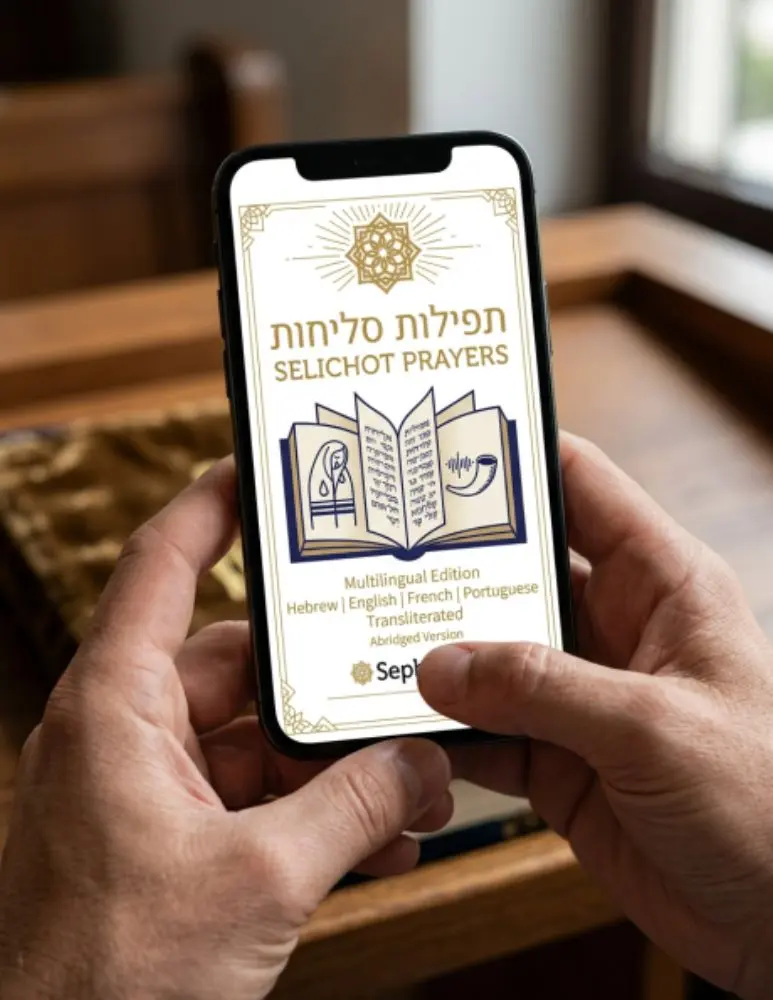
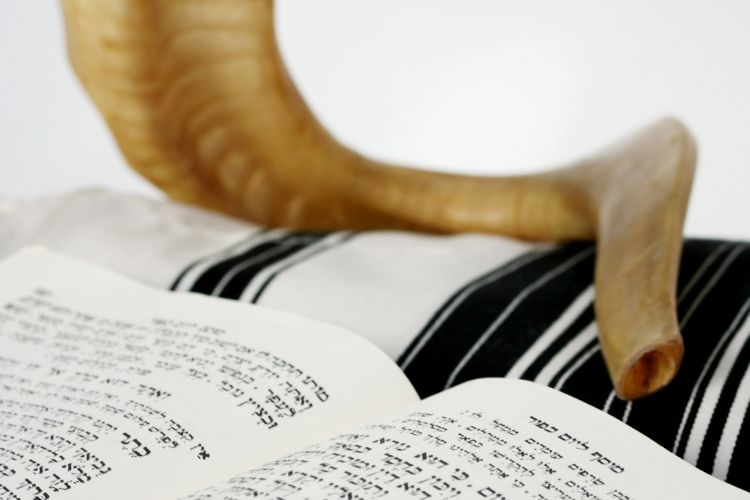

Siddur Ner Tamid - Selichot: Transliterated Sephardic Selichot (Edot HaMizrach)
[Print Replica] Kindle Edition

Siddur Ner Tamid - Weekday: Transliterated Sephardic Siddur (Edot HaMizrach)
[Print Replica] Kindle Edition
Quick Guide: The Five Books of Moses
| Genesis | Exodus | Leviticus | Numbers | Deuteronomy |
|---|---|---|---|---|
| Bereshit (1:1-6:8) |
Shemot (1:1-6:1) |
Vayikra (1:1-5:26) |
Bemidbar (1:1-4:20) |
Devarim (1:1-3:22) |
| Noach (6:9-11:32) |
Va'era (6:2-9:35) |
Tzav (6:1-8:36) |
Naso (4:21-7:89) |
Va'etchanan (3:23-7:11) |
| Lech Lecha (12:1-17:27) |
Bo (10:1-13:16) |
Shemini (9:1-11:47) |
Behaalotecha (8:1-12:16) |
Ekev (7:12-11:25) |
| Vayera (18:1-22:24) |
Beshalach (13:17-17:16) |
Tazria (12:1-13:59) |
Shelach (13:1-15:41) |
Re'eh (11:26-16:17) |
| Chaye Sarah (23:1-25:18) |
Yitro (18:1-20:23) |
Metzora (14:1-15:33) |
Korach (16:1-18:32) |
Shoftim (16:18-21:9) |
| Toledot (25:19-28:9) |
Mishpatim (21:1-24:18) |
Achare Mot (16:1-18:30) |
Chukat (19:1-22:1) |
Ki Tetze (21:10-25:19) |
| Vayetze (28:10-32:3) |
Teruma (25:1-27:19) |
Kedoshim (19:1-20:27) |
Balak (22:2-25:9) |
Ki Tavo (26:1-29:8) |
| Vayishlach (32:4-36:43) |
Tetzave (27:20-30:10) |
Emor (21:1-24:23) |
Pinchas (25:10-30:1) |
Nitzavim (29:9-30:20) |
| Vayeshev (37:1-40:23) |
Ki Tisa (30:11-34:35) |
Behar (25:1-26:2) |
Matot (30:2-32:42) |
Vayelech (31:1-30) |
| Miketz (41:1-44:17) | Vayakhel (35:1-38:20) |
Bechukotai (26:3-27:34) |
Masei (33:1-36:13) |
Haazinu (32:1-52) |
| Vayigash (44:18-47:27) |
Pekude (38:21-40:38) |
V'Zot HaBeracha (33:1-34:12) |
||
| Vayechi (47:28-50:26) |