

Matbucha (Salade Cuite): The Essential Sephardic Tomato Conserve

Authentic Moroccan Matbucha: A rich, savory tomato conserve.
A portrait close-up of a rich, red Matbucha stew served in a traditional blue and white tagine, with fresh tomatoes and garlic in the background.

Relevant

A portrait close-up of Fijeula pastries in a traditional blue and white patterned bowl, drizzled with honey, surrounded by fresh lemons and cinnamon sticks on a dark background.

Fijuelas

Traditional Sephardic Fijuelas: A delicate, honey-dipped Purim pastry.

Cultural Significance

Matbucha—derived from the Arabic word for “cooked”—and Salade Cuite (cooked salad)—the term favored by French-speaking North African communities—refer to the same fundamental pillar of the Sephardic table. This dense, aromatic reduction of tomatoes, roasted peppers, garlic, and chili is far more than a simple condiment; it is a culinary foundation.

In the Sephardic diaspora, Matbucha functions much like the Sunday gravy of Italian tradition; it is a repository of domestic technique and regional flavor. Its versatility is its primary virtue, serving simultaneously as a stand-alone appetizer (served chilled or at room temperature with crusty bread), a sophisticated side dish for grilled meats, and an essential base for complex main courses, including tagines, kefta, and the ubiquitous shakshouka. At Sephardic U, we document this preparation as a quintessential example of North African resourcefulness—transforming a handful of humble, produce-aisle staples into a savory, complex conserve that anchors the festive meal.

From the Kosher Cowboy Archives

Go to any Moroccan family’s home and there are two things you can always count on: their warm hospitality and an assurance that their grandmother’s Matbucha is the world’s best.

A family’s Matbucha recipe is serious business. First, know that the recipe has been handed down for generations. Secondly, there’s never been a written version of it, and there never will be. Gaining the recipe requires years of trust and hours of observation in the kitchen. Finally, asking for the family recipe is like asking for the combination to the family safe—and if you’re lucky enough to get one, there will always be a key “secret” ingredient missing, as if to throw off potential spies. You would think the recipe is worth gold bars, but the reality is that it comes down to a few key ingredients: tomatoes, bell peppers, garlic, and spices. It is a labor of love that rewards patience; the longer it simmers, the deeper the flavor. If someone asks you for your Matbucha recipe, don’t forget to leave out an ingredient!
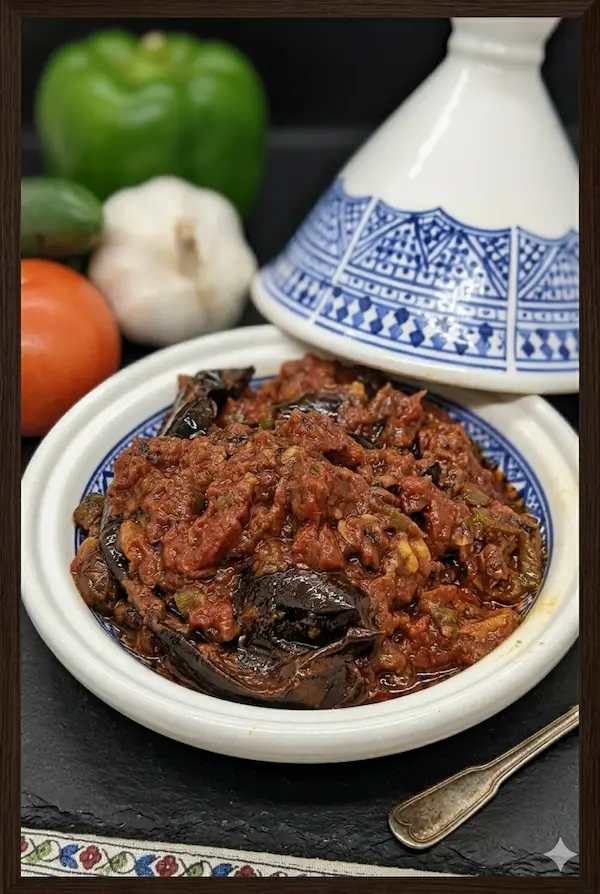
A portrait close-up of a rich, red Matbucha stew served in a traditional blue and white tagine, with fresh tomatoes and garlic in the background.
Kosher Cowboy

Matbucha (Salade Cuite)

A foundational Moroccan conserve of tomatoes, roasted bell peppers, and chili. Use this rich, savory condiment as an appetizer, a side dish, or the flavor base for shakshouka and tagines.
Prep Time 20 minutes
Cook Time 1 hour
Total Time 1 hour 20 minutes
Servings: 6 people
Course: Appetizer
Cuisine: Moroccan, Sephardic

Ingredients
  

  • 2 cans 14.5 oz each diced tomatoes
  • 1 bell pepper green or red, roasted, skinned, and sliced into strips
  • 1 jalapeno pepper optional, roasted, skinned, and sliced into strips
  • 5 Tbsp olive oil
  • 7-10 cloves garlic peeled and thinly sliced
  • 2 guajillo peppers dry (optional, for smoky flavor)
  • 4 arbol peppers dry (optional, for heat)
  • 2 Tbsp paprika ground
  • 1 Tbsp chili powder
  • ½ tsp turmeric ground (optional)
  • ½ tsp salt
  • 1 Tbsp sugar

Equipment

  • 1 Large skillet with cover
  • 1 Potato masher

Method
 

  1. Roast Peppers: Flame-roast the bell and jalapeno peppers on a gas cooktop or under the broiler until the skin is blackened. Let cool for 5–10 minutes. Under a cool stream of water, peel the skin, remove seeds, and slice into strips. Set aside.
  2. Infuse Spices: In a deep skillet over medium heat, add olive oil, paprika, chili powder, turmeric, and sliced garlic. Fry until the garlic turns a pale beige; this wakes up the aromatic oils.
  3. Simmer: Add the roasted pepper strips, guajillo, and arbol peppers (if using). Add the cans of diced tomatoes. Cover and simmer for 30 minutes.
  4. Reduce: Use a potato masher to break down any firm tomato chunks. Stir in the sugar. Cover and simmer on low for another 30 minutes, or until the liquid has significantly reduced into a thick paste.
  5. Finish: Remove from heat. Drizzle with a little olive oil, sprinkle with salt, and serve at room temperature or chilled.

Heritage Attribution

The culinary context and historical overview are provided by Sephardic U. The personal narrative and specific family techniques are part of the Kosher Cowboy heritage collection, featured here with permission. The historical context, personal memories, and culinary techniques preserved in this archive are licensed to Sephardic U to ensure these traditions remain accessible. See original recipe here.

Resources

Mourner’s Kaddish (Kaddish Yatom), traditionally said by mourners––that is, those who have lost a parent during the previous eleven months or a child, sibling, or spuce during the last thirty days––and by those observing the anniversary of the death of those close relatives. (In many contemporary communities, the full congregation says it in support of the mourners, and in memory of the six million Jews who perished during the Holocaust, assuming that at least one died on any given day.) The mourners Kaddish omits lines 7 and 8 of the Full Kaddish that asks God to answer our prayers, because presumably, God did not grant the mourner’s prayers that the relative recover and live).
 
אבל: יִתְגַּדַּל וְיִתְקַדַּשׁ שְׁמֵהּ רַבָּא
[קהל: אמן]
בְּעָלְמָא דִּי בְרָא כִרְעוּתֵהּ וְיַמְלִיךְ מַלְכוּתֵהּ בְּחַיֵּיכון וּבְיומֵיכון וּבְחַיֵּי דְכָל בֵּית יִשרָאֵל בַּעֲגָלָא וּבִזְמַן קָרִיב, וְאִמְרוּ אָמֵן: [קהל: אמן]
קהל ואבל: יְהֵא שְׁמֵהּ רַבָּא מְבָרַךְ לְעָלַם וּלְעָלְמֵי עָלְמַיָּא
אבל: יִתְבָּרַךְ וְיִשְׁתַּבַּח וְיִתְפָּאַר וְיִתְרומַם וְיִתְנַשּא וְיִתְהַדָּר וְיִתְעַלֶּה וְיִתְהַלָּל שְׁמֵהּ דְּקֻדְשָׁא. בְּרִיךְ הוּא. [קהל: בריך הוא:]
לְעֵלָּא מִן כָּל בִּרְכָתָא בעשי”ת: לְעֵלָּא לְעֵלָּא מִכָּל וְשִׁירָתָא תֻּשְׁבְּחָתָא וְנֶחֱמָתָא דַּאֲמִירָן בְּעָלְמָא. וְאִמְרוּ אָמֵן: [קהל: אמן]
יְהֵא שְׁלָמָא רַבָּא מִן שְׁמַיָּא וְחַיִּים עָלֵינוּ וְעַל כָּל יִשרָאֵל. וְאִמְרוּ אָמֵן: [קהל: אמן]
עושה שָׁלום בִּמְרומָיו הוּא יַעֲשה שָׁלום עָלֵינוּ וְעַל כָּל יִשרָאֵל וְאִמְרוּ אָמֵן: [קהל: אמן]

וְזֹ֖את הַתּוֹרָ֑ה אֲשֶׁר־שָׂ֣ם מֹשֶׁ֔ה לִפְנֵ֖י בְּנֵ֥י יִשְׂרָאֵֽל׃ תּוֹרָ֥ה צִוָּה־לָ֖נוּ מֹשֶׁ֑ה מוֹרָשָׁ֖ה קְהִלַּ֥ת יַעֲקֹֽב׃ הָאֵל֮ תָּמִ֢ים דַּ֫רְכּ֥וֹ אִמְרַֽת־יְהֹוָ֥ה צְרוּפָ֑ה מָגֵ֥ן ה֝֗וּא לְכֹ֤ל ׀ הַחֹסִ֬ים בּֽוֹ׃

Before reading the Torah:
הַשֵּׁם עִמָּכֶם.
יְבָרֶכְךָ הַשֵּׁם.
 

 .בָּרְכוּ אֶת יְהֹוָה הַמְּבֹרָךְ
.בָּרוּךְ יְהֹוָה הַמְּבֹרָךְ לְעוֹלָם וָעֶד

בָּרוּךְ אַתָּה יְהֹוָה, אֱלֹהֵינוּ מֶלֶךְ הָעוֹלָם, אֲשֶׁר בָּחַר בָּנוּ מִכָּל הָעַמִּים וְנָתַן לָנוּ אֶת תּוֹרָתוֹ. בָּרוּךְ אַתָּה יְהֹוָה, נוֹתֵן הַתּוֹרָה:
 אמן.

After reading the Torah:

בָּרוּךְ אַתָּה יְהֹוָה, אֱלֹהֵינוּ מֶלֶךְ הָעוֹלָם, אֲשֶׁר נָתַן לָנוּ אֶת תּוֹרָתוֹ תּוֹרַת אֱמֶת, וְחַיֵּי עוֹלָם נָטַע בְּתוֹכֵנוּ. בָּרוּךְ אַתָּה יְהֹוָה, נוֹתֵן הַתּוֹרָה:
אמן.

Beracha recited before the reading of the Haftara:

Mi Sheberach, the Jewish prayer for healing, is one of the most meaningful prayers in Judaism. It is a public prayer or blessing for an individual or group, most often recited in synagogue when the Torah is being read. 

He who blessed our fathers Abraham, Isaac and Jacob, Moses and Aaron, David and Solomon, may he heal ___ who is ill. May the Holy One, blessed be he, have mercy and speedily restore him to perfect health, both spiritual and physical; and let us say, Amen.

מִי שֶׁבֵּרַךְ אֲבוֹתֵֽינוּ, אַבְרָהָם יִצְחָק וְיַעֲקֹב, משֶׁה וְאַהֲרֹן, דָּוִד וּשְׁלֹמֹה, הוּא יְבָרֵךְ וִירַפֵּא אֶת הַחוֹלֶה ___. הַקָּדוֹשׁ בָּרוּךְ הוּא יִמָּלֵא רַחֲמִים עָלָיו לְהַחֲלִימוֹ וּלְרַפֹּאתוֹ, לְהַחֲזִיקוֹ וּלְהַחֲיוֹתוֹ, וְיִשְׁלַח לוֹ מְהֵרָה רְפוּאָה שְׁלֵמָה, רְפוּאַת הַנֶּֽפֶשׁ וּרְפוּאַת הַגּוּף; וְנֹאמַר אָמֵן.

Tefilat HaDerech (Hebrew: תפילת הדרך), also known as the Traveler’s Prayer or Wayfarer’s Prayer in English, is a prayer for safe travel recited by Jews when traveling by air, sea, or long car trips. It is recited at the start of every journey, preferably standing, but this is not required. It is frequently inscribed on hamsas, which may also include the Shema or Birkat HaBayit prayer.

In the “Blessing of Thanksgiving” (Birkat HaGomel), persons in four different categories should express gratitude to God for His compassion toward them:
One who has done one of the following: a) traveled across the ocean (by an international flight, etc.); b) traversed the desert; c) recovered from a very serious illness; d) been released from prison.
All other potentially fatal circumstances that one escapes, such as a wall crumbling on him, an ox goring him, thieves, auto accidents, etc., fall under the category of desert.

The reader recites:

בָּרוּךְ אַתָּה ה’ אֱלֹהֵינוּ מֶלֶךְ הָעוֹלָם הַגּוֹמֵל לְחַיָּבִים טוֹבוֹת שֶׁגְּמָלַנִי כָּל טוֹב.

 
The congregations responds:

מִי שֶׁגְמַלְךָ כֹּל טוֹב הוּא יִגְמַלְךָ כֹּל טוֹב סֶלָה.

[table id=6 /]

Spanish-Portuguese custom

זַרְקָא֮ מַקַּף־שׁוֹפָר־הוֹלֵ֣ךְ סְגוֹלְתָּא֒ פָּזֵר גָּד֡וֹל
תַ֠לְשָׁא תִּ֩ילְשָׁא אַזְלָ֨א גֵּ֜רֵישׁ פָּסֵק  ׀  רָבִ֗יעַ שְׁנֵי־גֵרֵישִׁ֞ין
דַּרְגָ֧א תְּבִ֛יר מַאֲרִ֥יךְ טַרְחָ֖א אַתְנָ֑ח שׁוֹפָר־מְהֻפָּ֤ךְ
קַדְמָא֙ תְּרֵ֨י־קַדְמִין֙ זָקֵף־קָט֔וֹן זָקֵף־גָּד֕וֹל שַׁלְשֶׁ֓לֶת
תְּרֵי־טַעֲמֵ֦י יְ֚תִיב סוֹף־פָּסֽוּק׃

Sephardic U Calendar