Boyosa: Traditional Moroccan Purim Bread

A historic, symbolic Moroccan bread for Purim.
A portrait shot of a rustic, braided Boyosa bread featuring baked-in eggs, set beside a small bowl of fresh eggs and a silver tea kettle on a wooden surface.

Relevant

A portrait close-up of Fijeula pastries in a traditional blue and white patterned bowl, drizzled with honey, surrounded by fresh lemons and cinnamon sticks on a dark background.

Fijuelas

Traditional Sephardic Fijuelas: A delicate, honey-dipped Purim pastry.

Cultural Significance

In the Sephardic tradition, the dining table is not merely a place for sustenance; it is a venue for the transmission of history. Boyosa—often referred to as ojos de Haman (Haman’s eyes) or boyoja ungola di Purim—is a central artifact of the Purim holiday. This rustic, scalloped loaf is more than a bread; it is a symbolic reenactment of the Purim narrative.

The preparation of boyosa requires both artisanal precision and symbolic intent. The dough, traditionally studded with the deep aromatics of anise and sesame seeds, is crafted to hold the weight of hard-boiled eggs embedded within its surface. In the Sephardic home, these eggs represent the eyes of the villain Haman. The act of “gouging” them out upon consumption serves as a ritualized remembrance of our history and a rejection of those who sought to harm our people. At Sephardic U, we document this recipe not only for its distinct flavor profile—characteristic of the North African diaspora—but as a preserved method of cultural resistance. Through the crimping of the dough and the careful positioning of the eggs, the boyosa reminds us that our culinary heritage is an active, living history.

From the Kosher Cowboy Archives

While the history is deep, the kitchen is where the tradition truly comes alive. Boyosa is a labor-intensive bake, but a necessary one to preserve the traditions that bind our generations together. Growing up, the arrival of Boyosa in our kitchen signaled the start of the holiday season. The house would fill with the scent of yeast and toasted flour—a precursor to the festive meals that define our culinary life.

While every family has a slightly different method for the filling—some preferring spinach and cheese, others keeping it simple with hard-boiled eggs tucked into the center—the soul of the bread remains the same: a testament to the resourcefulness and artistry of our ancestors. My mother’s hands crimping the dough, the smell of the oven, and the anticipation of that first crispy bite—that is the feeling we are passing down.
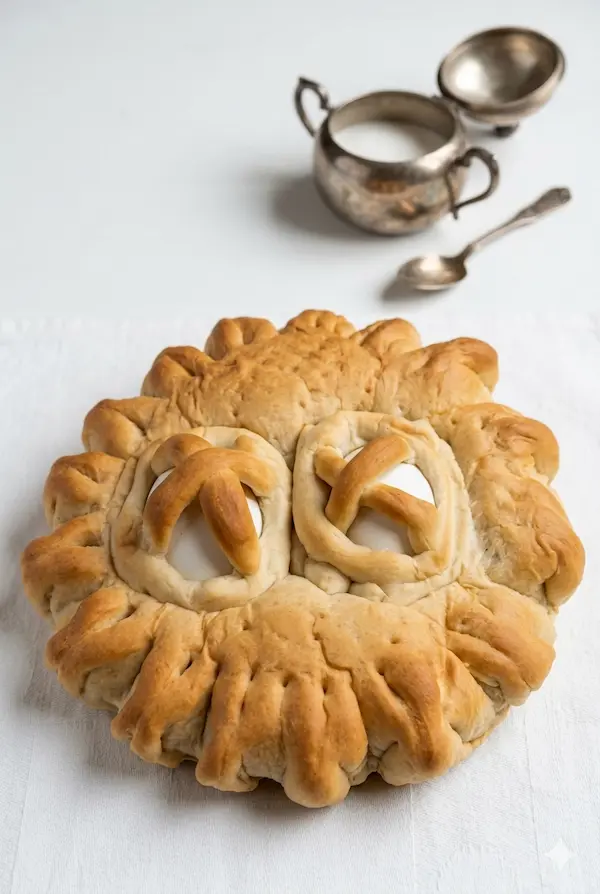
A portrait shot of a rustic, braided Boyosa bread featuring baked-in eggs, set beside a small bowl of fresh eggs and a silver tea kettle on a wooden surface.
Kosher Cowboy

Boyosa: Traditional Moroccan Purim Bread

A traditional Sephardic Purim bread, Boyosa is prized for its delicate, flaky layers and rich, savory profile. Often associated with the festival of Purim and the symbols of the Megillah, this heritage recipe preserves a centuries-old lamination technique that yields a crisp, golden pastry ideal for festive gatherings.
Prep Time 1 hour 30 minutes
Cook Time 25 minutes
Total Time 1 hour 55 minutes
Servings: 8 servings
Course: Bread
Cuisine: North African, Sephardic

Ingredients
  

  • 1 cup warm water
  • 1 tbsp active dry yeast
  • 3 cups white bread flour optional: 2-1/2 cups white bread flour and 1/2 cup whole wheat flour
  • 3 tbsp extra virgin olive oil
  • 1 tsp salt
  • 1 tbsp anise or fennel seeds
  • 2 tbsp sesame seeds for topping
  • 1/4 cup coarsely chopped almonds for topping
  • 2 hard-boiled eggs in their shells

Equipment

  • 1 Food processor or stand mixer
  • 1 Large baking sheet or wooden baking boards
  • 1 Kitchen shears
  • 1 Mixing bowl (for proofing)
  • 1 Fork

Method
 

  1. Activate Yeast: Dissolve the yeast in warm water. Allow to proof for 5–10 minutes until the mixture is foamy and active.
  2. Develop the Dough: In a food processor or stand mixer, combine the flour, olive oil, salt, and anise/fennel seeds. Add the yeast mixture and blend until the dough pulls away from the sides of the bowl.
  3. Knead and First Rise: Turn the dough out onto a floured surface. Knead by hand until the dough is smooth and elastic. Place in a greased bowl, cover, and let rise in a warm, draft-free area for 30 minutes.
  4. Second Rise: Punch down the dough and knead briefly. Cover and allow for a second rise of approximately 30 minutes.
  5. Shape: Divide the dough into two equal portions. Roll each half into a round, flat disk approximately the size of a pie pan.
  6. Symbolic Detail: Using kitchen shears, cut vertical slits (1/4 inch deep) around the perimeter of the dough. Crimp groups of three slits together to create a scalloped edge. Prick the surface of the loaf with a fork to prevent bubbling.
  7. Embed Ritual Elements: Position the pre-soaked, hard-boiled eggs in the center of the loaf where the eyes would be on a face. Secure each egg by crisscrossing two thin strips of rolled dough over the top, then circle the base with an additional thin strip of dough to anchor it.
  8. Final Proof: Let the shaped loaves rise for an additional 30 minutes.
  9. Bake: Preheat oven to 325°F (165°C). Bake for 15 minutes, then rotate the pans to ensure even heat distribution. Bake for an additional 10 minutes, or until the loaf achieves a deep, golden-brown crust.

Notes

Baker’s Note: This is a traditional, rustic bread designed to be dense and sturdy to support the weight of the symbolic egg additions. Unlike modern, aerated loaves, this bread has a hearty, satisfying crumb.
Ritual Note (Hafrashat Challah): In accordance with the Mitzvah of separating dough, remove a small piece of the dough prior to shaping. This consecrated portion is to be burnt or wrapped and disposed of respectfully, symbolizing the Terumah (offering) from the Temple era.

Heritage Attribution

The culinary context and historical overview are provided by Sephardic U. The personal narrative and specific family techniques are part of the Kosher Cowboy heritage collection, featured here with permission. The historical context, personal memories, and culinary techniques preserved in this archive are licensed to Sephardic U to ensure these traditions remain accessible. Explore more from the Kosher Cowboy archive here.

Resources

Mourner’s Kaddish (Kaddish Yatom), traditionally said by mourners––that is, those who have lost a parent during the previous eleven months or a child, sibling, or spuce during the last thirty days––and by those observing the anniversary of the death of those close relatives. (In many contemporary communities, the full congregation says it in support of the mourners, and in memory of the six million Jews who perished during the Holocaust, assuming that at least one died on any given day.) The mourners Kaddish omits lines 7 and 8 of the Full Kaddish that asks God to answer our prayers, because presumably, God did not grant the mourner’s prayers that the relative recover and live).
 
אבל: יִתְגַּדַּל וְיִתְקַדַּשׁ שְׁמֵהּ רַבָּא
[קהל: אמן]
בְּעָלְמָא דִּי בְרָא כִרְעוּתֵהּ וְיַמְלִיךְ מַלְכוּתֵהּ בְּחַיֵּיכון וּבְיומֵיכון וּבְחַיֵּי דְכָל בֵּית יִשרָאֵל בַּעֲגָלָא וּבִזְמַן קָרִיב, וְאִמְרוּ אָמֵן: [קהל: אמן]
קהל ואבל: יְהֵא שְׁמֵהּ רַבָּא מְבָרַךְ לְעָלַם וּלְעָלְמֵי עָלְמַיָּא
אבל: יִתְבָּרַךְ וְיִשְׁתַּבַּח וְיִתְפָּאַר וְיִתְרומַם וְיִתְנַשּא וְיִתְהַדָּר וְיִתְעַלֶּה וְיִתְהַלָּל שְׁמֵהּ דְּקֻדְשָׁא. בְּרִיךְ הוּא. [קהל: בריך הוא:]
לְעֵלָּא מִן כָּל בִּרְכָתָא בעשי”ת: לְעֵלָּא לְעֵלָּא מִכָּל וְשִׁירָתָא תֻּשְׁבְּחָתָא וְנֶחֱמָתָא דַּאֲמִירָן בְּעָלְמָא. וְאִמְרוּ אָמֵן: [קהל: אמן]
יְהֵא שְׁלָמָא רַבָּא מִן שְׁמַיָּא וְחַיִּים עָלֵינוּ וְעַל כָּל יִשרָאֵל. וְאִמְרוּ אָמֵן: [קהל: אמן]
עושה שָׁלום בִּמְרומָיו הוּא יַעֲשה שָׁלום עָלֵינוּ וְעַל כָּל יִשרָאֵל וְאִמְרוּ אָמֵן: [קהל: אמן]

וְזֹ֖את הַתּוֹרָ֑ה אֲשֶׁר־שָׂ֣ם מֹשֶׁ֔ה לִפְנֵ֖י בְּנֵ֥י יִשְׂרָאֵֽל׃ תּוֹרָ֥ה צִוָּה־לָ֖נוּ מֹשֶׁ֑ה מוֹרָשָׁ֖ה קְהִלַּ֥ת יַעֲקֹֽב׃ הָאֵל֮ תָּמִ֢ים דַּ֫רְכּ֥וֹ אִמְרַֽת־יְהֹוָ֥ה צְרוּפָ֑ה מָגֵ֥ן ה֝֗וּא לְכֹ֤ל ׀ הַחֹסִ֬ים בּֽוֹ׃

Before reading the Torah:
הַשֵּׁם עִמָּכֶם.
יְבָרֶכְךָ הַשֵּׁם.
 

 .בָּרְכוּ אֶת יְהֹוָה הַמְּבֹרָךְ
.בָּרוּךְ יְהֹוָה הַמְּבֹרָךְ לְעוֹלָם וָעֶד

בָּרוּךְ אַתָּה יְהֹוָה, אֱלֹהֵינוּ מֶלֶךְ הָעוֹלָם, אֲשֶׁר בָּחַר בָּנוּ מִכָּל הָעַמִּים וְנָתַן לָנוּ אֶת תּוֹרָתוֹ. בָּרוּךְ אַתָּה יְהֹוָה, נוֹתֵן הַתּוֹרָה:
 אמן.

After reading the Torah:

בָּרוּךְ אַתָּה יְהֹוָה, אֱלֹהֵינוּ מֶלֶךְ הָעוֹלָם, אֲשֶׁר נָתַן לָנוּ אֶת תּוֹרָתוֹ תּוֹרַת אֱמֶת, וְחַיֵּי עוֹלָם נָטַע בְּתוֹכֵנוּ. בָּרוּךְ אַתָּה יְהֹוָה, נוֹתֵן הַתּוֹרָה:
אמן.

Beracha recited before the reading of the Haftara:

Mi Sheberach, the Jewish prayer for healing, is one of the most meaningful prayers in Judaism. It is a public prayer or blessing for an individual or group, most often recited in synagogue when the Torah is being read. 

He who blessed our fathers Abraham, Isaac and Jacob, Moses and Aaron, David and Solomon, may he heal ___ who is ill. May the Holy One, blessed be he, have mercy and speedily restore him to perfect health, both spiritual and physical; and let us say, Amen.

מִי שֶׁבֵּרַךְ אֲבוֹתֵֽינוּ, אַבְרָהָם יִצְחָק וְיַעֲקֹב, משֶׁה וְאַהֲרֹן, דָּוִד וּשְׁלֹמֹה, הוּא יְבָרֵךְ וִירַפֵּא אֶת הַחוֹלֶה ___. הַקָּדוֹשׁ בָּרוּךְ הוּא יִמָּלֵא רַחֲמִים עָלָיו לְהַחֲלִימוֹ וּלְרַפֹּאתוֹ, לְהַחֲזִיקוֹ וּלְהַחֲיוֹתוֹ, וְיִשְׁלַח לוֹ מְהֵרָה רְפוּאָה שְׁלֵמָה, רְפוּאַת הַנֶּֽפֶשׁ וּרְפוּאַת הַגּוּף; וְנֹאמַר אָמֵן.

Tefilat HaDerech (Hebrew: תפילת הדרך), also known as the Traveler’s Prayer or Wayfarer’s Prayer in English, is a prayer for safe travel recited by Jews when traveling by air, sea, or long car trips. It is recited at the start of every journey, preferably standing, but this is not required. It is frequently inscribed on hamsas, which may also include the Shema or Birkat HaBayit prayer.

In the “Blessing of Thanksgiving” (Birkat HaGomel), persons in four different categories should express gratitude to God for His compassion toward them:
One who has done one of the following: a) traveled across the ocean (by an international flight, etc.); b) traversed the desert; c) recovered from a very serious illness; d) been released from prison.
All other potentially fatal circumstances that one escapes, such as a wall crumbling on him, an ox goring him, thieves, auto accidents, etc., fall under the category of desert.

The reader recites:

בָּרוּךְ אַתָּה ה’ אֱלֹהֵינוּ מֶלֶךְ הָעוֹלָם הַגּוֹמֵל לְחַיָּבִים טוֹבוֹת שֶׁגְּמָלַנִי כָּל טוֹב.

 
The congregations responds:

מִי שֶׁגְמַלְךָ כֹּל טוֹב הוּא יִגְמַלְךָ כֹּל טוֹב סֶלָה.

[table id=6 /]

Spanish-Portuguese custom

זַרְקָא֮ מַקַּף־שׁוֹפָר־הוֹלֵ֣ךְ סְגוֹלְתָּא֒ פָּזֵר גָּד֡וֹל
תַ֠לְשָׁא תִּ֩ילְשָׁא אַזְלָ֨א גֵּ֜רֵישׁ פָּסֵק  ׀  רָבִ֗יעַ שְׁנֵי־גֵרֵישִׁ֞ין
דַּרְגָ֧א תְּבִ֛יר מַאֲרִ֥יךְ טַרְחָ֖א אַתְנָ֑ח שׁוֹפָר־מְהֻפָּ֤ךְ
קַדְמָא֙ תְּרֵ֨י־קַדְמִין֙ זָקֵף־קָט֔וֹן זָקֵף־גָּד֕וֹל שַׁלְשֶׁ֓לֶת
תְּרֵי־טַעֲמֵ֦י יְ֚תִיב סוֹף־פָּסֽוּק׃

Sephardic U Calendar