

Dafina: The Traditional Moroccan Shabbat Stew

Traditional Moroccan Dafina: A classic slow-cooked Shabbat stew.
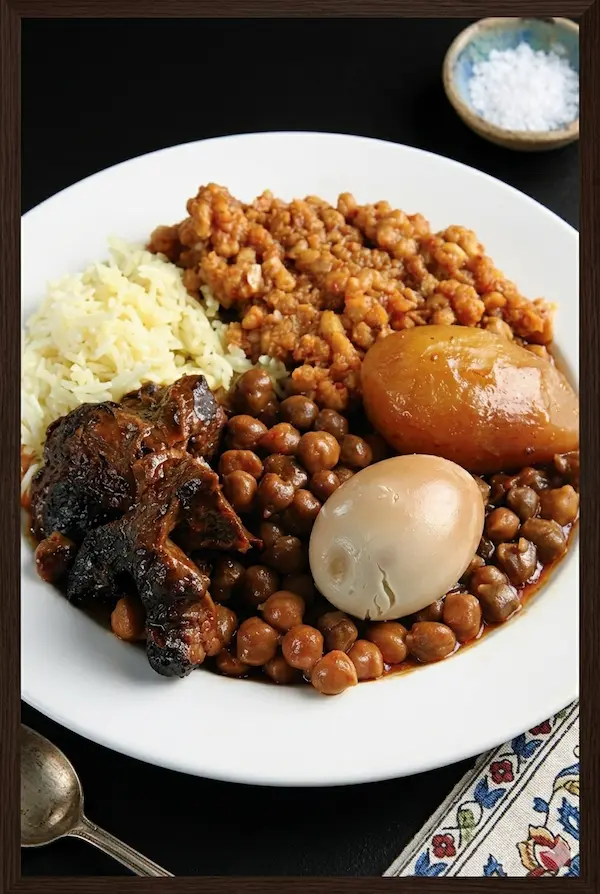
A portrait view of a hearty Dafina stew served in a white bowl, featuring tender meat, whole chickpeas, and a whole egg, set against a dark, moody background.

Relevant

A portrait close-up of Fijeula pastries in a traditional blue and white patterned bowl, drizzled with honey, surrounded by fresh lemons and cinnamon sticks on a dark background.

Fijuelas

Traditional Sephardic Fijuelas: A delicate, honey-dipped Purim pastry.

Cultural Significance

In the observance of Shabbat, the preparation of food is governed by specific traditions that prohibit cooking on the Sabbath day. Across the Sephardic diaspora, this resulted in the development of the hamin—a category of slow-cooked stews designed to be placed in the oven or on a heat source before sundown on Friday, simmering gently until the Sabbath meal the following day. Dafina (from the Arabic dafina, meaning “covered” or “hidden”) is the Moroccan iteration of this culinary tradition.

Dafina is a testament to the artistry of patience. Unlike quick-cooking weeknight dishes, dafina relies on the long, low-temperature transition of time to bind its ingredients—meat, marrow bones, legumes, and eggs—into a unified, savory whole. The eggs, cooked in their shells within the stew, take on a deep brown hue and a custard-like texture, while the potatoes absorb the essence of the beef and marrow. At Sephardic U, we document this recipe not only as a centerpiece of the Shabbat table but as a profound example of how Jewish culinary heritage has adapted to the ritual requirements of our faith.

From the Kosher Cowboy Archives

Every Saturday morning, the smell of Dafina permeates every Jewish Moroccan home. It is a scent ingrained into our senses for life. There is nothing quite like waking up to that aroma. The crusty drips from the lid of the slow cooker, the browned eggs, and the darkened, tender potatoes are all visual signs that “this is the best one yet!”

It’s more than just a stew; it’s a sensory experience that connects us to our grandparents’ kitchens. The ritual of pre-soaking the beans, carefully layering the meat and marrow bones, and knowing it will transform overnight is a piece of the magic of Shabbat. When it’s finally time to serve, peeling the browned eggs and plating them alongside the potatoes and meat feels like unwrapping a gift you’ve been waiting for all week.
A portrait view of a hearty Dafina stew served in a white bowl, featuring tender meat, whole chickpeas, and a whole egg, set against a dark, moody background.
Kosher Cowboy

Dafina: The Traditional Moroccan Shabbat Stew

A traditional Moroccan slow-cooked Shabbat stew featuring tender beef, marrow bones, beans, and eggs. An essential, heritage-rich centerpiece for the Sabbath table.
Prep Time 15 minutes
Cook Time 1 day
Servings: 8 servings
Course: Main Course
Cuisine: Moroccan, Sephardic

Ingredients
  

  • 1 lb roast beef, lamb, ribs, or flanken
  • 2 marrow bones
  • 4 medium red potatoes peeled and quartered
  • 1 cup navy beans soaked overnight or 1 can, drained
  • 1 small onion minced
  • 1 head garlic washed with top clipped
  • 1 tsp salt
  • 1 tsp cumin
  • ½ tsp nutmeg
  • 2 tsp paprika
  • ½ tsp pepper
  • 4 eggs in shell, rinsed
  • 4 cups water approx., as needed

Equipment

  • 1 Slow cooker
  • 1 Sauce pan

Method
 

  1. Prep: If using dry navy beans, pre-soak in cold water overnight. Wash the garlic head and clip the top to remove any sand.
  2. Sauté Base: In a saucepan, fry the minced onion until translucent. Stir in the garlic, salt, cumin, nutmeg, paprika, and pepper. Add 3 cups of water and bring to a simmer.
  3. Layer: Add the beans, meat, and marrow bones to the saucepan. Simmer covered for 30–45 minutes until the beans begin to soften.
  4. Slow Cook: Transfer all contents into a slow cooker. Add the whole eggs (in shells) and the quartered potatoes. Add remaining water until the potatoes are just submerged.
  5. Simmer: Cover and cook on low heat overnight (or at least 12–24 hours).
  6. Serve: Carefully remove the eggs, peel them, and arrange on a platter with the potatoes, meat, and bones. Serve the cooking juices and beans in a separate bowl.

Heritage Attribution

The culinary context and historical overview are provided by Sephardic U. The personal narrative and specific family techniques are part of the Kosher Cowboy heritage collection, featured here with permission. The historical context, personal memories, and culinary techniques preserved in this archive are licensed to Sephardic U to ensure these traditions remain accessible. [Link to original post on Kosher Cowboy]

Resources

Mourner’s Kaddish (Kaddish Yatom), traditionally said by mourners––that is, those who have lost a parent during the previous eleven months or a child, sibling, or spuce during the last thirty days––and by those observing the anniversary of the death of those close relatives. (In many contemporary communities, the full congregation says it in support of the mourners, and in memory of the six million Jews who perished during the Holocaust, assuming that at least one died on any given day.) The mourners Kaddish omits lines 7 and 8 of the Full Kaddish that asks God to answer our prayers, because presumably, God did not grant the mourner’s prayers that the relative recover and live).
 
אבל: יִתְגַּדַּל וְיִתְקַדַּשׁ שְׁמֵהּ רַבָּא
[קהל: אמן]
בְּעָלְמָא דִּי בְרָא כִרְעוּתֵהּ וְיַמְלִיךְ מַלְכוּתֵהּ בְּחַיֵּיכון וּבְיומֵיכון וּבְחַיֵּי דְכָל בֵּית יִשרָאֵל בַּעֲגָלָא וּבִזְמַן קָרִיב, וְאִמְרוּ אָמֵן: [קהל: אמן]
קהל ואבל: יְהֵא שְׁמֵהּ רַבָּא מְבָרַךְ לְעָלַם וּלְעָלְמֵי עָלְמַיָּא
אבל: יִתְבָּרַךְ וְיִשְׁתַּבַּח וְיִתְפָּאַר וְיִתְרומַם וְיִתְנַשּא וְיִתְהַדָּר וְיִתְעַלֶּה וְיִתְהַלָּל שְׁמֵהּ דְּקֻדְשָׁא. בְּרִיךְ הוּא. [קהל: בריך הוא:]
לְעֵלָּא מִן כָּל בִּרְכָתָא בעשי”ת: לְעֵלָּא לְעֵלָּא מִכָּל וְשִׁירָתָא תֻּשְׁבְּחָתָא וְנֶחֱמָתָא דַּאֲמִירָן בְּעָלְמָא. וְאִמְרוּ אָמֵן: [קהל: אמן]
יְהֵא שְׁלָמָא רַבָּא מִן שְׁמַיָּא וְחַיִּים עָלֵינוּ וְעַל כָּל יִשרָאֵל. וְאִמְרוּ אָמֵן: [קהל: אמן]
עושה שָׁלום בִּמְרומָיו הוּא יַעֲשה שָׁלום עָלֵינוּ וְעַל כָּל יִשרָאֵל וְאִמְרוּ אָמֵן: [קהל: אמן]

וְזֹ֖את הַתּוֹרָ֑ה אֲשֶׁר־שָׂ֣ם מֹשֶׁ֔ה לִפְנֵ֖י בְּנֵ֥י יִשְׂרָאֵֽל׃ תּוֹרָ֥ה צִוָּה־לָ֖נוּ מֹשֶׁ֑ה מוֹרָשָׁ֖ה קְהִלַּ֥ת יַעֲקֹֽב׃ הָאֵל֮ תָּמִ֢ים דַּ֫רְכּ֥וֹ אִמְרַֽת־יְהֹוָ֥ה צְרוּפָ֑ה מָגֵ֥ן ה֝֗וּא לְכֹ֤ל ׀ הַחֹסִ֬ים בּֽוֹ׃

Before reading the Torah:
הַשֵּׁם עִמָּכֶם.
יְבָרֶכְךָ הַשֵּׁם.
 

 .בָּרְכוּ אֶת יְהֹוָה הַמְּבֹרָךְ
.בָּרוּךְ יְהֹוָה הַמְּבֹרָךְ לְעוֹלָם וָעֶד

בָּרוּךְ אַתָּה יְהֹוָה, אֱלֹהֵינוּ מֶלֶךְ הָעוֹלָם, אֲשֶׁר בָּחַר בָּנוּ מִכָּל הָעַמִּים וְנָתַן לָנוּ אֶת תּוֹרָתוֹ. בָּרוּךְ אַתָּה יְהֹוָה, נוֹתֵן הַתּוֹרָה:
 אמן.

After reading the Torah:

בָּרוּךְ אַתָּה יְהֹוָה, אֱלֹהֵינוּ מֶלֶךְ הָעוֹלָם, אֲשֶׁר נָתַן לָנוּ אֶת תּוֹרָתוֹ תּוֹרַת אֱמֶת, וְחַיֵּי עוֹלָם נָטַע בְּתוֹכֵנוּ. בָּרוּךְ אַתָּה יְהֹוָה, נוֹתֵן הַתּוֹרָה:
אמן.

Beracha recited before the reading of the Haftara:

Mi Sheberach, the Jewish prayer for healing, is one of the most meaningful prayers in Judaism. It is a public prayer or blessing for an individual or group, most often recited in synagogue when the Torah is being read. 

He who blessed our fathers Abraham, Isaac and Jacob, Moses and Aaron, David and Solomon, may he heal ___ who is ill. May the Holy One, blessed be he, have mercy and speedily restore him to perfect health, both spiritual and physical; and let us say, Amen.

מִי שֶׁבֵּרַךְ אֲבוֹתֵֽינוּ, אַבְרָהָם יִצְחָק וְיַעֲקֹב, משֶׁה וְאַהֲרֹן, דָּוִד וּשְׁלֹמֹה, הוּא יְבָרֵךְ וִירַפֵּא אֶת הַחוֹלֶה ___. הַקָּדוֹשׁ בָּרוּךְ הוּא יִמָּלֵא רַחֲמִים עָלָיו לְהַחֲלִימוֹ וּלְרַפֹּאתוֹ, לְהַחֲזִיקוֹ וּלְהַחֲיוֹתוֹ, וְיִשְׁלַח לוֹ מְהֵרָה רְפוּאָה שְׁלֵמָה, רְפוּאַת הַנֶּֽפֶשׁ וּרְפוּאַת הַגּוּף; וְנֹאמַר אָמֵן.

Tefilat HaDerech (Hebrew: תפילת הדרך), also known as the Traveler’s Prayer or Wayfarer’s Prayer in English, is a prayer for safe travel recited by Jews when traveling by air, sea, or long car trips. It is recited at the start of every journey, preferably standing, but this is not required. It is frequently inscribed on hamsas, which may also include the Shema or Birkat HaBayit prayer.

In the “Blessing of Thanksgiving” (Birkat HaGomel), persons in four different categories should express gratitude to God for His compassion toward them:
One who has done one of the following: a) traveled across the ocean (by an international flight, etc.); b) traversed the desert; c) recovered from a very serious illness; d) been released from prison.
All other potentially fatal circumstances that one escapes, such as a wall crumbling on him, an ox goring him, thieves, auto accidents, etc., fall under the category of desert.

The reader recites:

בָּרוּךְ אַתָּה ה’ אֱלֹהֵינוּ מֶלֶךְ הָעוֹלָם הַגּוֹמֵל לְחַיָּבִים טוֹבוֹת שֶׁגְּמָלַנִי כָּל טוֹב.

 
The congregations responds:

מִי שֶׁגְמַלְךָ כֹּל טוֹב הוּא יִגְמַלְךָ כֹּל טוֹב סֶלָה.

[table id=6 /]

Spanish-Portuguese custom

זַרְקָא֮ מַקַּף־שׁוֹפָר־הוֹלֵ֣ךְ סְגוֹלְתָּא֒ פָּזֵר גָּד֡וֹל
תַ֠לְשָׁא תִּ֩ילְשָׁא אַזְלָ֨א גֵּ֜רֵישׁ פָּסֵק  ׀  רָבִ֗יעַ שְׁנֵי־גֵרֵישִׁ֞ין
דַּרְגָ֧א תְּבִ֛יר מַאֲרִ֥יךְ טַרְחָ֖א אַתְנָ֑ח שׁוֹפָר־מְהֻפָּ֤ךְ
קַדְמָא֙ תְּרֵ֨י־קַדְמִין֙ זָקֵף־קָט֔וֹן זָקֵף־גָּד֕וֹל שַׁלְשֶׁ֓לֶת
תְּרֵי־טַעֲמֵ֦י יְ֚תִיב סוֹף־פָּסֽוּק׃

Sephardic U Calendar