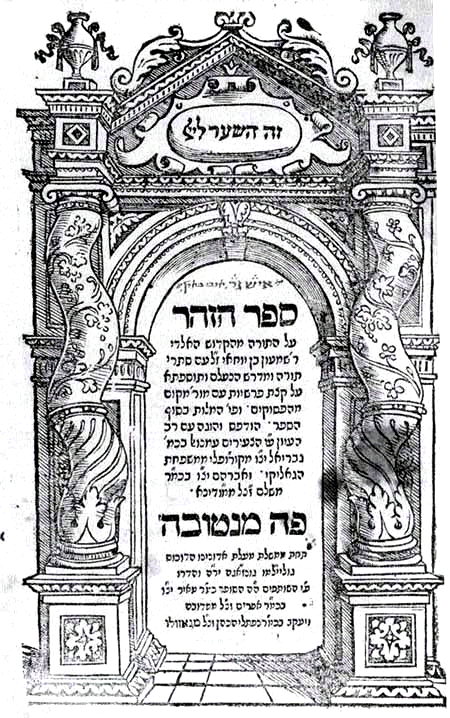
Student of the Rashba whose clear novellae on most of the Talmud are a cornerstone of yeshiva study. His Sefer HaZikkaron defends the Rambam's views where the Ramban had challenged them.
Who was the Ritva?
Rabbi Yom Tov ben Avraham Asevilli, known by the acronym the Ritva, was one of the last great Talmudic commentators of medieval Spain. His Hiddushei HaRitva, novellae on most of the Talmud, are among the most studied works in yeshivot today, prized for their clarity and for preserving the teachings of the great sages of Catalonia and Castile.
Seville and Barcelona
Yom Tov ben Avraham was born around 1260 in Seville, in Castile, and his family name, Asevilli, means “of Seville.” As a young man he went to study in Barcelona and other centers with the two leading sages of the generation: Rabbi Aharon HaLevi, the Ra’ah, and Rabbi Shlomo ben Adret, the Rashba. Through them he inherited the method of the Ramban, who had taught them both, a method that joined the rigor of the Spanish tradition to the dialectic of the French Tosafists.
The Ritva became a recognized authority, and in later life is said to have served as a rabbi in Zaragoza in Aragon. Questions of halakha came to him from many communities.
The Hiddushei HaRitva
His great work is his commentary on the Talmud. Tractate by tractate, the Ritva follows the discussion of the Gemara, explaining its logic, raising difficulties, and bringing the explanations of the Ramban, the Ra’ah, the Rashba and the Tosafists, before giving his own view. He writes clearly and concisely, and for many students the Ritva is the best way to understand what the earlier Spanish sages meant. Many of his commentaries were lost for centuries and survived only in manuscripts; some were printed only in modern times.
Not every work printed under his name is his: scholars have shown that some commentaries attributed to the Ritva were written by others. The genuine works, however, place him among the greatest of the Rishonim, the early authorities.
A defense of the Rambam
The Ritva also wrote Sefer HaZikaron, a short work defending the Rambam against criticisms raised by the Ramban in his commentary on the Torah. It shows his independence of mind: though he was a student of the Ramban’s school, he felt it right to stand up for the Rambam where he thought his words had been misunderstood. He also wrote a commentary on the Passover Haggadah and a work on the laws of blessings, and his responsa were collected and printed.
Death
The Ritva died around 1320. The exact place and date of his death are not known, and no hilula date is widely recorded.
The Ritva’s legacy for Sephardim
The Ritva stands at the end of the golden chain of Spanish Talmudists that runs from the Ramban through the Rashba to his own generation. Sephardi and Ashkenazi students alike open the Hiddushei HaRitva every day, and Sephardi halakhic authorities cite him constantly. Through him, the Torah of Seville, Barcelona and Zaragoza is still alive in the study halls of the world.
Teachers and students
Sources
- "Yom Tov ben Abraham Ishbili," Encyclopaedia Judaica, 2nd ed. (2007)