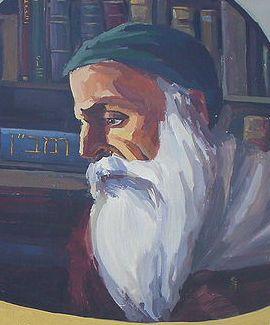
For half a century the rabbi of Barcelona, answering questions from communities across Europe and North Africa. Thousands of his responsa survive, and his Talmudic novellae remain standard study in yeshivot today.
Who was the Rashba?
Rabbi Shlomo ben Avraham ibn Aderet, known as the Rashba, was for half a century the rabbi of Barcelona and the leading halakhic authority of the Jewish world. Questions came to him from Spain, Provence, France, Germany, Italy, North Africa and the Land of Israel, and thousands of his answers survive. His novellae on the Talmud are studied in every yeshiva, and his students carried his method across the Sephardic world.
Barcelona
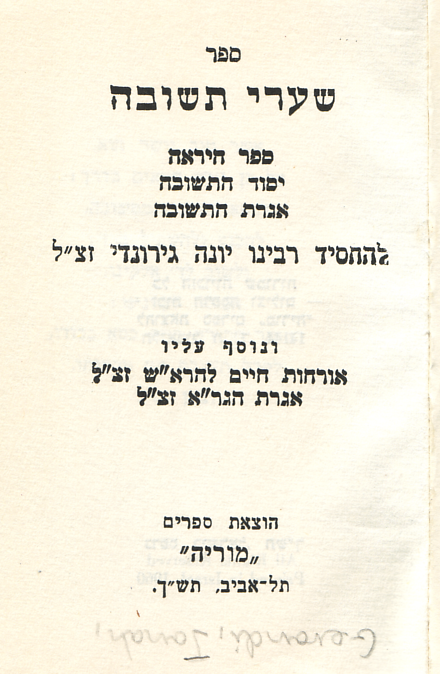
Shlomo ibn Aderet was born in Barcelona in 1235, to a prominent family of the city. He studied with the two leading sages of Catalonia: the Ramban, Rabbi Moshe ben Nahman of Girona, and Rabbenu Yonah of Girona, author of Sha’arei Teshuvah. From the Ramban he inherited the method of Talmud study that joined the Sephardi tradition of the Rif and the Rambam to the analytical approach of the Tosafists of northern France.
He was also a successful businessman who lent money to the King of Aragon, and he served as rabbi of Barcelona for some fifty years, leading one of the largest and most learned Jewish communities of Europe.
The responsa
The Rashba’s greatest legacy is his responsa, his written answers to questions of Jewish law. Some three thousand survive, the largest collection from any medieval sage. They deal with prayer, Shabbat and kashrut, marriage and divorce, business and inheritance, communal taxation and government, and the relations between Jews and their non-Jewish neighbors. Historians read them as a window into Jewish life in medieval Spain, and rabbis still cite them as binding precedents.
The Talmudist
His Hiddushei HaRashba, novellae on much of the Talmud, are a classic of the Spanish school: clear, careful and penetrating, gathering earlier views and weighing them before reaching a conclusion. His Torat HaBayit is a code of the laws of kashrut and other household matters, and his Avodat HaKodesh covers the laws of Shabbat and festivals. Maran Yosef Karo often relied on his rulings.
Defender of the tradition
The Rashba wrote in defense of Judaism against Christian polemicists, including the Dominican Raymond Martini, and against a Muslim critic of the Torah, answering their arguments with learning and calm. He also wrote explanations of the aggadot of the Talmud, showing that stories that seemed strange had deep meaning.
In 1305 he joined other rabbis of Barcelona in issuing a ban against studying Greek philosophy and science before the age of twenty-five, except for medicine. He feared that young students who studied philosophy without a firm grounding in Torah would lose their faith, after hearing of preachers in Provence who explained the Bible as allegory. The ban reflected a long debate among Sephardi sages about the place of philosophy, a debate in which he took a cautious side while respecting the Rambam.
Students and legacy
The Rashba’s students included Rabbi Yom Tov ben Avraham Asevilli, the Ritva, whose novellae are among the most studied in the Sephardi world; Rabbenu Bahya ben Asher, author of a famous Torah commentary; and many others who spread his teachings across Spain and beyond. He died in Barcelona around 1310.
For Sephardim, the Rashba stands at the center of the great chain of Spanish Talmudists that runs from the Ramban through him to the Ritva and the Ran. When a Sephardi student opens the Talmud today, the Rashba’s novellae are among the first commentaries he turns to, and when a rabbi decides a hard question, the Rashba’s responsa are still part of the conversation.

Teachers and students
Sources
- Isidore Epstein, The Responsa of Rabbi Solomon ben Adreth of Barcelona (1235–1310) as a Source of the History of Spain (London: Kegan Paul, 1925)
- "Adret, Solomon ben Abraham," Encyclopaedia Judaica, 2nd ed. (2007)