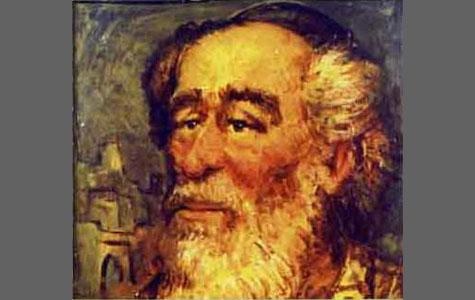
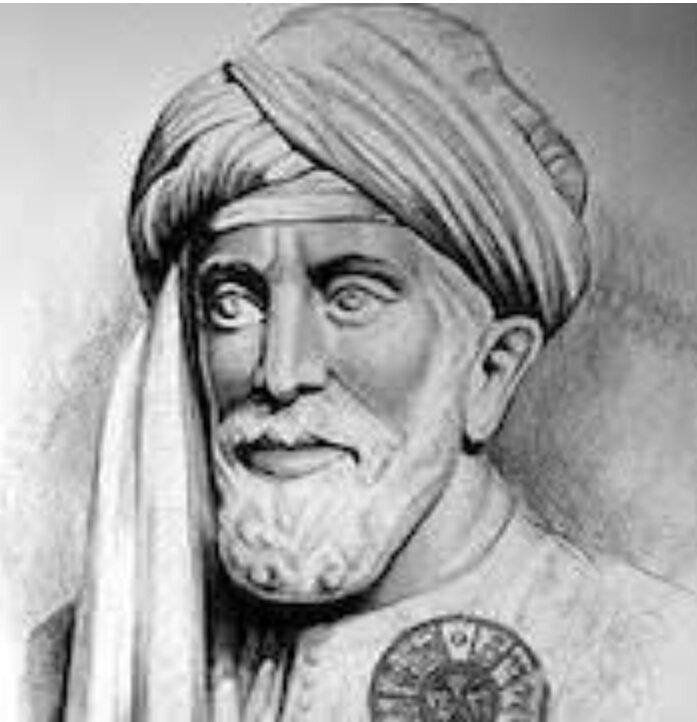
Vizier of Zirid Granada who led its armies in the field and also served as nagid, head of the Jewish community. His Hebrew war poems, wisdom verse and laments made Hebrew a language of public life again.
Who was Shmuel HaNagid?
Rabbi Shmuel HaLevi ibn Naghrela, known as Shmuel HaNagid, was one of the most extraordinary figures of Jewish history: a Talmudic scholar and halakhic author, the leader of the Jews of Spain, the chief minister of a Muslim kingdom, the commander of its armies, and one of the greatest Hebrew poets who ever lived. In him the Golden Age of al-Andalus reached its height.
From Córdoba to Granada
Shmuel ibn Naghrela was born in 993, probably in Córdoba, the capital of the Umayyad caliphate, into a family of the tribe of Levi. He studied Talmud with Rabbi Hanokh ben Moshe, the head of Córdoba’s Jewish community, and also mastered Arabic language and literature, which would open the doors of power to him.
In 1013 Berber troops sacked Córdoba, and the caliphate collapsed into a patchwork of small kingdoms, the taifas. Like many Jews, the young Shmuel fled. According to a later account by Avraham ibn Daud, he opened a spice shop in Málaga, where his skill in writing elegant Arabic letters brought him to the attention of the vizier of the Berber kingdom of Granada. He entered the vizier’s service as a secretary, and his abilities carried him upward.
Vizier and commander
By the late 1020s he had become one of the leading officials of King Habbus of Granada, and after the king’s death in 1038 he helped secure the throne for Habbus’s son, Badis. For nearly two decades he served as Badis’s chief minister, running the kingdom’s administration and finances. Remarkably for a Jew in a Muslim state, he also led its armies. Almost every year he went out on campaign against Granada’s neighbors, especially Almería and Seville.
He wrote about these campaigns in Hebrew poems unlike anything before them: poems of the night before battle, of victory and of the dead on the field, often ending with thanksgiving to God for his rescue. They are the first war poems in Hebrew since the Bible, written by a man who had fought the battles himself.
Nagid of the Jews
Around 1027 the Jews of Spain recognized him as their nagid, their leader and protector, the title by which he has been known ever since. He used his wealth and influence to support Torah learning across the Jewish world. He maintained scholars and students in Spain, bought books for them, and sent support to the academies of Babylonia, North Africa and the Land of Israel. He corresponded with the sages of Kairouan and Babylonia, and he was a patron of young poets, among them, for a time, Shlomo ibn Gabirol.
He was also a halakhic authority. His great legal work, Hilkhata Gavrata, “the great halakhot,” was cited by later sages, though only fragments survive.
The poet
Shmuel HaNagid wrote his poetry in three collections named after the books of the Bible: Ben Tehillim, poems in the spirit of Psalms, including his war poems; Ben Mishlei, a collection of wisdom sayings in the spirit of Proverbs; and Ben Kohelet, reflections on the passing of life in the spirit of Ecclesiastes. He also wrote love and wine poems, laments for his brother, and poems to his son Yehosef, who as a boy helped copy his father’s verses.
He was among the first to show that Hebrew, the language of prayer, could express the whole of human life, from the battlefield and the court to friendship and grief. The poets who followed him in al-Andalus, from Ibn Gabirol to Yehuda HaLevi, wrote in a language he had helped bring back to life.
Death and legacy
Shmuel HaNagid died in 1055 or 1056, still in office. His son Yehosef succeeded him as vizier, but resentment of a Jew’s power at court ended in tragedy: in 1066 a mob in Granada killed Yehosef and attacked the city’s Jews.
For Sephardim, Shmuel HaNagid is a symbol of what the Jews of al-Andalus achieved: Torah scholarship, leadership of the community, public service and poetry joined in one life. His poems are still read in Israeli schools, and his name stands at the head of the long line of Sephardi Jews who served their countries and their people at the same time.
Sephardic connection
Andalusian Jewish statesman and Hebrew poet who became nagid of the Jews under the Zirid rulers of Granada
Sources
- Samuel Ha-Nagid, Encyclopaedia Judaica
- David Goldstein, Hebrew Poems from Spain
- Peter Cole, trans., The Dream of the Poem: Hebrew Poetry from Muslim and Christian Spain, 950–1492 (Princeton: Princeton University Press, 2007)
- Leon J. Weinberger, Jewish Prince in Moslem Spain: Selected Poems of Samuel ibn Nagrela (Tuscaloosa: University of Alabama Press, 1973)
- Ross Brann, Power in the Portrayal: Representations of Jews and Muslims in Eleventh- and Twelfth-Century Islamic Spain (Princeton: Princeton University Press, 2002)