
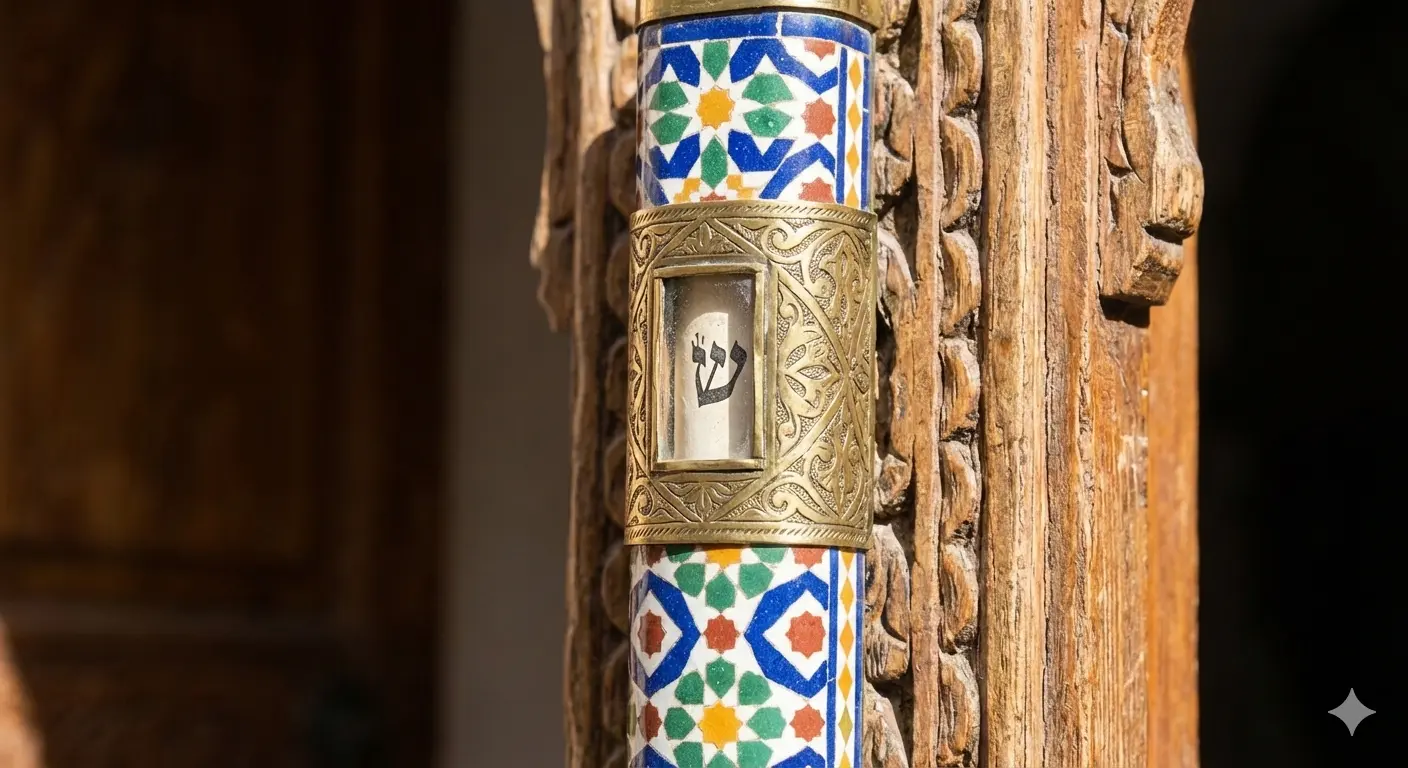




The mezuzah is one of the most recognizable symbols of a Jewish home. More than just a decorative case, it contains a hand-written parchment (klaf) with the words of the Shema, serving as a constant reminder of G-d’s presence and protection. Whether you are moving into a new home or refreshing your current one, knowing how to affix a mezuzah correctly is essential.
Where to Place the Mezuzah
Before you reach for the hammer or adhesive, you must identify the correct location according to halakha (Jewish law).
- The Right Side: The mezuzah should be placed on the right side of the doorpost as you enter the room.
- The Height: It should be affixed within the top third of the doorpost’s height (roughly at shoulder level).
- The Depth: It should be placed within the outer handbreadth (approx. 3.2 inches) of the doorpost, so you encounter the mitzvah immediately upon entering.
Sephardic vs. Ashkenazi Mounting: What’s the Difference?
While the scroll inside is identical in purpose, the traditions for mounting the case differ significantly.
The Sephardic Tradition (Vertical)
Following the rulings of the Shulchan Aruch and the Kabbalistic tradition of the Arizal, Sephardim affix the mezuzah perfectly vertical. This represents a firm, upright commitment to the commandments.
The Ashkenazi Tradition (Slanted)
Ashkenazim follow a compromise reached in the Middle Ages. Rashi argued for a vertical placement, while Rabbeinu Tam argued for horizontal. To honor both opinions, Ashkenazim affix the mezuzah at a slant, with the top of the case pointing inward toward the room.
Which Rooms Require a Mezuzah?
A common misconception is that only the front door requires a mezuzah. In reality, most rooms in a Jewish home require their own.
General Room Requirements
For a room to require a mezuzah, it generally must:
- Have a lintel (top beam) and two doorposts.
- Meet a minimum size of 4×4 amot (approx. 6.3ft \times 6.3ft).
Room-Specific Rules
| Room Type | Mezuzah Required? | Sephardic Nuance |
| Living & Bedrooms | Yes | Recite a blessing. |
| Kitchen | Yes | According to Yalkut Yosef, affix without a blessing unless you eat there regularly. |
| Walk-in Closet | Yes | Required if it is at least 4×4 amot. Many Sephardim affix one without a blessing if it’s smaller but functional. |
| Balcony/Terrace | Yes | Required if it is roofed and meets size requirements. |
| Garage | Yes | Usually affixed without a blessing. |
| Bathroom/Shower | No | It is forbidden to place a mezuzah here due to the lack of “honor” in the room. |
The Blessing for Affixing a Mezuzah
Before securing the mezuzah to the doorpost, recite the following blessing. If you are hanging multiple mezuzot, one blessing covers all of them, provided you do not speak until the last one is fastened.
Hebrew
בָּרוּךְ אַתָּה יְיָ אֱלֹהֵינוּ מֶלֶךְ הָעוֹלָם, אֲשֶׁר קִדְּשָׁנוּ בְּמִצְוֹתָיו וְצִוָּנוּ לִקְבֹּעַ מְזוּזָה
Transliteration
Baruch atah Adonai, Eloheinu Melech ha-olam, asher kiddeshanu be-mitzvotav ve-tzivanu likboa mezuzah.
English Translation
“Blessed are You, L-rd our G-d, King of the Universe, who has sanctified us with His commandments and commanded us to affix a mezuzah.”
Step-by-Step: How to Affix Your Mezuzah
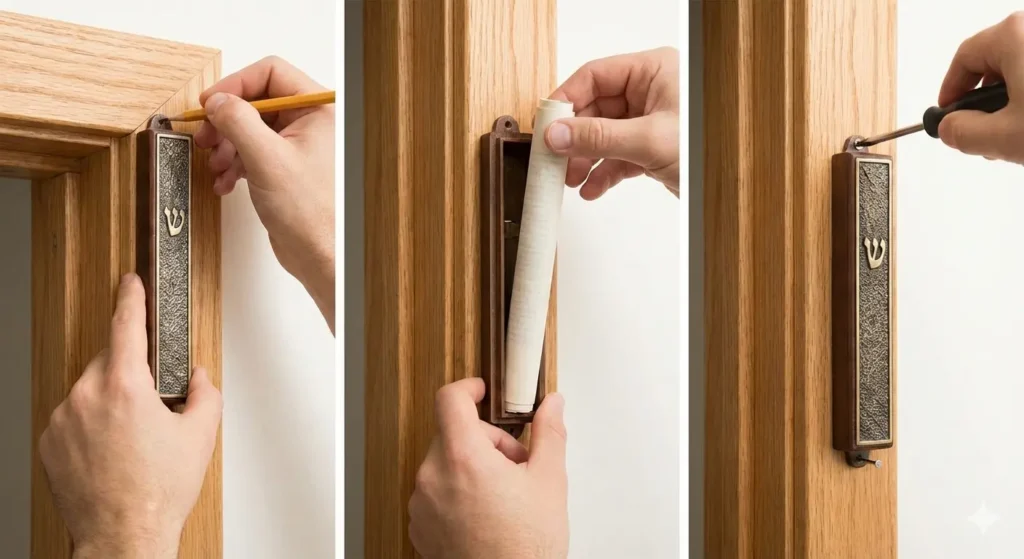
- Check the Scroll: Ensure your klaf (parchment) is kosher and rolled correctly (from left to right).
- Insert into Case: Place the scroll inside the case so that the word Shaddai (on the back) faces outward.
- Position It: Hold the mezuzah in the top third of the right-hand doorpost.
- Recite the Blessing: Say the blessing before you begin the physical act of fastening.
- Secure It: Use nails, screws, or strong mounting tape. It must be firm and not wiggle.
Pro Tip: It is traditional to have your scrolls checked by a certified Sofer (scribe) twice every seven years to ensure the ink hasn’t faded.
🏠 Turning a House into a Sephardic Home: The Ultimate Moving Guide
Moving is more than just shifting boxes from Point A to Point B; in the Sephardic tradition, it’s about shifting the Mazal (fortune) of your family and inviting the Divine Presence (Shekhinah) into your new walls. At Sephardic U, we believe your home is a “Mikdash Me’at”—a miniature sanctuary.
Here is how to ensure your transition is filled with blessing, tradition, and a little bit of Sephardic soul.
1. Timing Your Move: The Tuesday Tradition
If your schedule allows, try to move in on a Tuesday. In the creation story in Genesis, Tuesday is the only day where G-d says “It is good” twice. Sephardic custom views this as a double dose of blessing for new beginnings.
Pro-Tip: Avoid moving on Mondays or Wednesdays if possible, as kabbalistic tradition sometimes associates these days with “Gevurah” (strict judgment).
2. The “First In” Essentials
Before the heavy furniture arrives, walk through the front door with these three items to “set the frequency” of the house:
- Bread and Salt: Symbols of eternal sustenance and a home that never lacks.
- A Charity Box (Tzedakah): To establish the home as a place of kindness.
- Holy Books: A Siddur (prayer book) or Chumash (Torah) to bring immediate holiness into the space.
3. The Mezuzah: Your Spiritual Shield
The most critical step in a Sephardic move is affixing the Mezuzah. While Ashkenazi tradition tilts the Mezuzah, the Sephardic custom is to hang it vertically (straight up and down).
- The Blessing: > Baruch atah Adonai, Eloheinu Melech ha-olam, asher kid’shanu b’mitzvotav v’tzivanu likboa mezuzah.
- The Shehecheyanu: Many Sephardic families recite the Shehecheyanu blessing when moving into a purchased home to thank G-d for reaching this milestone.
🌟 Bonus: The Seder Chanukat HaBayit (Home Dedication)
Once you are unpacked (or at least have a clear path to the kitchen!), it is customary to host a Chanukat HaBayit. This isn’t just a housewarming party—it’s a formal “dedication” of the space.
The Order of the Ceremony
In Sephardic tradition, specifically following the teachings of the Mekubalim (Kabbalists), the ceremony often follows a specific Seder (order):
- Learning Over Lunch: A festive meal is served, but it only becomes a Seudat Mitzvah (a holy meal) if words of Torah are spoken.
- The Readings: Guests and family members often read selected passages to “purify” the air of the new home. This typically includes:
- Torah: Verses regarding the dedication of the Tabernacle.
- Mishnah: Specifically tractates Berachot (blessings) and Tamid (the daily service).
- Zohar: Sephardic communities often recite specific passages from the Zohar (Parashat Tazria) that discuss the spiritual sanctity of a home.
- Psalm 30: This is the “Theme Song” of the move. It begins with Mizmor Shir Chanukat HaBayit L’David—”A Psalm, a song for the dedication of the House of David.”
- The Sephardic “Segulah”: In some Moroccan and North African families, it is a beautiful custom to toss coins into the corners of the rooms or sprinkle a little sugar/sweets to symbolize a “sweet” and prosperous life in the new home.
Closing Prayer
The ceremony usually concludes with a special prayer asking that no sorrow, plague, or darkness ever enter the gates of the home, and that it instead be a place of “Simcha, Beracha, v’Shalom” (Joy, Blessing, and Peace).