


History of Moroccan Charoset
Long before recipes were written in cookbooks, Moroccan Jewish families prepared charoset by memory — a handful of dates, a scattering of raisins, fragrant spices ground by hand, and walnuts crushed into a rich paste that carried centuries of Sephardic tradition.
In many Sephardic homes, charoset was more than a symbolic Passover food. It was history you could taste.
This Moroccan charoset recipe reflects the culinary heritage of Sephardic Jews who carried ancient traditions from the Iberian Peninsula into North Africa after the expulsions from Spain and Portugal [Explore our full Sephardic Passover Resource Hub here to learn more about the unique customs of the Seder.] Across Morocco — from Fez and Marrakech to Casablanca and Tangier — Jewish families developed their own variations of haroset using local ingredients abundant in the region: sweet Medjool dates, golden raisins, warm cloves, allspice, and nuts.
The Difference between Ashkenazi and Sephardi Charoset
Unlike the apple-based charoset commonly found on Ashkenazi Passover tables, authentic Moroccan Sephardic charoset is darker, richer, and deeply aromatic. Its texture resembles the mortar used by Hebrew slaves in ancient Egypt, connecting the Passover Seder directly to the story of bondage and liberation told each year.
The Hebrew word charoset (חֲרֽוֹסֶת) comes from cheres — meaning clay — reminding us that every bite carries memory, symbolism, and survival.
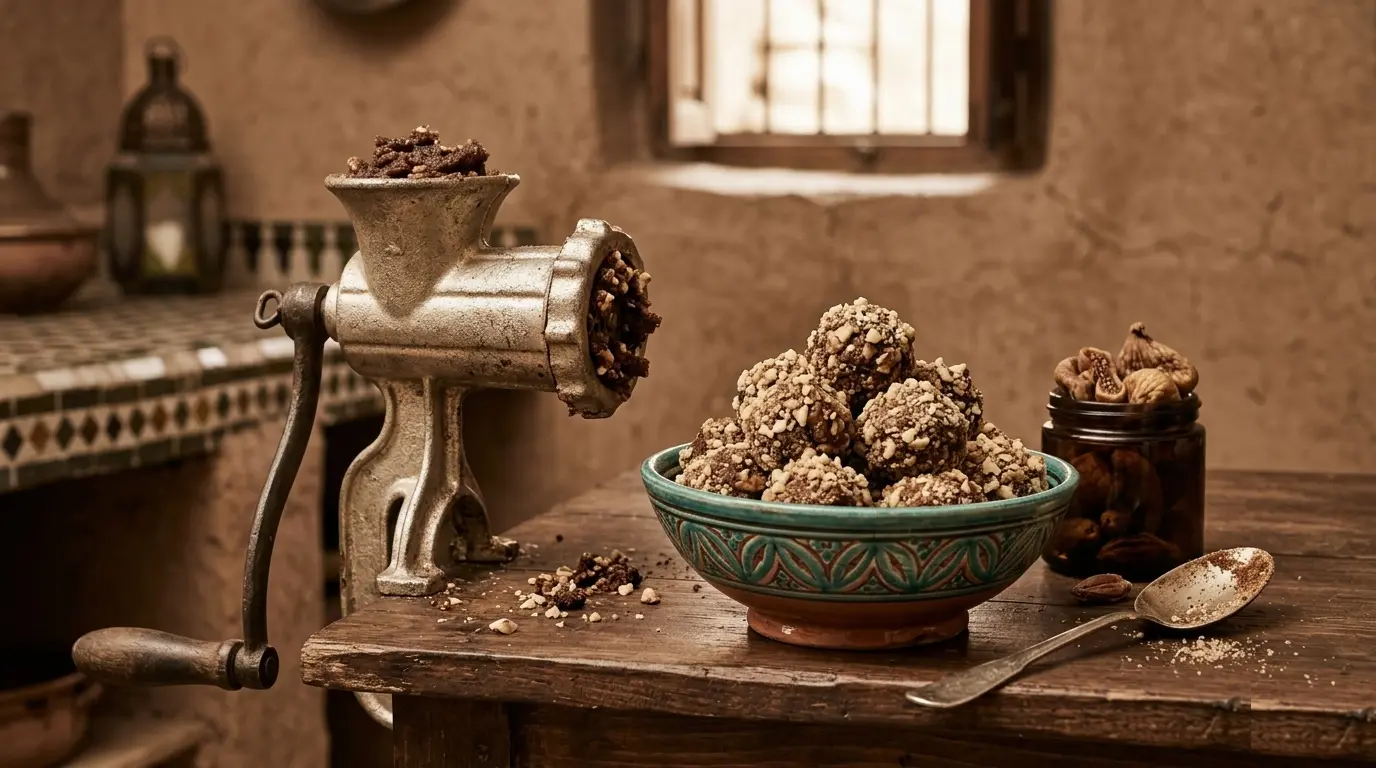
In many Moroccan Jewish households, the mixture was rolled into small balls before the Seder, making it easy to serve alongside matzah and maror in the traditional “Hillel sandwich.” Children often waited eagerly for charoset, its natural sweetness balancing the bitterness of the maror and transforming ritual into something both meaningful and comforting.
Sephardic charoset recipes vary widely throughout the Jewish world:
- Moroccan Jews often use dates, raisins, walnuts, and warming spices
- Egyptian Jews incorporate sweet wine and cinnamon
- Iraqi Jewish charoset features silan (date syrup) and nuts
- Greek and Turkish Sephardic communities add apples and almonds
Each version tells the story of a diaspora shaped by exile, trade, migration, and resilience.
This Authentic Moroccan Charoset charoset recipe preserves that Sephardic legacy with a blend of naturally sweet fruits and earthy spices that evoke the flavors of North African Jewish kitchens during Pesach. Whether served at a large family Seder or a quiet holiday table, charoset remains one of Passover’s most beloved symbols of remembrance, freedom, and continuity.
Why You’ll Love This Moroccan Charoset Recipe
- Authentic Sephardic Passover recipe
- Naturally sweet with no refined sugar
- Made with dates, raisins, walnuts, and Passover wine
- Easy no-cook recipe ready in 20 minutes
- Perfect for Seder plates and matzah spreads
- Freezer-friendly and make-ahead approved
Traditional Moroccan Charoset Ingredients
This Sephardic charoset combines classic North African Passover ingredients:
- Medjool dates
- Golden and dark raisins
- Walnuts
- Sweet kosher Passover wine
- Ground cloves
- Allspice
The result is a rich, fragrant charoset paste with deep caramel notes and warming spice.

Moroccan Passover Date Raisin Walnut Charoset
Ingredients
Method
- Add the pitted dates, golden raisins, dark raisins, walnuts, allspice, and cloves to a food processor.
- Pulse the mixture several times until the ingredients are finely chopped and begin forming a sticky paste.
- Slowly add the sweet Passover wine, one tablespoon at a time, blending until the charoset reaches a thick, spreadable consistency.
- Using lightly moistened hands, roll the mixture into walnut-sized balls or leave as a rustic paste for serving.
- Place the charoset balls on a parchment-lined tray and refrigerate for 20–30 minutes until firm.
- Serve chilled or at room temperature alongside matzah and maror during the Passover Seder.
Notes
Charoset can be prepared up to 3 days in advance.
Store refrigerated in an airtight container.
Freeze for up to 3 months.