North Africa’s Jewish communities are older than the Sephardi diaspora. Jews lived in Roman Carthage, Volubilis and Cyrenaica centuries before the Arab conquest, and refugees from Spain arrived twice: after the massacres of 1391 and after the expulsions of 1492 and 1497. The newcomers merged with the established Arabic- and Berber-speaking Jews, and their law and liturgy became the norm across the region. Around 1948 more than half a million Jews lived in Morocco, Algeria, Tunisia and Libya; almost all left within a generation. This page is an overview; each country has its own page.
The communities
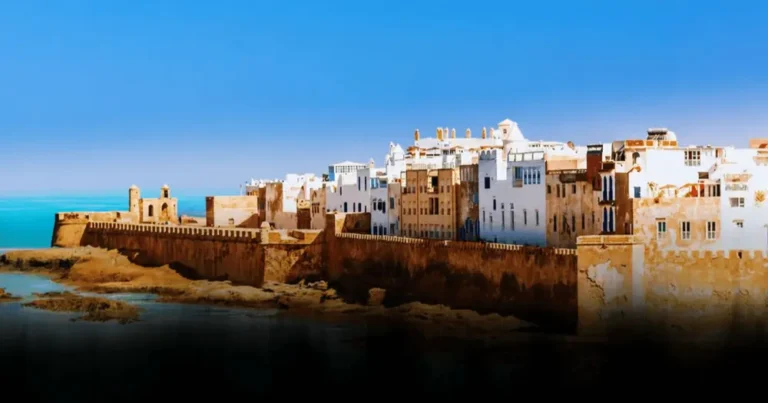
- Moroccan Jews. The largest community, about 250,000–265,000 around 1948, in the mellahs of Fez, Marrakesh and Essaouira, the Atlas villages and the Spanish-speaking north.
- Algerian Jews. Shaped by the rabbis who fled Spain in 1391; made French citizens by the Crémieux Decree of 1870. About 140,000 in 1954.
- Tunisian Jews. The established Twansa and the Livornese Grana of Tunis, and the ancient community of Djerba. About 105,000 before 1956.
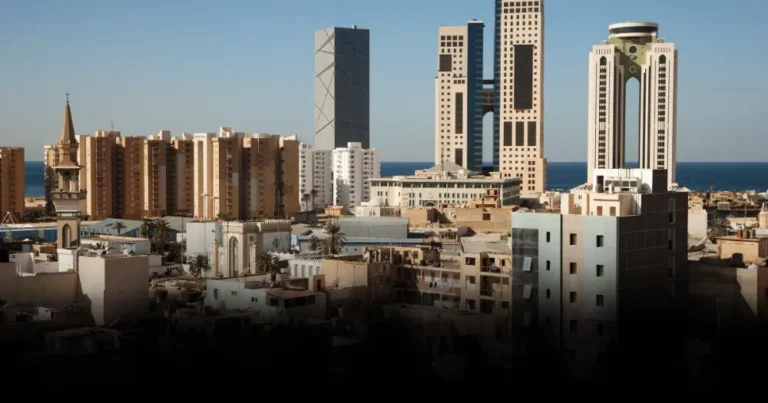
- Libyan Jews. Two thousand years in Tripoli and Cyrenaica, given the Sephardi rite by Rabbi Shimon Lavi in the 16th century. About 40,000 in the late 1940s.
Egypt’s Jews are often counted with North Africa as well; see Egyptian Jews.
Origins
Jewish life in North Africa goes back to antiquity. Ptolemy I settled Jews in Cyrenaica in 312 BCE; Jewish tombs at Gammarth, outside Carthage, date from the 2nd century CE; and a Hebrew epitaph at Volubilis, in Morocco, comes from late antiquity. Under Muslim rule the region’s Jews lived as protected dhimmis, and cities such as Fez and Kairouan became centers of learning: Isaac Alfasi, born in today’s Algeria in 1013, took his name from Fez.
The Sephardi connection
The first wave came after the anti-Jewish riots of 1391 in Spain and the Balearic Islands. Rabbis Isaac ben Sheshet and Simeon ben Zemah Duran led the community of Algiers, and Ephraim Alnaqua is remembered as the founder of Tlemcen’s. After 1492 and 1497 a far larger wave reached Morocco. There the newcomers, the megorashim, lived for generations beside the established toshavim; see Megorashim and Toshavim. In the 17th century Sephardi merchants from Livorno, the Grana, settled in Tunis and other ports.
Many North African Jews descended from the older local communities rather than from Spanish exiles. What spread was Sephardi rabbinic law, set down in works such as the Takkanot of Fez, and the Sephardi liturgy, which every community adopted with its own melodies and customs.
Modern era and departure
- Colonial rule. France took Algeria in 1830, Tunisia in 1881 and most of Morocco in 1912; Italy took Libya in 1911. Alliance Israélite Universelle schools, the first opened in Tetouan in 1862, made French the language of a new generation.
- The Second World War. Vichy’s antisemitic laws applied in Morocco, Algeria and Tunisia, and Algeria’s Jews lost their French citizenship in 1940. Germany occupied Tunisia from November 1942 to May 1943, and in Libya the Jews of Cyrenaica were sent to the Giado camp, where 562 died. Read more: Sephardim in the Holocaust.
- 1945–1970. Pogroms in Tripoli (1945) and riots in Oujda and Jerada (1948), then the independence of Libya, Morocco, Tunisia and Algeria, drove a mass departure. Moroccan, Libyan and many Tunisian Jews went mainly to Israel; about 130,000 Algerian Jews went to France in 1961–1962.
Religious life
North African Jews pray in a family of closely related Sephardi rites. Shared customs include pilgrimages to the tombs of holy rabbis, the singing of bakkashot on winter Sabbath mornings, and Moroccan Jewry’s Mimouna at the end of Passover.
Language, music and food
Judeo-Arabic was the everyday language of most North African Jews, and some Atlas communities spoke Berber. In northern Morocco, Jews kept a Judeo-Spanish of their own, Haketia, spoken in Tetouan, Tangier, Ceuta and Melilla and carried to Oran. Some 30,000 people spoke it in 1900; about 1,000 do today. Italian was spoken by the Grana and in Libya, and French became the language of school and, in Algeria, of the home. Jewish musicians were leading performers of Andalusian and popular Arabic music across the region. The Sabbath stew, dafina or t’fina, is common to many communities; see our Sephardic recipes.
The community today
A few thousand Jews remain in North Africa: about 2,000 in Morocco and about 1,500 in Tunisia (both 2017 figures), a few dozen at most in Algeria and none in Libya. Most North African Jews and their descendants live in Israel and France, with others in Canada, the United States and Latin America. Gibraltar’s Jewish community also has North African roots: it began with merchants from Tetouan who supplied the British garrison after 1704.
Sources and further reading
- Michael M. Laskier, North African Jewry in the Twentieth Century: The Jews of Morocco, Tunisia, and Algeria (NYU Press, 1994).
- Haim Zafrani, Two Thousand Years of Jewish Life in Morocco (Ktav, 2005).
- “Haketia” and “History of the Jews in Gibraltar”, Wikipedia.
- The sources listed on each country page: Morocco, Algeria, Tunisia, Libya.
Revised October 2026 to correct errors in an earlier version of this page.