Italy has the oldest continuous Jewish community in Europe. Jews have lived in Rome since the 2nd century BCE, before the destruction of the Second Temple, and the Italkim, the native Italian Jews, keep a prayer rite of their own that is neither Ashkenazi nor Sephardi. Over the centuries Ashkenazi Jews settled in the north and Sephardi exiles arrived after 1492, so Italian Jewry came to include all three traditions. Sephardi Jews were especially prominent in Venice, Ferrara and Livorno. See also Spanish Jews and Western Sephardim.
Origins
Jewish life in Rome is recorded from the 2nd century BCE; in 139 BCE Simon Maccabeus sent an embassy to the city, and a large community lived there from about 150 BCE.
The Sephardi connection
After the expulsion of 1492, about 9,000 Spanish Jews reached the borders of the Papal States, and Pope Alexander VI admitted them to Rome; others settled in Naples, Ferrara and Tuscany. In the following century Portuguese conversos returning to Judaism settled in Venice, Ferrara and Livorno, where the Medici rulers invited Jewish merchants in the 1590s. Livorno’s Sephardi community became one of the most important in the Mediterranean, and its merchants later formed the Grana communities of North Africa; see Tunisian Jews.
In Venice, the city confined its Jews to the Ghetto on March 29, 1516, the origin of the word for segregated Jewish quarters. The Ghetto’s synagogues show Italian Jewry’s mix: the Scuola Spagnola for Spanish and Portuguese Jews, the Scuola Levantina for Sephardim from the Ottoman Empire, the Scuola Italiana for the Italian rite, and the Scuola Grande Tedesca for Ashkenazim. The Venetian poet Sarra Copia Sullam held a literary salon there in the 17th century.
Modern era
- Ghettos. Pope Paul IV created the Roman ghetto in 1555. The Venetian ghetto was opened when French forces took the city in 1797.
- Emancipation. Italian Jews gained equal rights with the unification of Italy, and in Rome when papal rule ended on September 20, 1870.
- 1938–1945. Fascist Italy passed its racial laws in 1938. After the German occupation in 1943, about 10,000 Jews were deported and about 7,700 Italian Jews were killed, including more than 1,000 deported from Rome in the raid of October 1943. Read more: Sephardim in the Holocaust.
Religious life
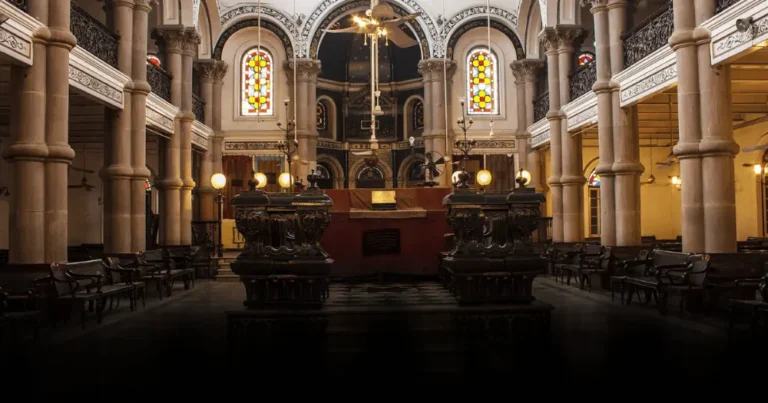
The Italian rite, Nusach Italki, descends from ancient Land of Israel traditions and is related to the rite of the Romaniote Jews of Greece. Outside Italy it survives only in Jerusalem and Netanya. Italian synagogues also follow the Sephardi and Ashkenazi rites, and Rome’s Great Synagogue is the center of the largest community. See also Jewish Rome.
The community today
About 27,000 Jews are registered with the Union of Italian Jewish Communities (2023), most of them in Rome and Milan; broader estimates run higher. The community includes Italkim, Sephardim, Ashkenazim and Libyan Jews who settled in Rome after 1967; see Libyan Jews.
Notable people
- Sarra Copia Sullam c. 1592–1641 · Venice Poet and host of a literary salon in the Venetian Ghetto.
- Rachel Morpurgo 1790–1871 · Trieste Hebrew poet and Hebraist.
- Rita Levi-Montalcini 1909–2012 · Turin Neurobiologist; Nobel Prize in Physiology or Medicine, 1986.
- Primo Levi 1919–1987 · Turin Chemist and writer; survivor of Auschwitz and author of If This Is a Man.
Sources and further reading
- Attilio Milano, Storia degli ebrei in Italia (Einaudi, 1963).
- “History of the Jews in Italy”, “Venetian Ghetto” and “Italian Nusach”, Wikipedia.
Revised October 2026 to correct errors in an earlier version of this page.